
It sets the wrong expectations – MBReviews Leave a comment
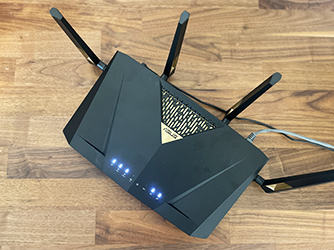
For about 100 {dollars} greater than the TUF BE3600 (in the mean time of writing), you may get the ASUS RT-BE88U which is a kind of mid-range WiFi 7 router that additionally doesn’t help the 6GHz radio band, nevertheless it does have some options that will or could not compensate for this main deficiency.
There’s help for MLO the place you’ll be able to mixture the 2 present radio bands for a probably higher throughput and vary, however maybe essentially the most fascinating new additions are the the 10GbE Ethernet port and the 10GbE SFP+ slot.
Don’t get me mistaken, it makes good sense contemplating the value tag of the gadget, however we lastly managed to get above 2.5GbE since this was a serious bottleneck for the WiFi 7 true potential. Whether or not the ASUS RT-BE88U is succesful to truly cross this restrict is one other story. However we are going to discover out very quickly, within the testing part. Different options which can be value mentioning are the highly effective chipset, the 2GB of RAM, the AiProtection Professional and there has additionally been some enhancements in direction of how the AiMesh capabilities.
Now, we get the AI-powered good AiMesh which might apparently leverage MLO to modify between bands to search out essentially the most appropriate one for knowledge transmission. All this could be fascinating in apply, so let’s get a better take a look at the router.
Design and Construct High quality
Design-wise, the ASUS RT-BE88U is similar to the RT-AX88U Pro with the one notable distinction being the golden piece across the emblem. The RT-AX88U Professional can also be equivalent to the RT-AX88U which additionally carefully resembles the RT-AC88U, so it’s an extended line of gadgets with little or no modifications by way of seems to be and design.
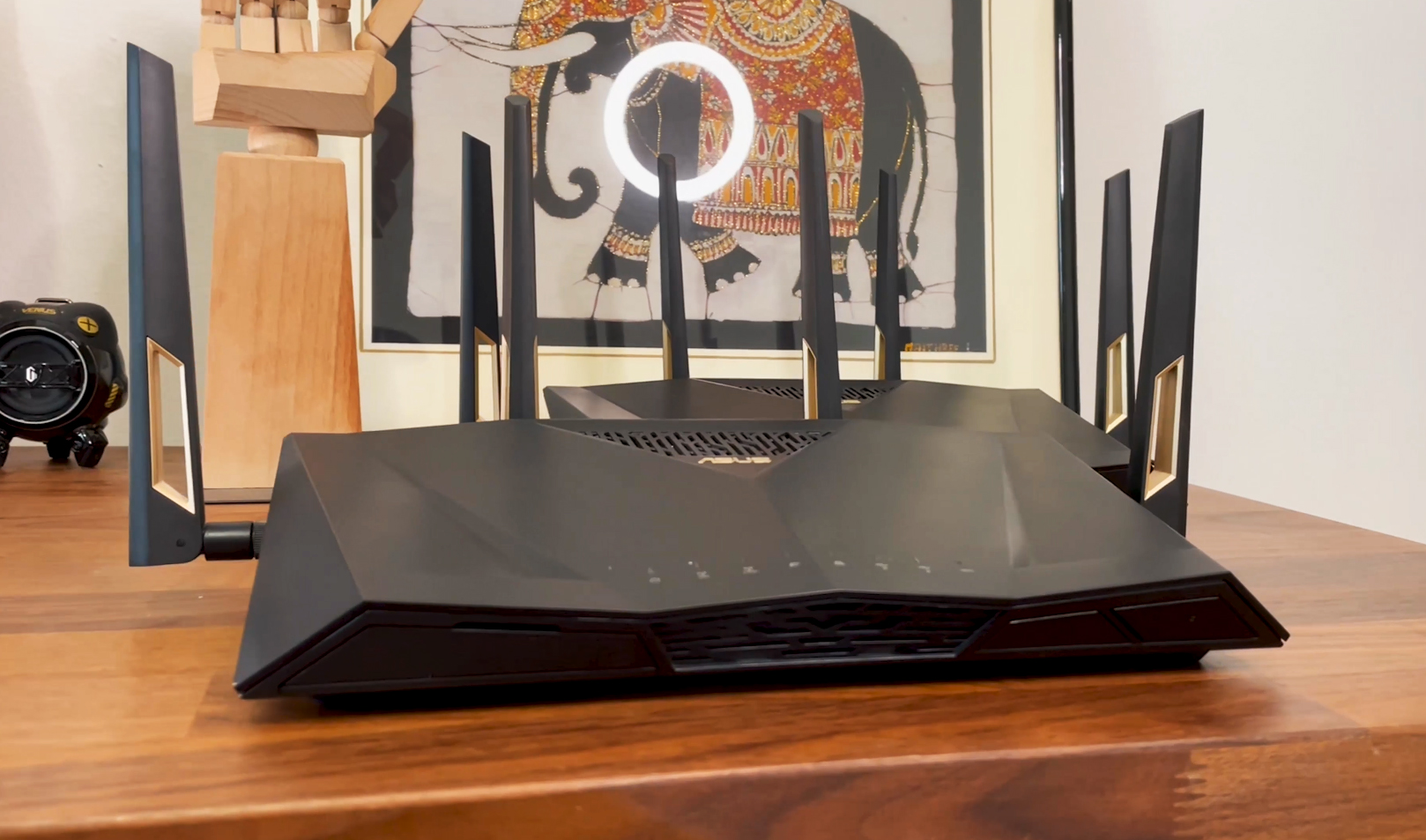
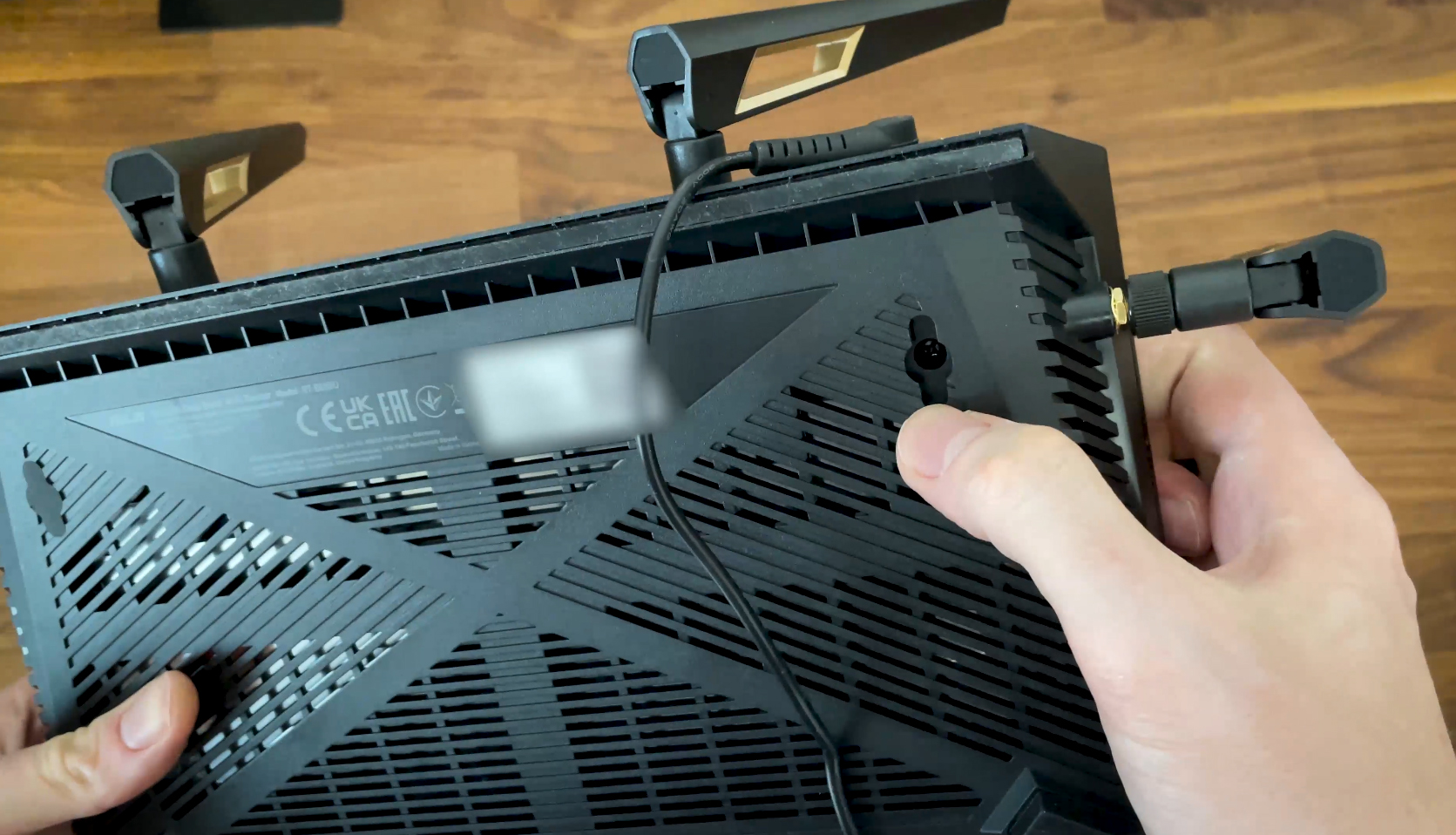
The case stays massive and the 2 aspect antennas do improve the footprint much more, however we do get the choice to mount the router on the wall, proper? Not within the conventional sense, no. There are two silicone covers which disguise what seems to be like mounting holes, however there isn’t any canal the place to hook up the router on the screw heads.
It’s flat. You may nonetheless cling the router, simply watch out to not stumble upon it or by chance yank a cable, in any other case, it’ll tumble to the ground.
On the entrance, we get to see the standing LEDs and I’m pleased with the builders choice to not go along with the minimalist, however extremely complicated single multi-colored LED. There are not any different buttons or ports right here or on the perimeters, every little thing else could be discovered on the rear aspect of the router. From the left aspect, we get the 10GbE WAN/LAN port adopted by an SFP+ slot that help 10GbE modules.
Then, there’s the WPS button preceded by eight LAN ports. The primary 4 are 2.5GbE, whereas the final are Gigabit solely. And in addition I want to say that the primary port is WAN/LAN, whereas the fourth is a Gaming port, so connecting a gaming gadget to it’ll robotically give it a better precedence.
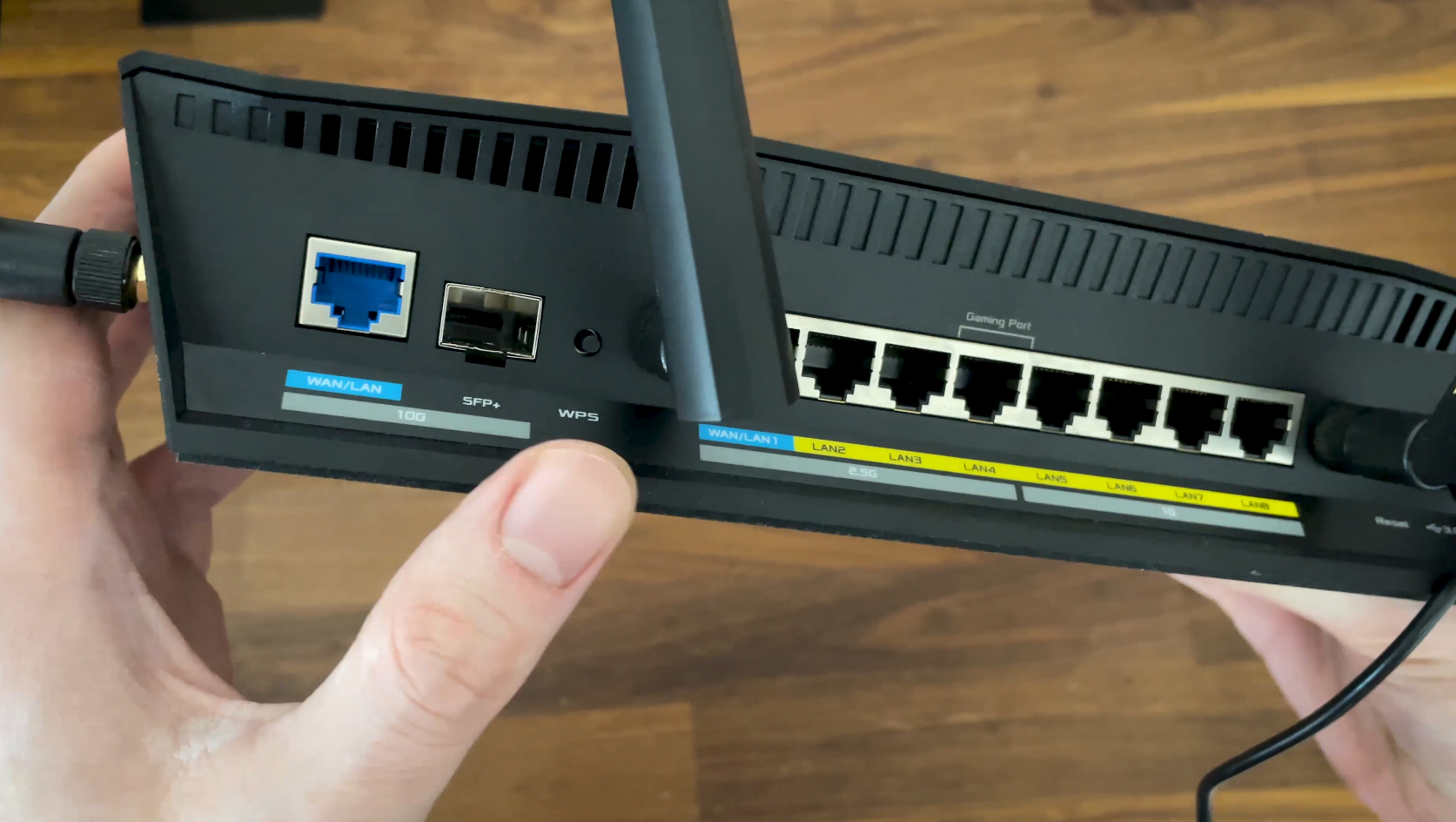
Lastly, there’s the Reset button, the USB 3.0 port, the DC In port and the Energy button.
The Warmth Administration
The kind of case that ASUS went for with the RT-BE88U has confirmed through the years to achieve success at pushing the warmth away from the internal elements. There are many air flow openings throughout, together with within the entrance and prime aspect, so it ought to be sufficient for it to stay at a good temperature, proper?
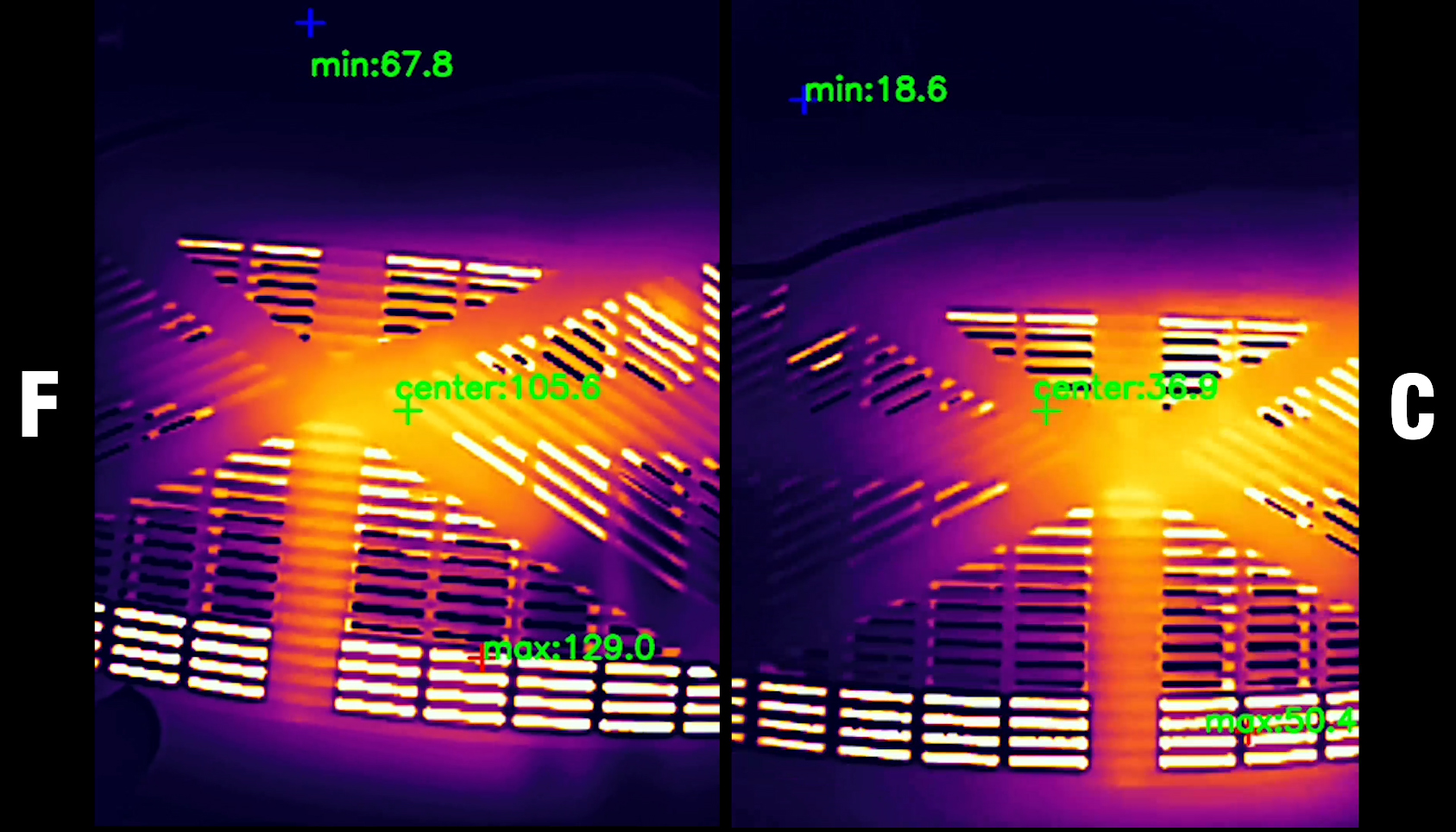
I used a thermal digicam to point out you the thermal administration of the router and I needed to embody two kind of footage, one for Fahrenheit, the opposite for Celsius since I had some complaints that the conversion cannot be accomplished simply. And, apparently, it does get heated up a bit greater than its predecessors, though I doubt it’ll result in thermal throttling.
ASUS RT-BE88U Teardown
I did open the ASUS RT-BE88U in a separate video and it wasn’t a really tough course of. There are 4 screws on the rear aspect hidden by silicone covers and one screw has a guaranty seal glued on prime of it. It’s extra of a scare tactic within the US, however in different nations, I’d watch out that the guarantee could be voided by a small fragile piece of paper that holds no purposeful worth for the router itself.
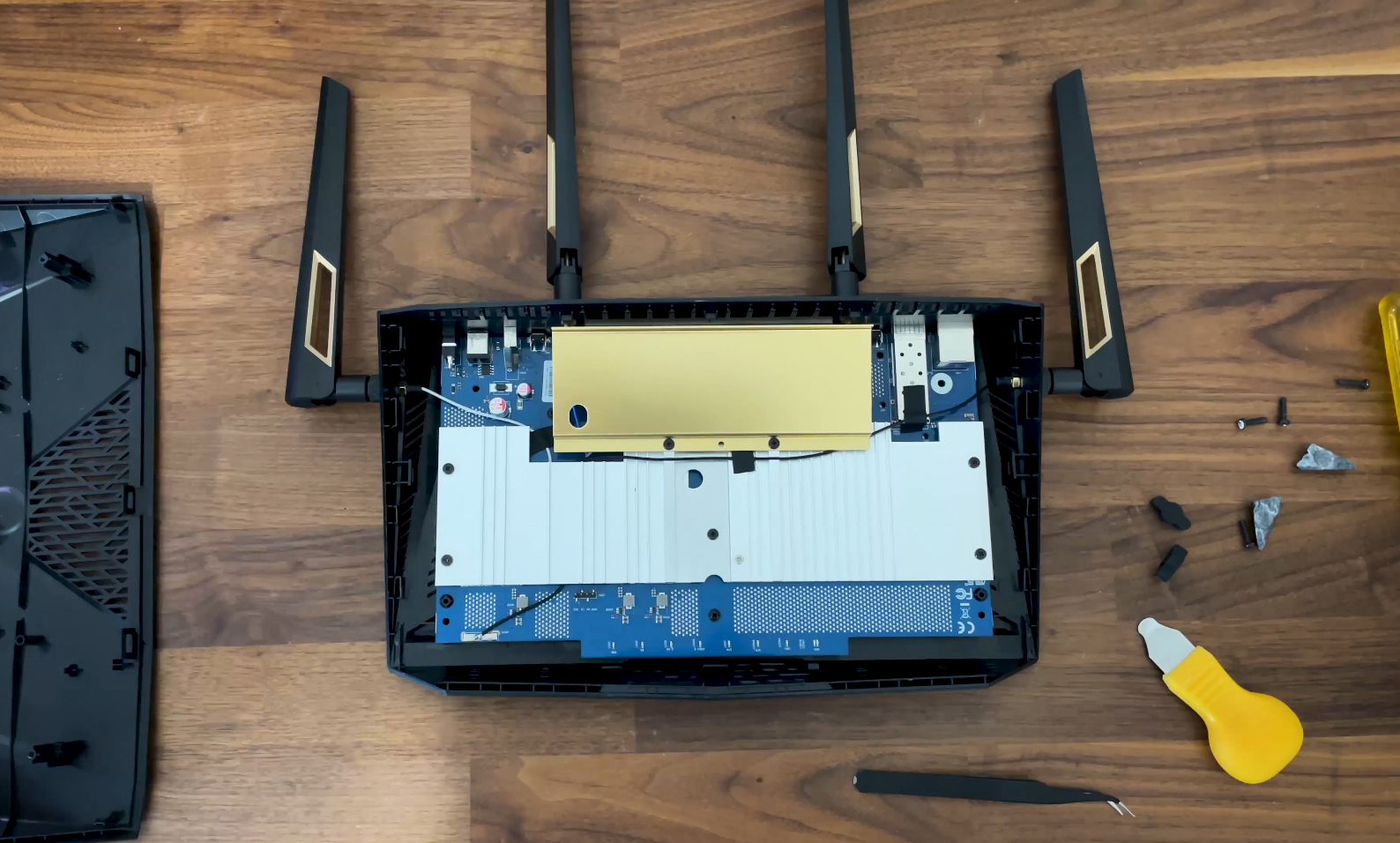
Humorous how these items work. The PCB is massive sufficient to cowl a lot of the internal aspect and there are three warmth spreaders to push the warmth away from the primary chipsets. You may have a better took on the foremost elements, however I did undergo them a bit faster, so both pause or test the devoted video for a slower tempo. On the finish, I needed to additionally embody a comparability desk with different comparable wi-fi routers.
| Asus RT-BE88U | ASUS TUF Gaming BE3600 | Xiaomi BE7000 | Asus TUF-AX4200 | |
| CPU | quad-core 2.6GHz Broadcom BCM4916KFEBG | quad-core 2.0GHz Broadcom BCM6764LFKFEBG | quad-core 1.5GHz Qualcomm IPQ9554 | quad-core 2.0GHz Mediatek MT7986AV |
| RAM | 2GB Samsung SEC 346 K4AAG16 5WCBCWE | 1GB Nanya NT5AD512M16C4-HR | 1GB Nanya (2x NT5CC256M16ER-EK) | 512MB Nanya NT5CB256M16ER-FL |
| Storage | 256MB MXIC MX30LF2G28AD-TI | 256MB NAND Winbond 25N02KVZEIR | 128MB GigaDevice 5F1GQ5REY1G | 256MB Winbond 25N02KVZEIR |
| Change | Broadcom BCM50904 | Realtek RTL83675 PHY | Qualcomm QCA8084 | MXL TC1PZ4122 |
| 5GHz Radio – 1 | Broadcom BCM6726 a/n/ac/ax 4×4:4 | Broadcom BCM6764LFKFEBG a/n/ac/ax/be 2×2:2 | Qualcomm QCN6224 a/n/ac/ax/be 4×4:4 | Mediatek MT7976DAN an/ac/ax 3×3:3 | 5GHz Radio – 2 | – | – | Qualcomm QCN6224 a/n/ac/ax/be 4×4:4 | – |
| 2.4GHz Radio | Broadcom BCM6726 a/b/g/n/ax 4×4:4 | Broadcom BCM6764LFKFEBG a/n/ac/ax/be 2×2:2 | Qualcomm QCN5024 b/g/n/ax 4×4:4 | Mediatek MT7986AV b/g/n/ax 2×2:2 |
The Wi-fi Take a look at (5GHz)
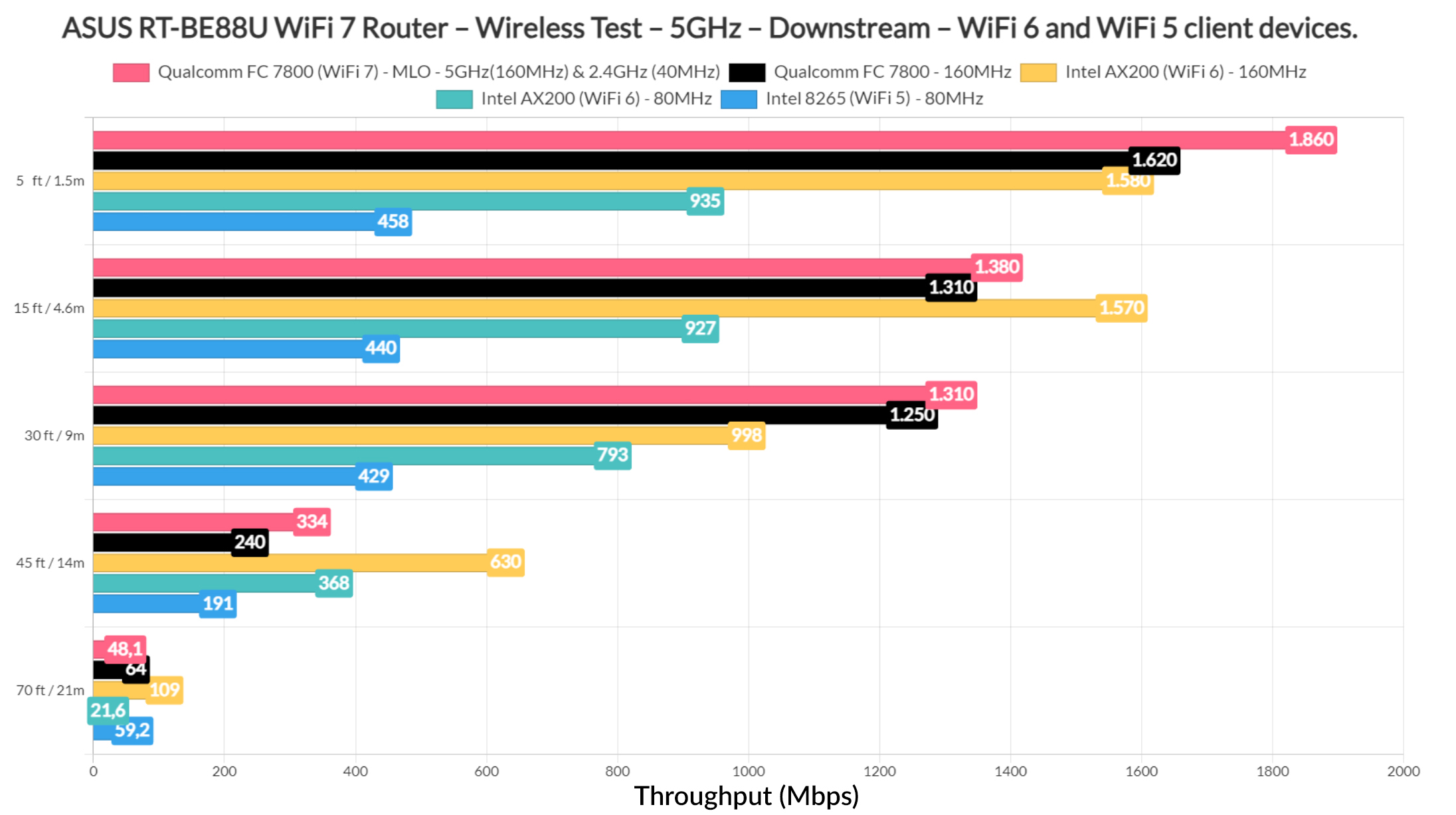
Now let’s discuss concerning the wi-fi efficiency of the router. You may see it from the graphic, there are two new parts. In addition to the same old WiFi 6 and WiFi 5 shopper gadgets, I additionally ran the identical single-client throughput check utilizing a WiFi 7 shopper gadget and it’s the identical one which I had to make use of to check the MLO efficiency as nicely.
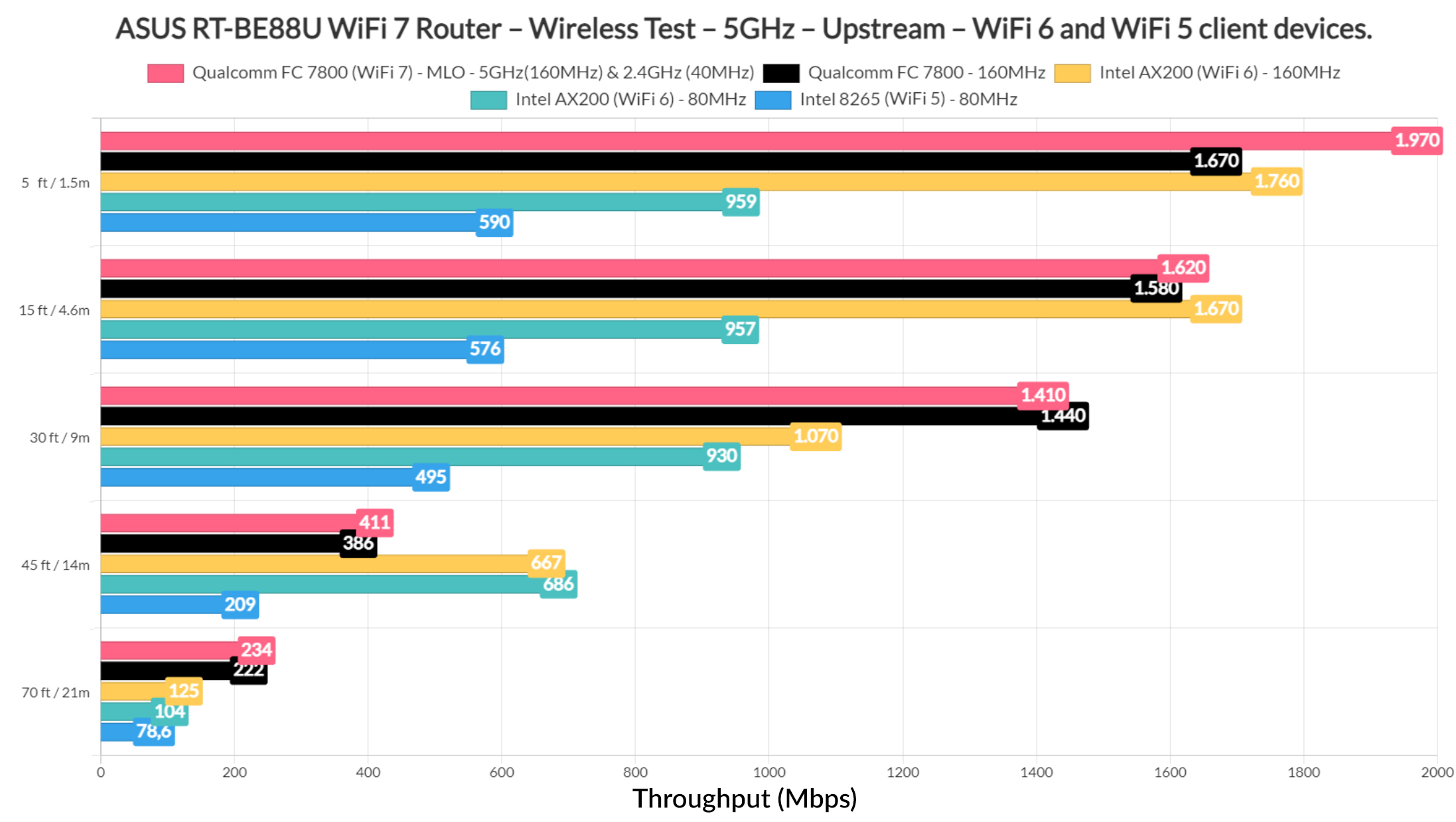
Since there are solely the 5GHz and the two.4GHz radios out there, I may aggregated these two and there may be an enchancment by way of throughput. And it’s has as a lot affect even at 70 toes the place the sign attenuation is far more of a burden.
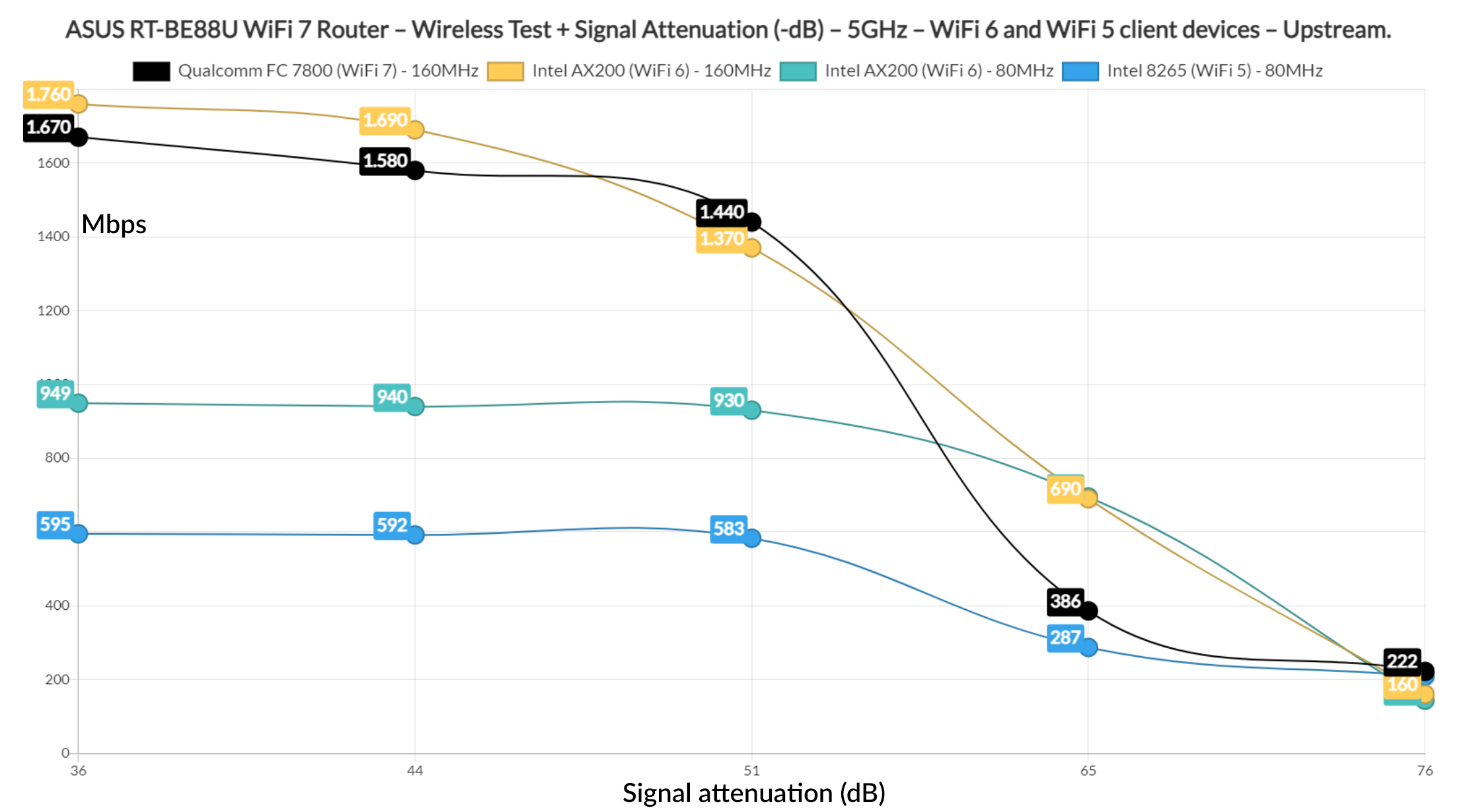
I didn’t embody it within the sign attenuation graphic as a result of I registered two simultaneous values from the 2 radios, as anticipated. You may also take a look on the values downstream. OK, I do take pleasure in seeing the throughput reaching nearly 2Gbps, however the ASUS RT-BE88U has a 10GbE Ethernet port.
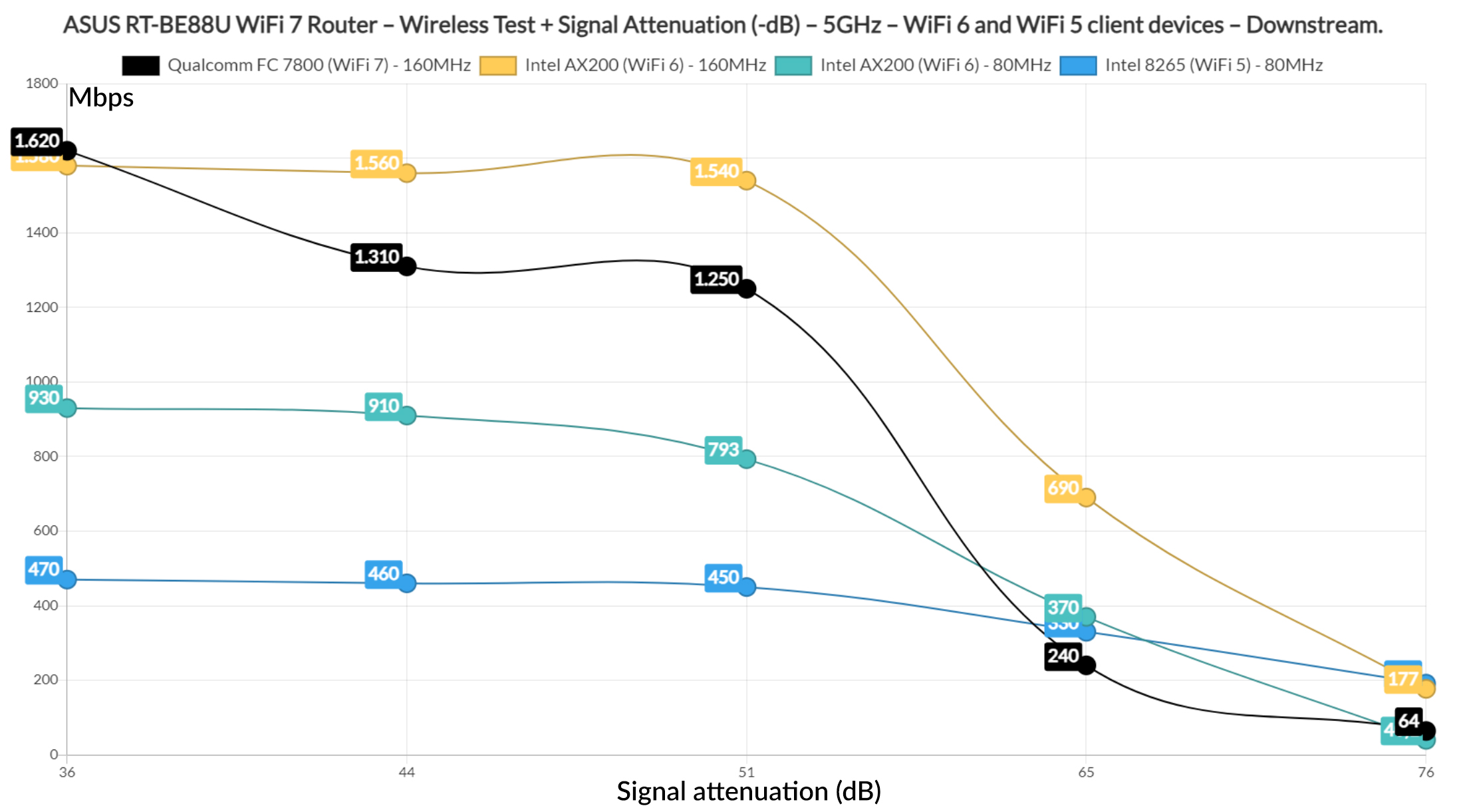
And I did join a 10GbE server to it, so there was no bottlenecking, that is the max efficiency that the router can provide.
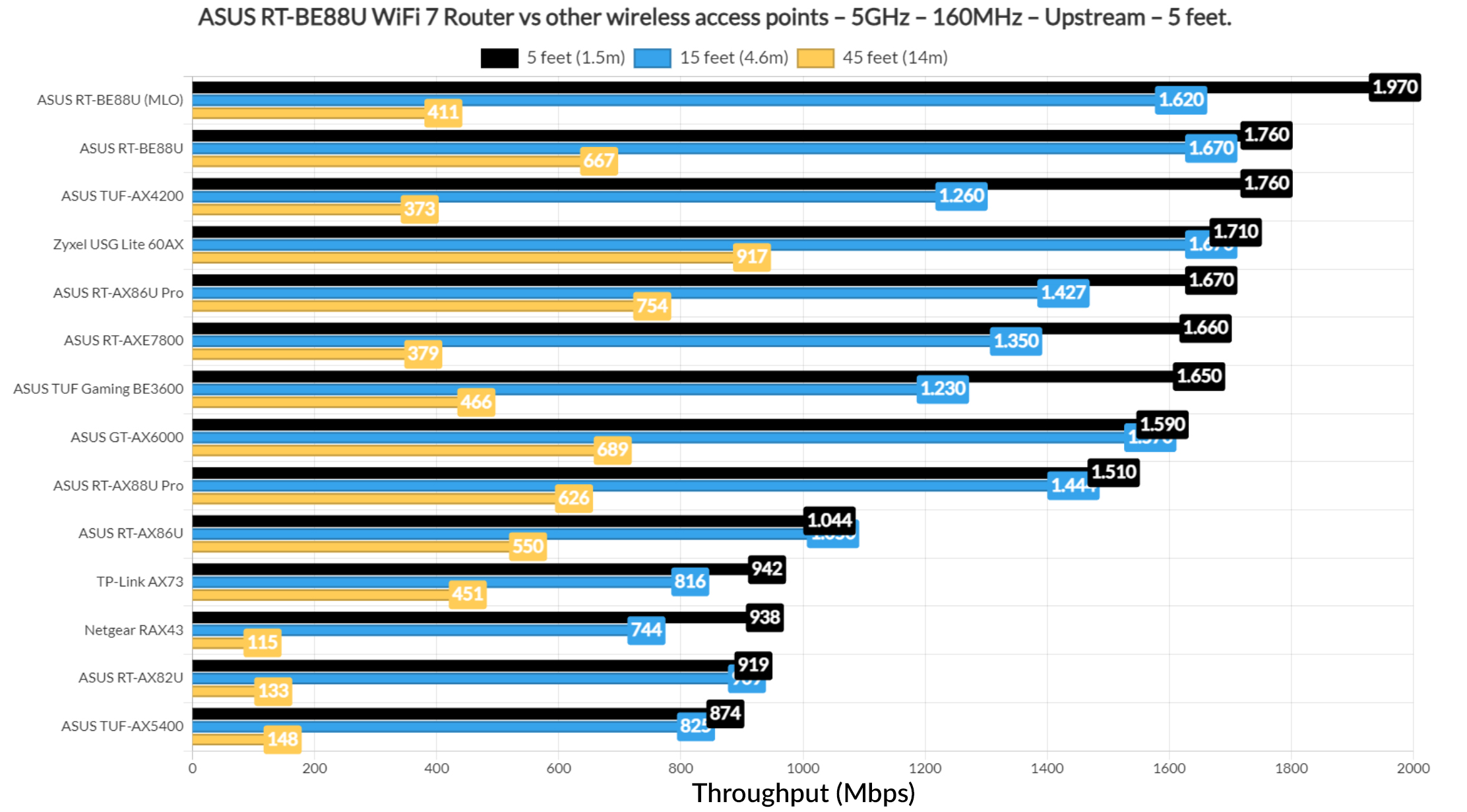
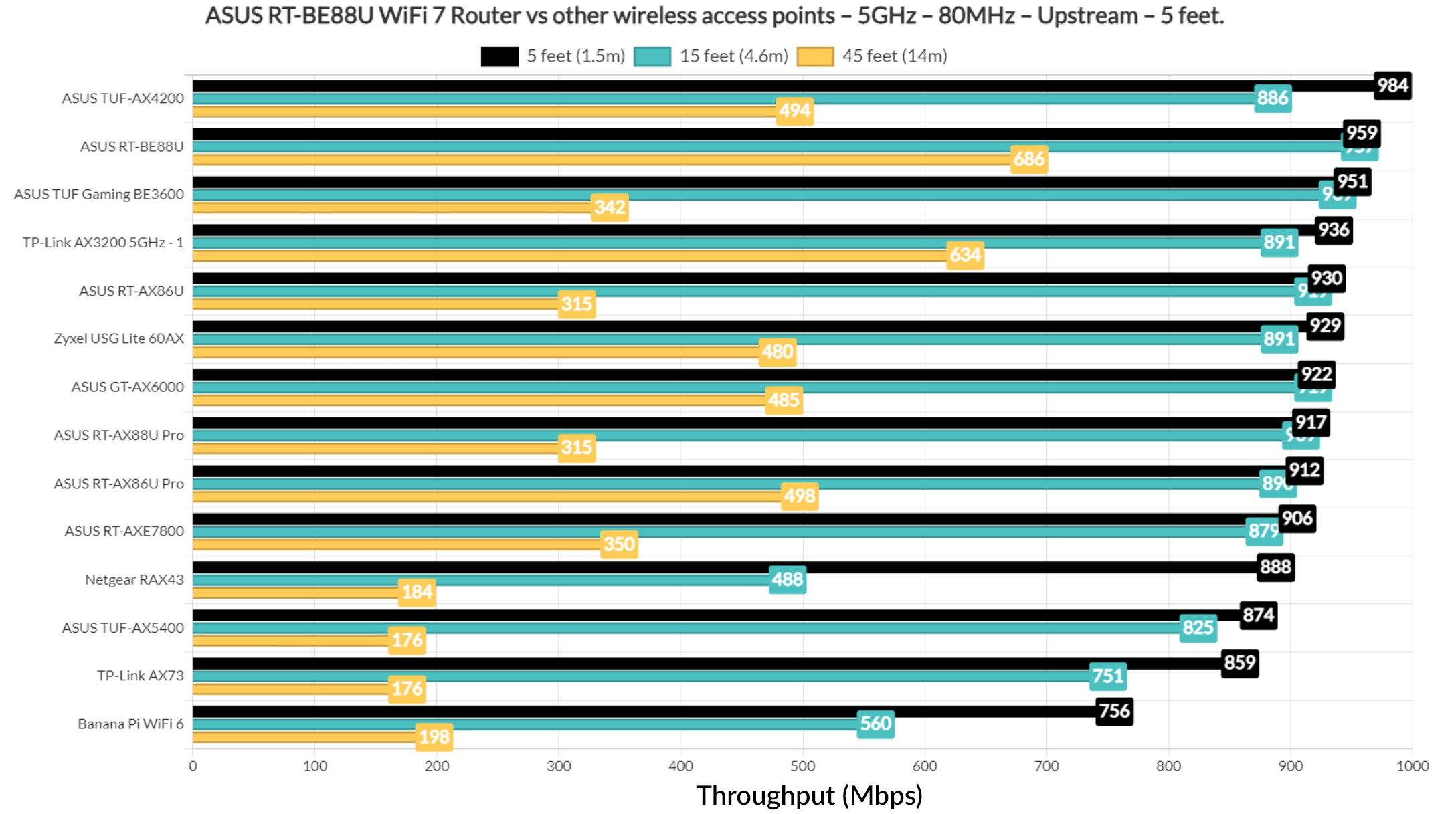
When in comparison with different wi-fi routers, we are able to see that whereas utilizing the 160MHz channel bandwidth, it provide the very best efficiency, and never solely when counting on the MLO. However issues do change a bit when utilizing the 80MHz channel width, the TUF-AX4200 taking the highest spot this time.
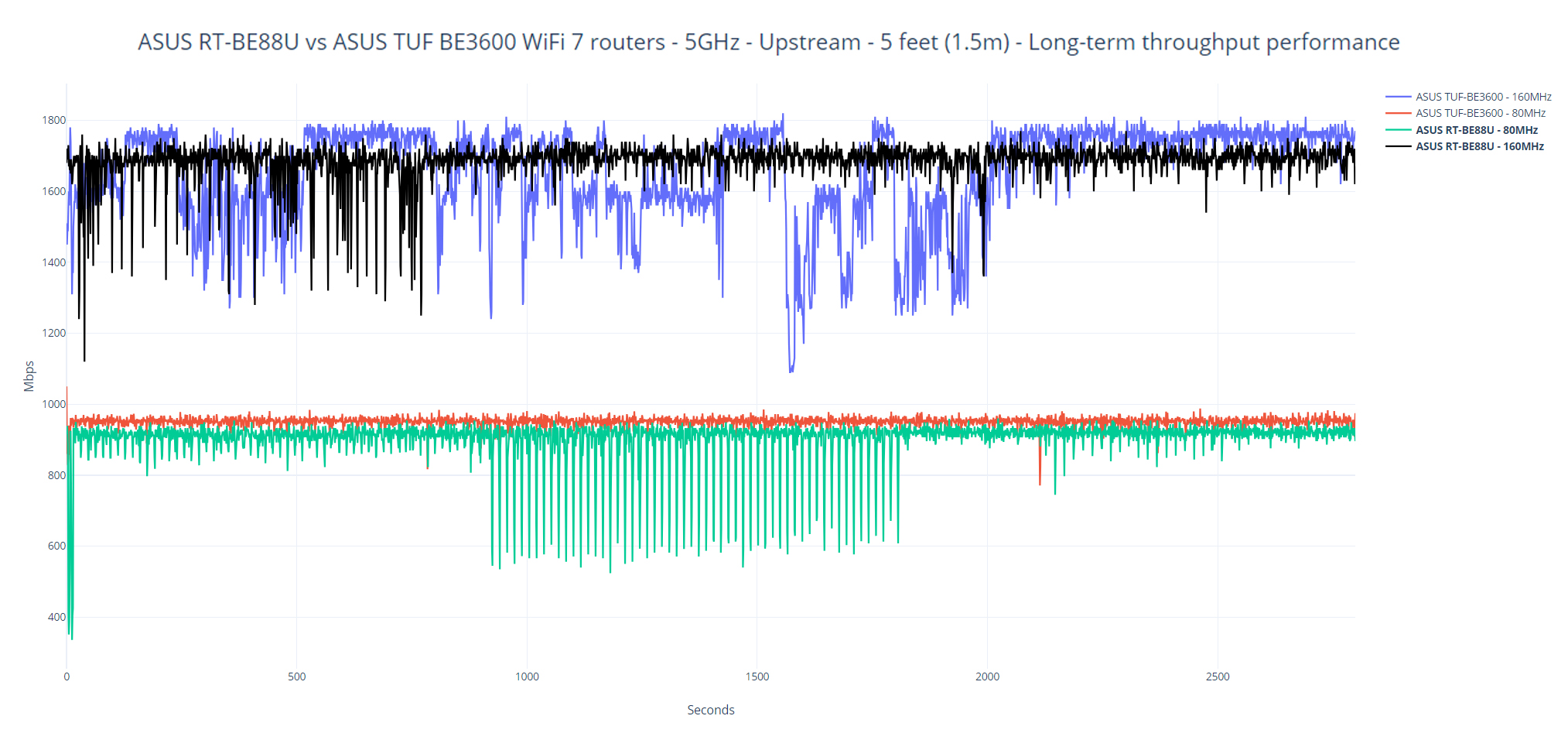
On the finish, I additionally added a long-term throughput efficiency graphic with a comparability with one other WiFi 7 router from ASUS, the TUF-BE3600. And there are some fascinating patterns.
The Wi-fi Take a look at (2.4GHz)
Let’s additionally take a look on the 2.4GHz radio throughput. I made certain to set it to make use of the 40MHz channel width and the throughput is okay, however not essentially spectacular.
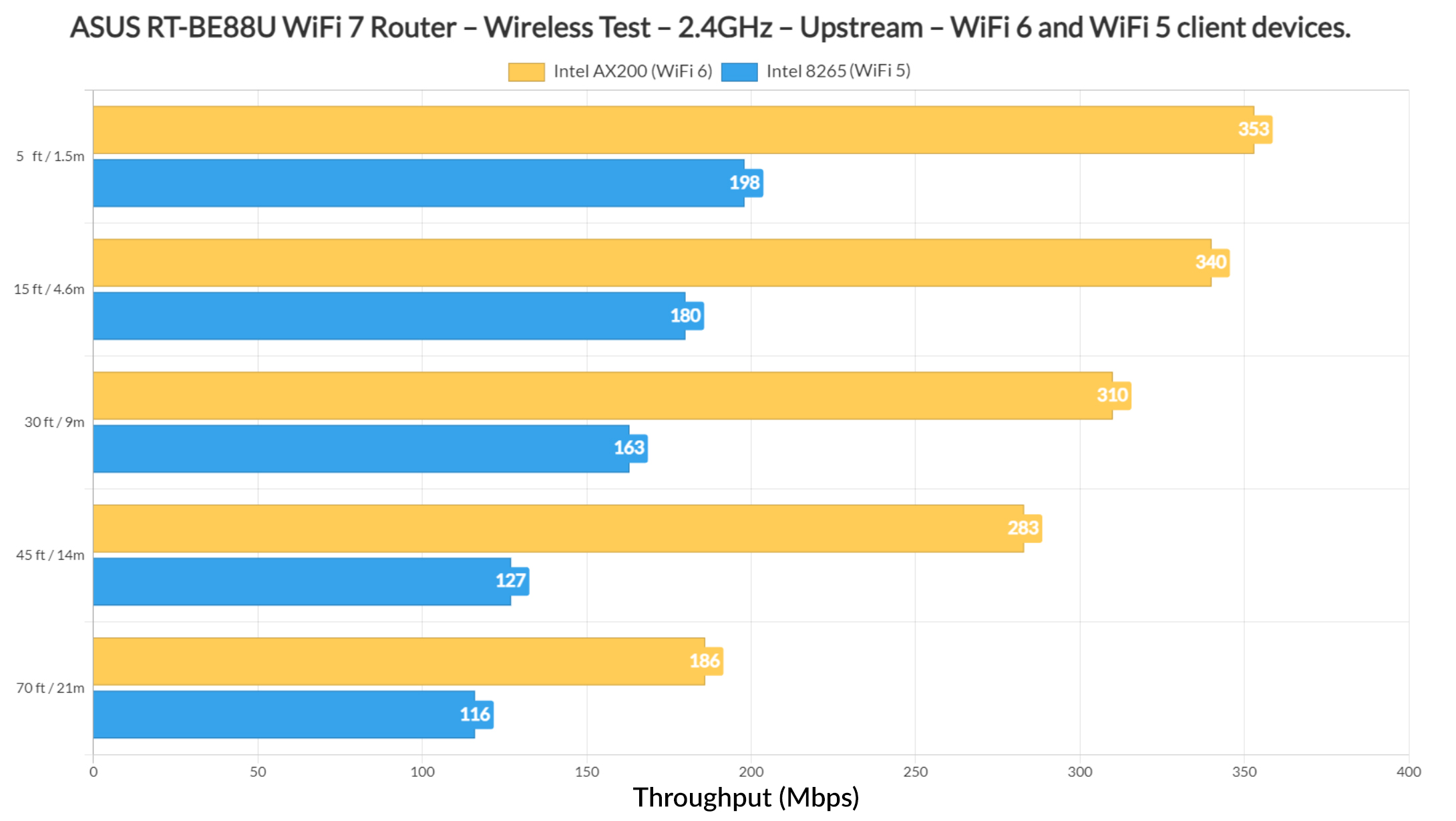
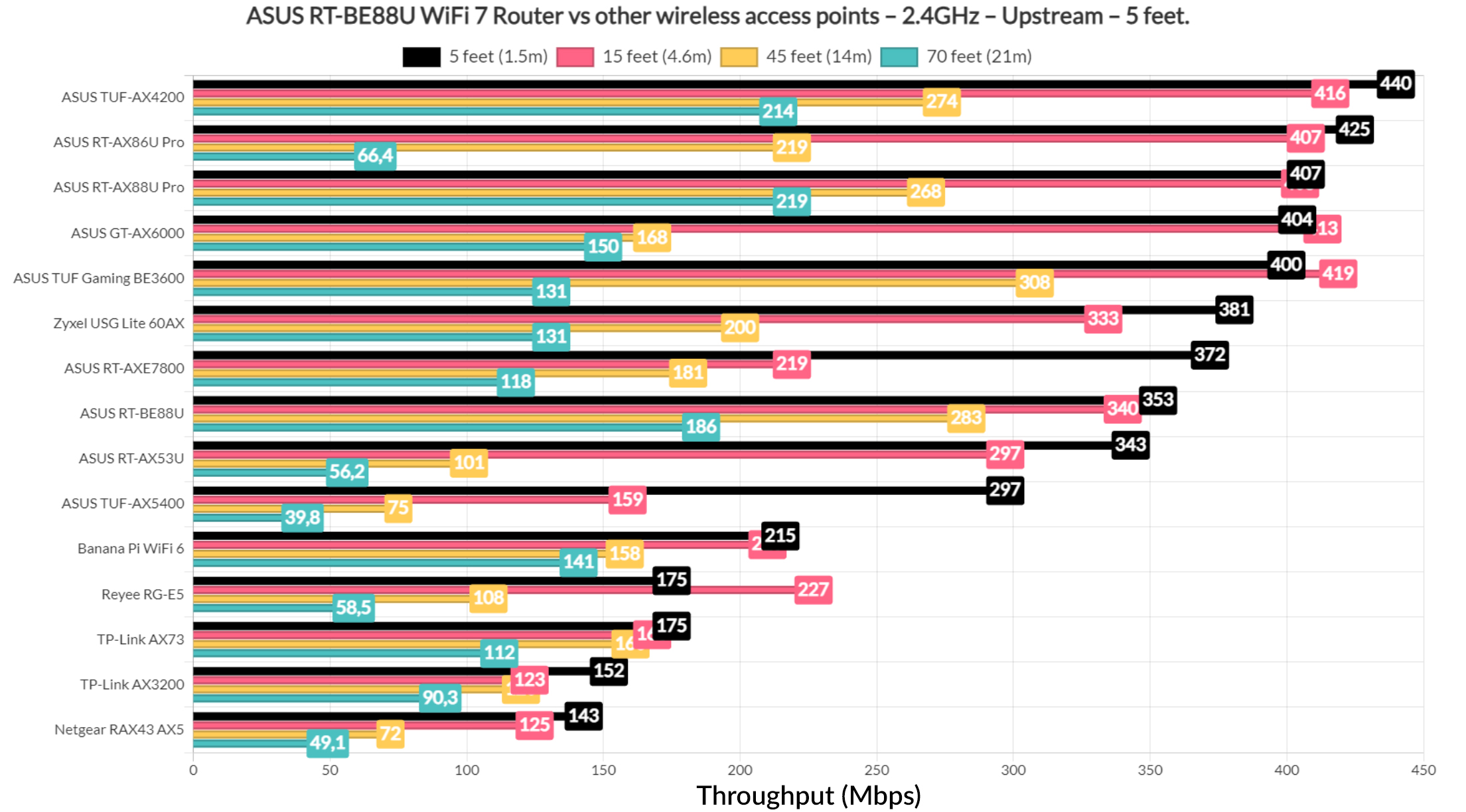
I imply, you’ll be able to see that different routers did significantly better right here.
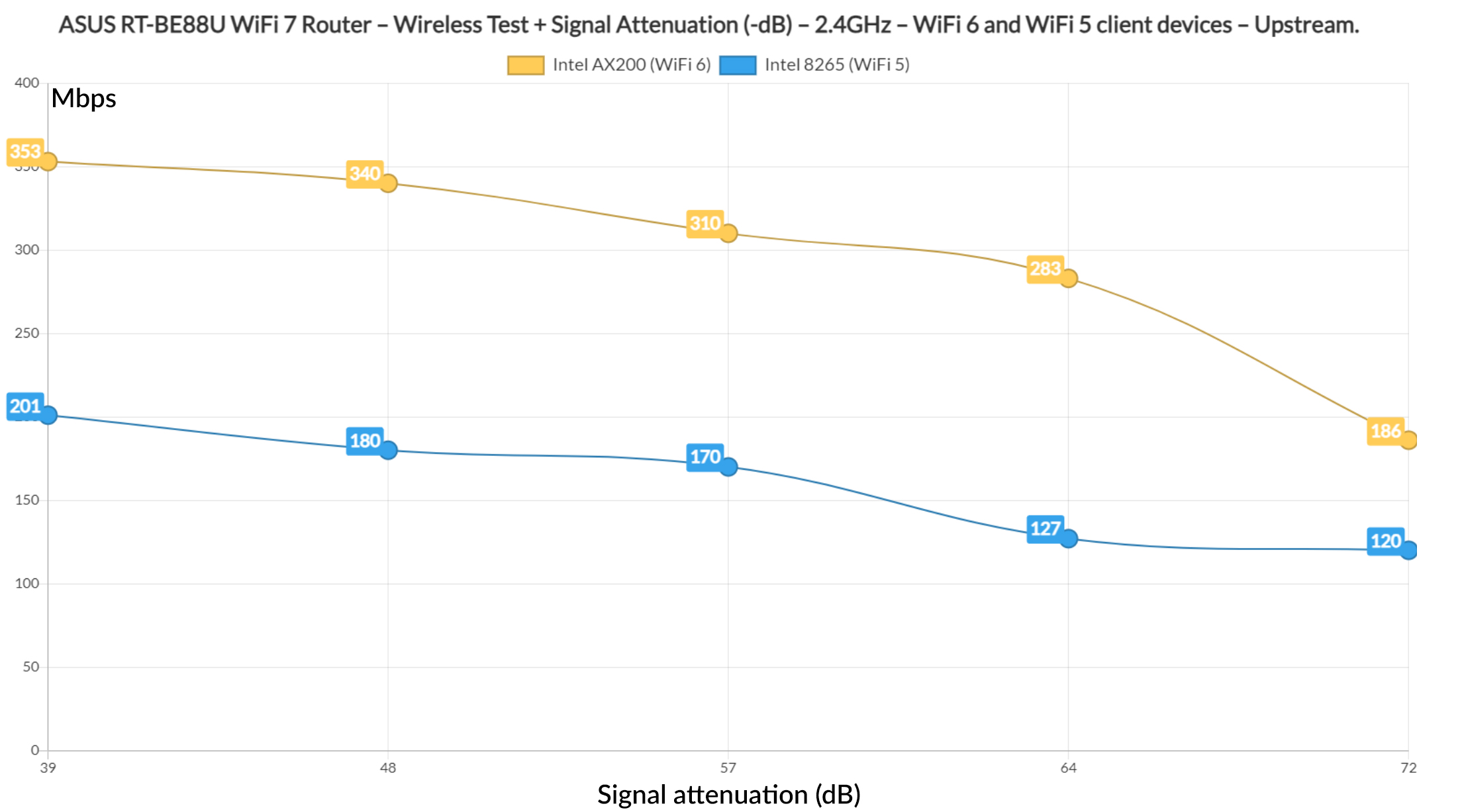
Then once more, it’s value mentioning the vary of the router and that even when the sign attenuation was greater than 70dB, we nonetheless get very a lot usable throughput for many purposes.
The Multi-Consumer Exams (5GHz)
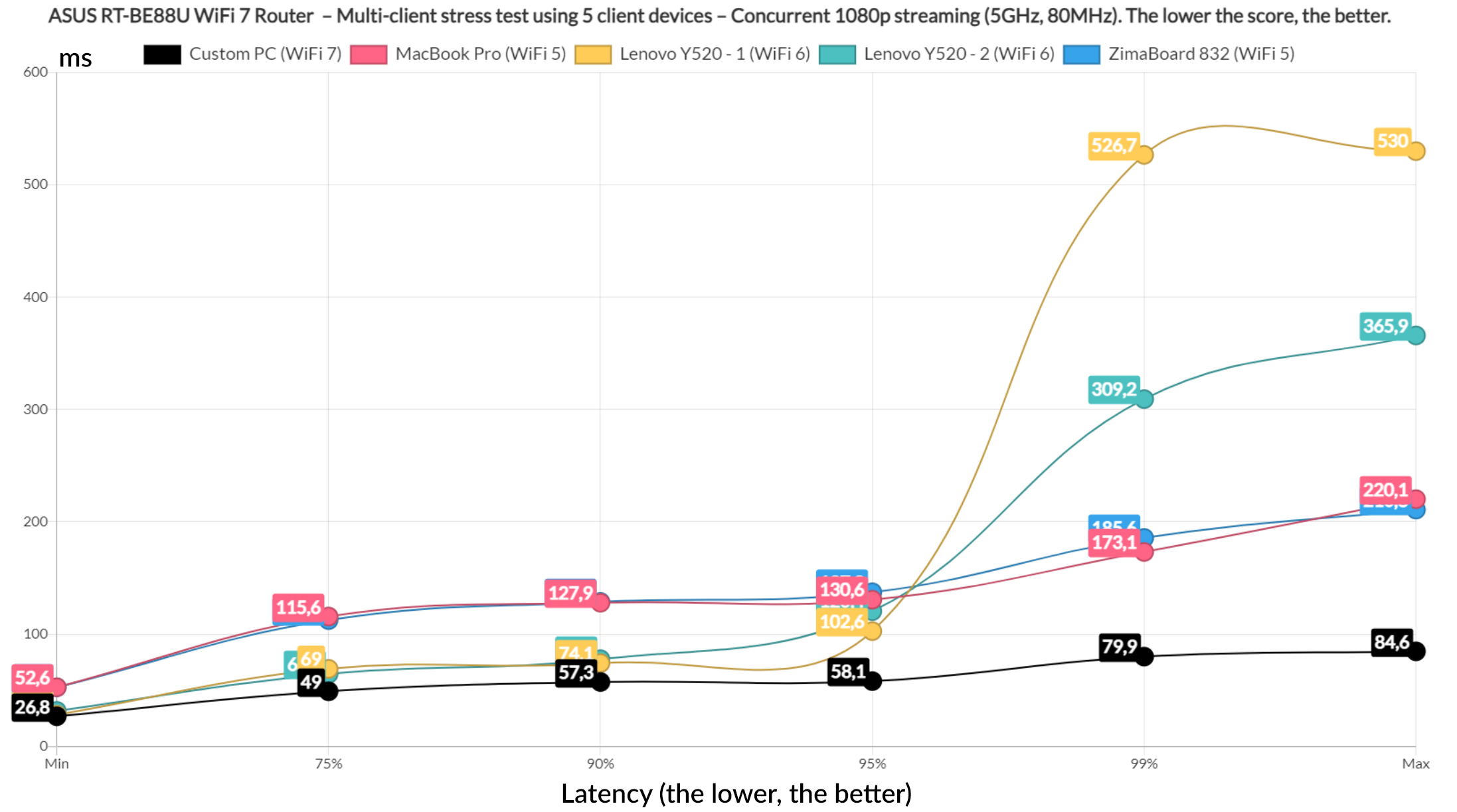
That’s about all for the only shopper checks for now, so let’s hearth up the net-hydra instrument and run the same old set of latency checks on the 5 shopper gadgets that I all the time use for this kind of checks. Beginning up with the simulated 1080p streaming, we are able to see that the 2 WiFi 5 shoppers didn’t carry out nicely, whereas the WiFi 7 and WiFi 6 gadgets did significantly better, considered one of them managing to remain beneath 60ms for 95% of the time.
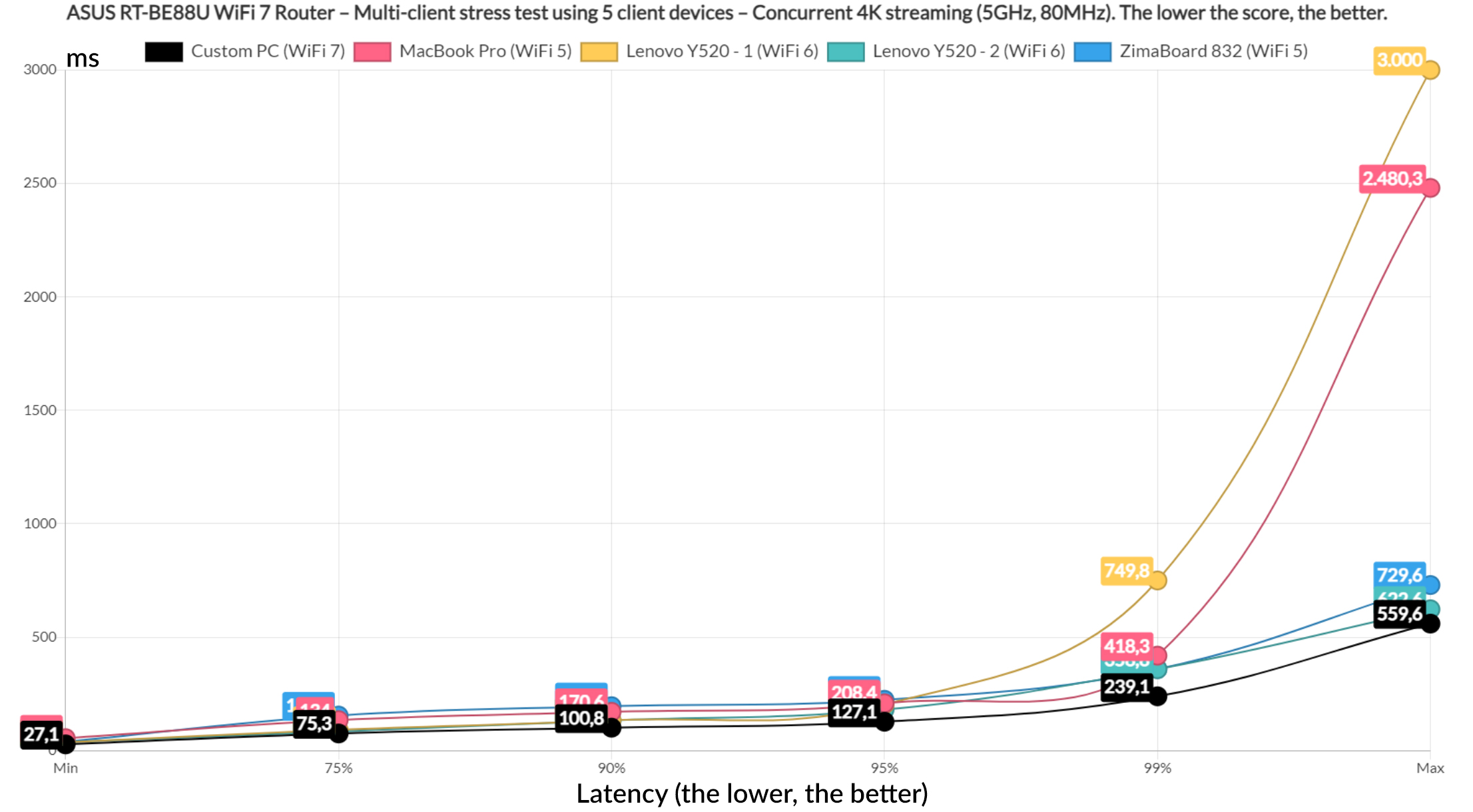
Operating the 4K streaming check, the three aforementioned shoppers did higher once more, however I may solely contemplate first rate latency what we see for 75% of the time. Something above 100ms isn’t good.
However, I didn’t cease right here and included intense shopping as nicely which I ran alongside the 1080p streaming site visitors. And we are able to see that one of many three shoppers did fail to remain beneath 100ms, whereas one WiFi 6 laptop computer and the WiFi 7 PC managed to remain beneath 100ms for not less than 95% of the time.
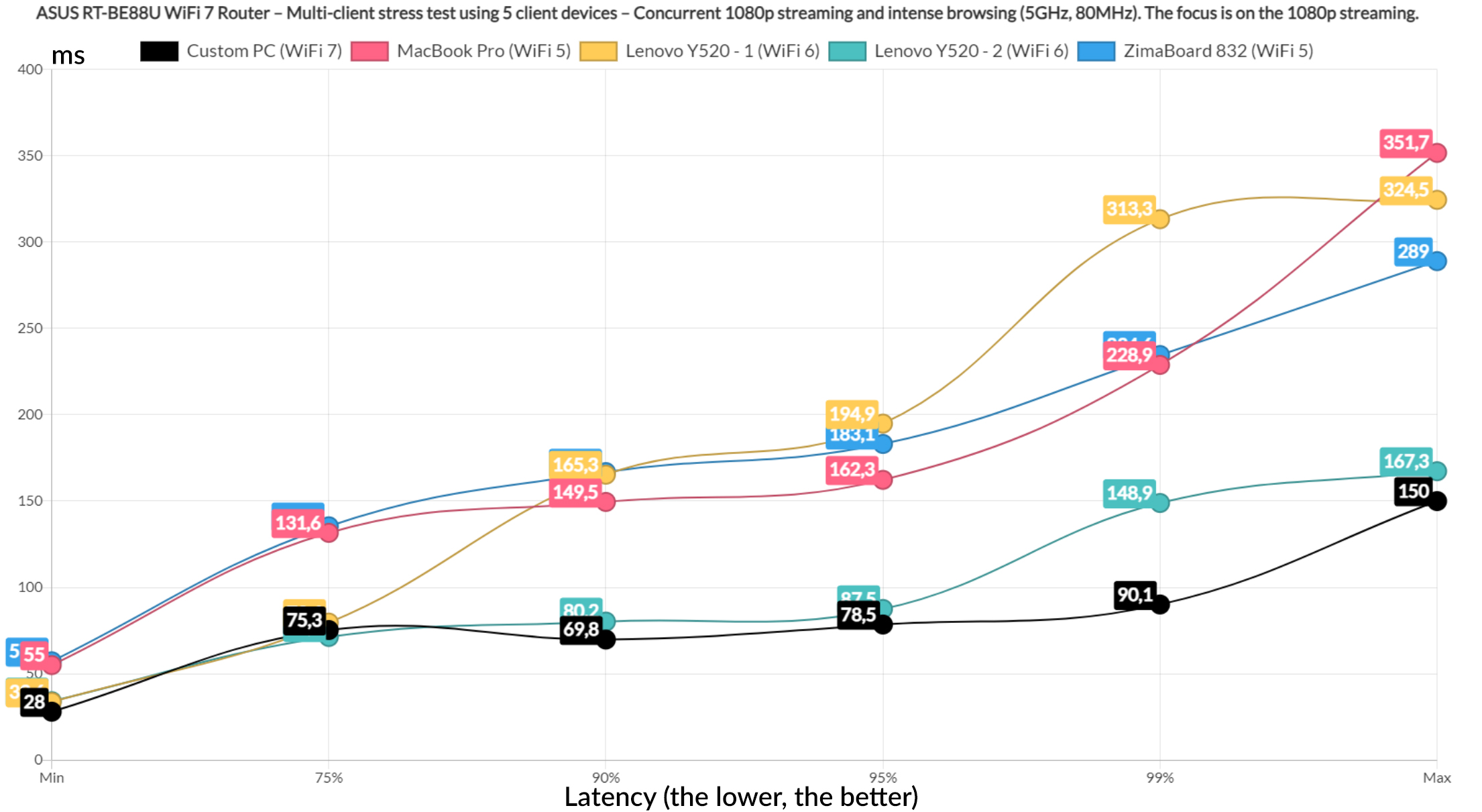
The remainder carried out a lot worse which signifies that it could be higher to depend on the Ethernet ports, and we do get loads. The extreme shopping graphic exhibits that the latency on all 5 shopper gadgets stays beneath 1.5 seconds on a regular basis, so all is okay right here.
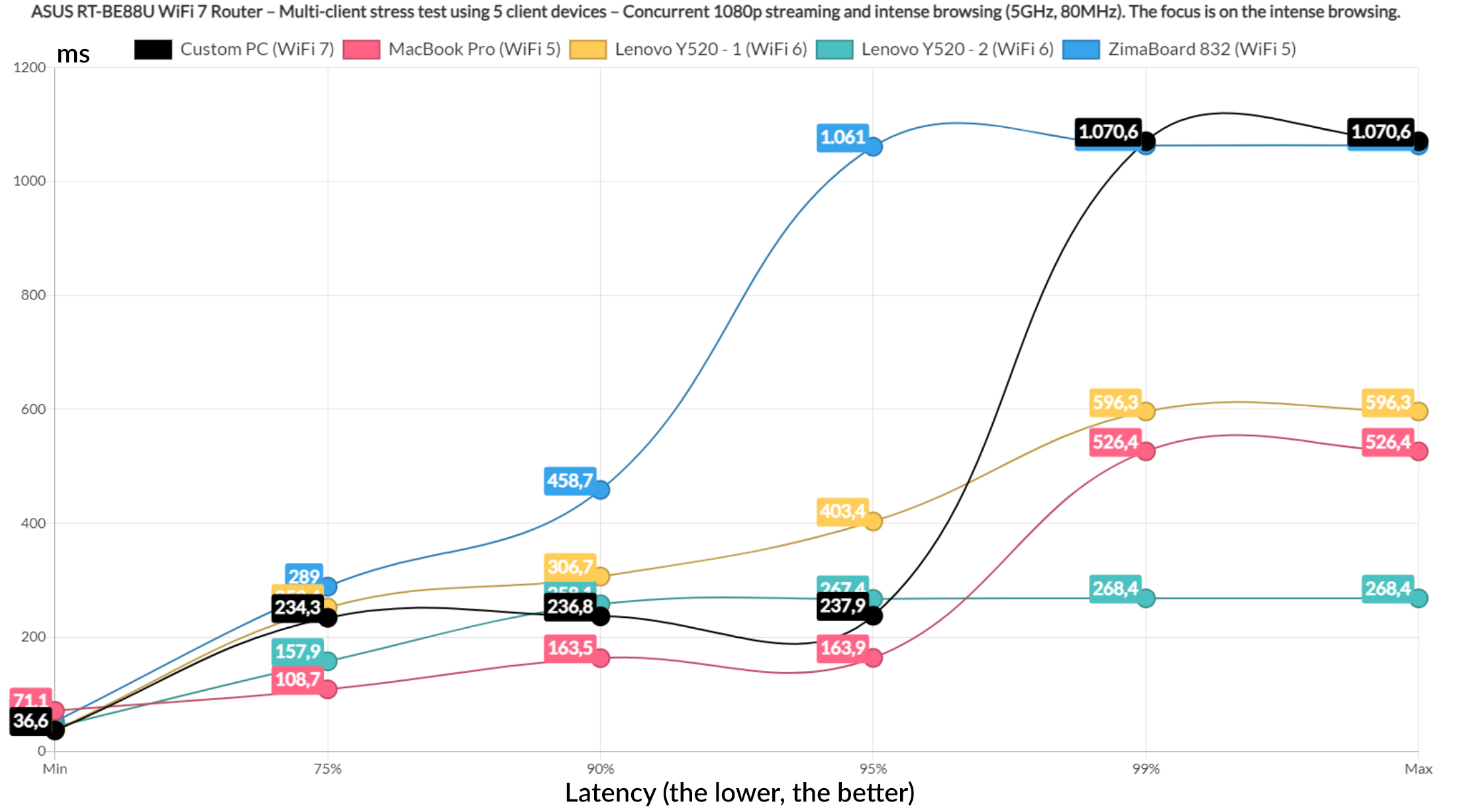
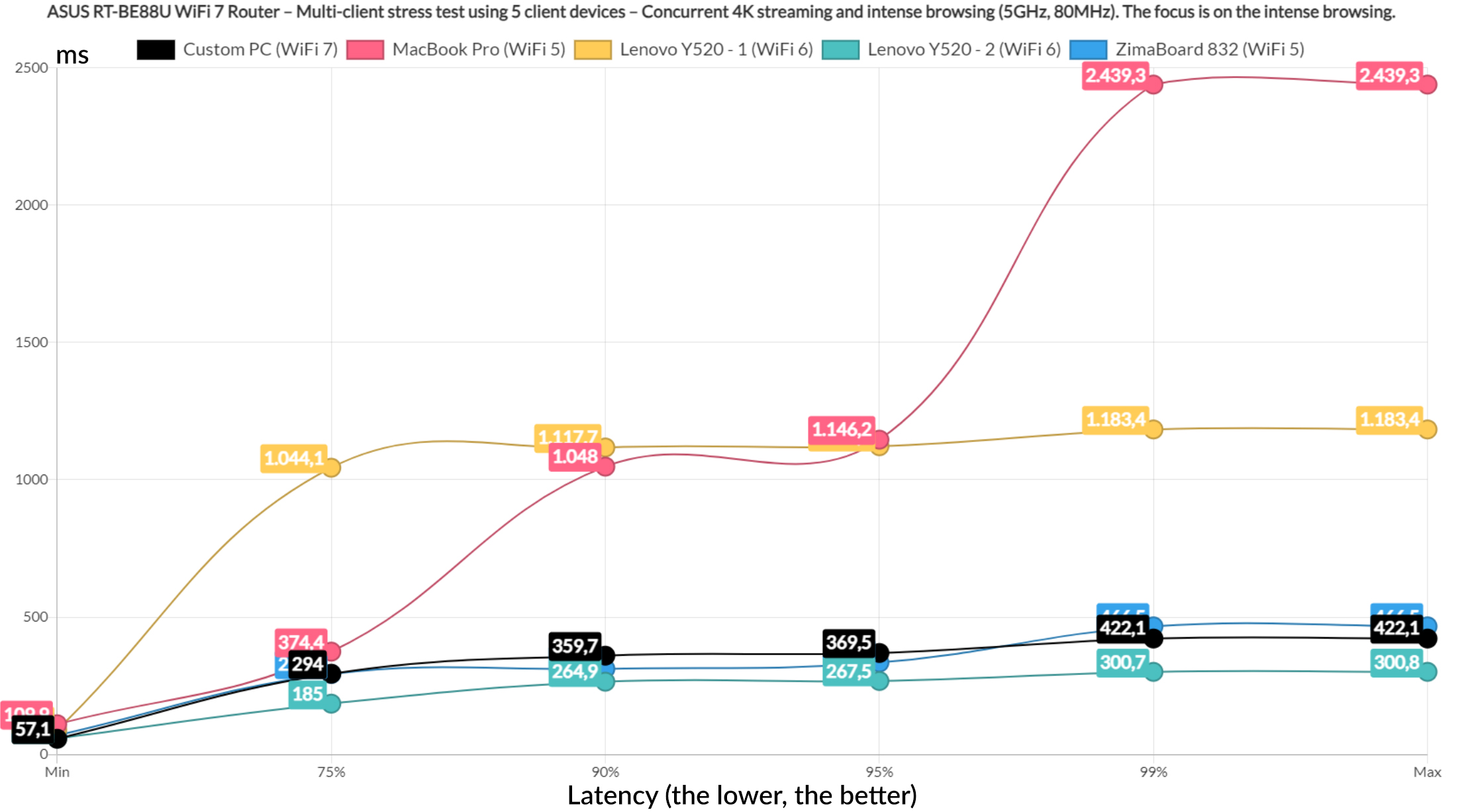
Now, let’s run the extraordinary shopping site visitors alongside the 4K streaming. And, it’s a slaughter. All shoppers instantly rose above 100ms, some even passing 1s for about 1% of the time. Don’t even take into consideration working one thing comparable.
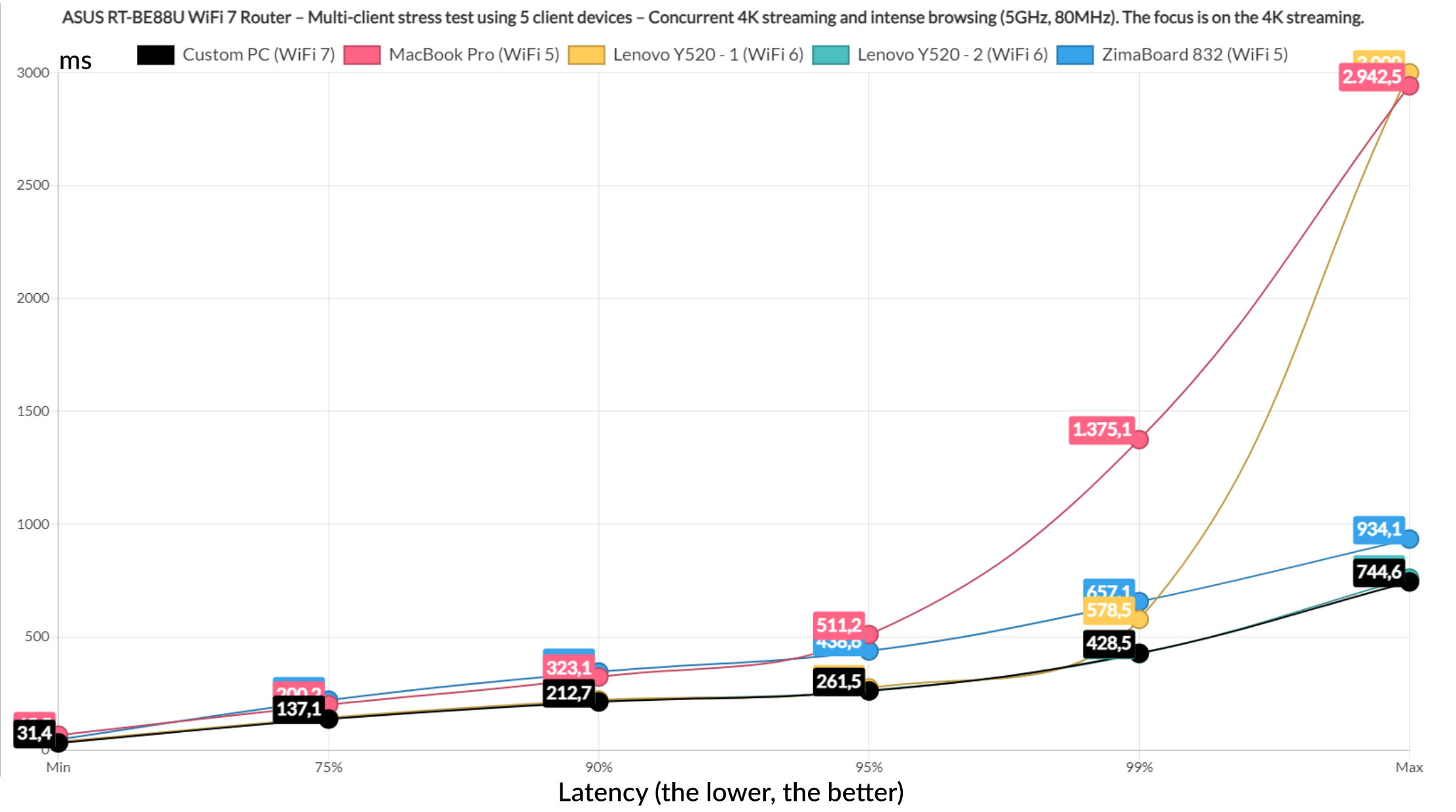
The extreme shopping graphic exhibits that one shopper went above 1.5s which isn’t good, however the remainder did stay beneath this restrict.
Transferring on, I modified issues a bit and included simulated downloading site visitors of a 10MB file on 2 shopper gadgets. Two dealt with the extraordinary shopping and one the 4K streaming.
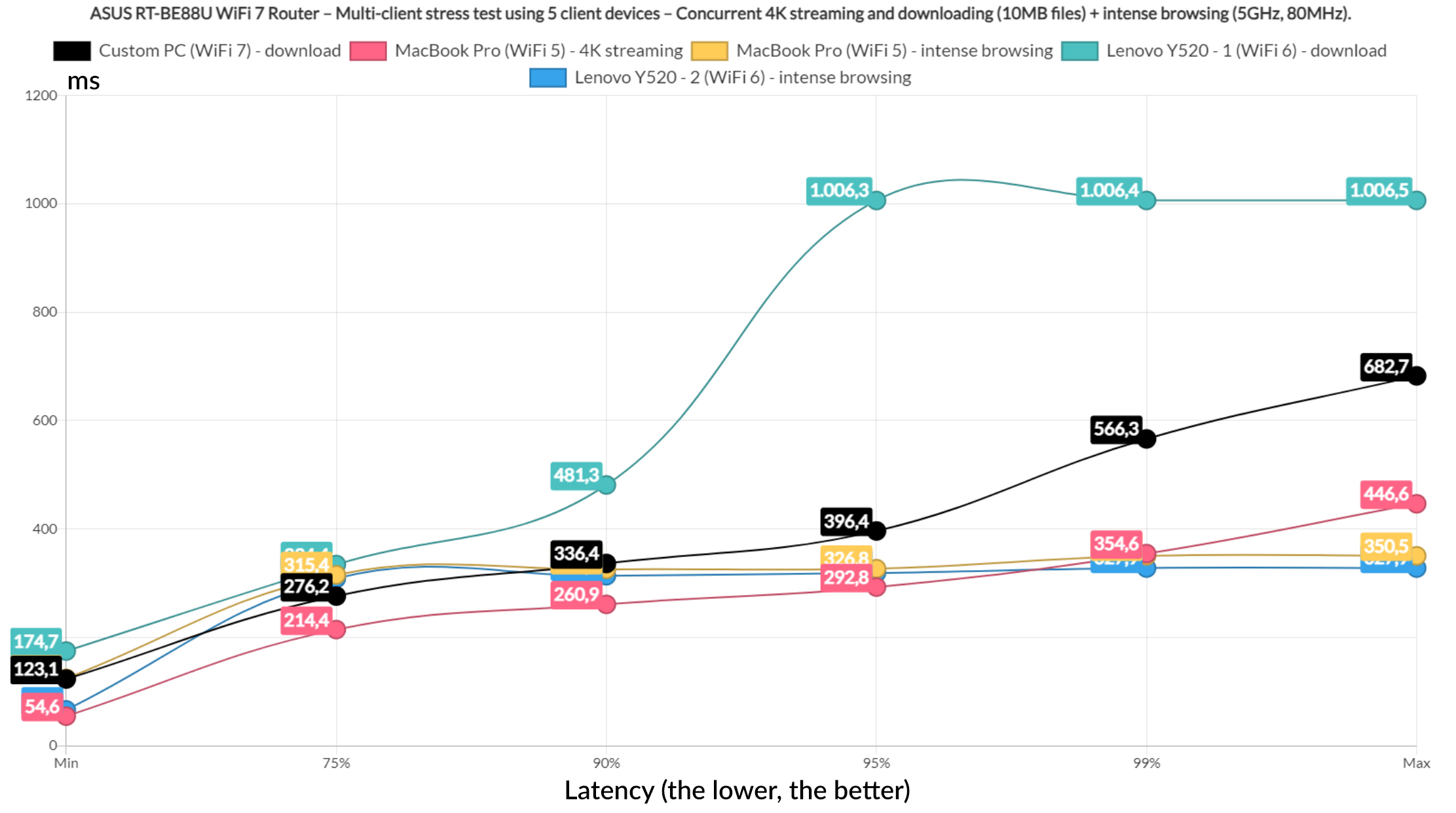
We will see that the WiFi 7 shopper was comparatively contained, moreso than the WiFi 6 downloading shopper that handed 1s for not less than 5% of the time. The 4K streaming exhibits latency values above 200ms which is way from first rate, however the two intense shopping shoppers did pretty OK.
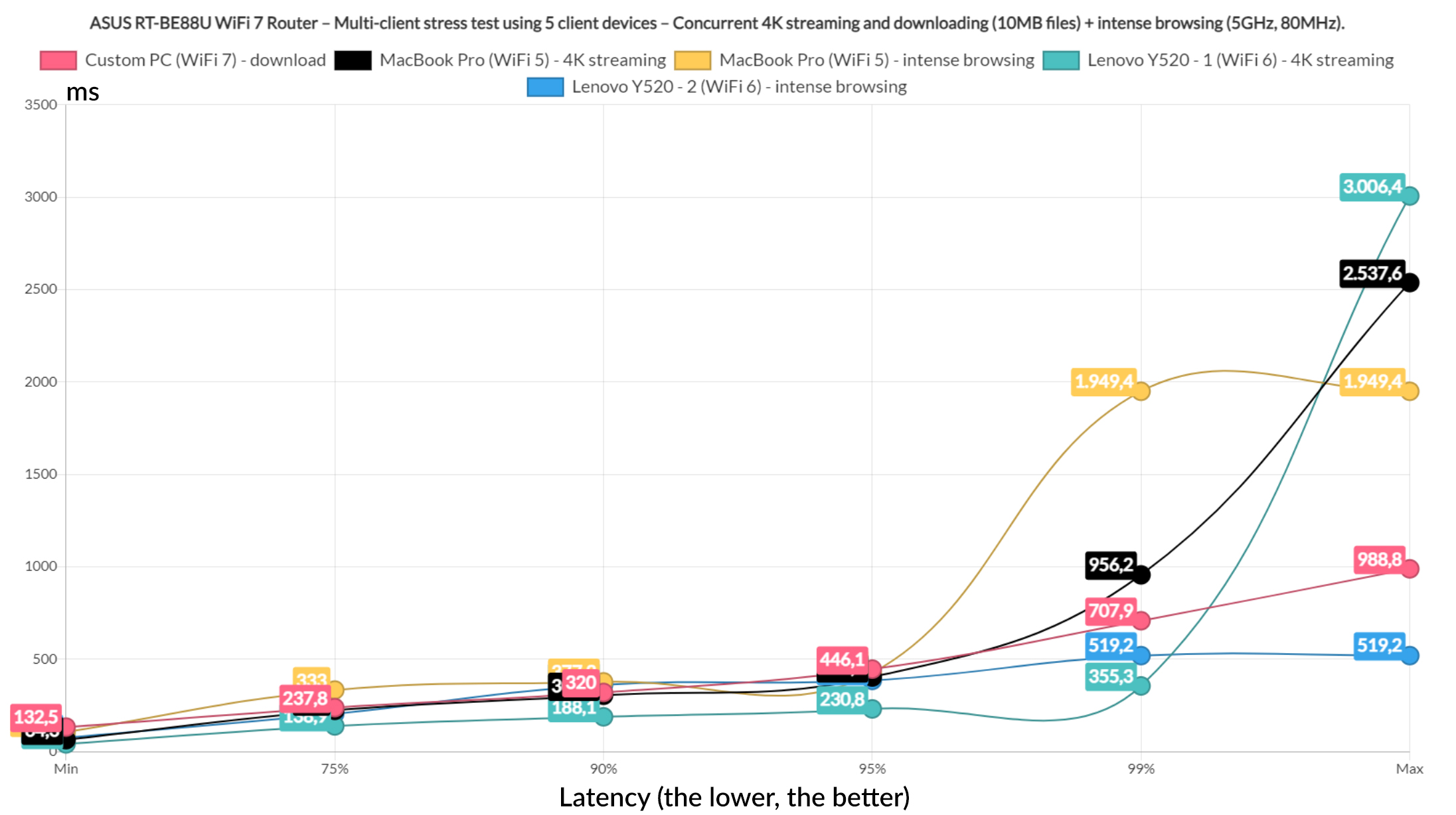
Let’s restrict the load a bit by working the obtain site visitors on a single shopper and, whereas issues received higher by way of latency for the downloading shopper, I doubt anybody can be pleased with a 200ms+ latency. The 2 4K streaming shoppers didn’t provide first rate latency values, however the two intense shopping did, as was anticipated.
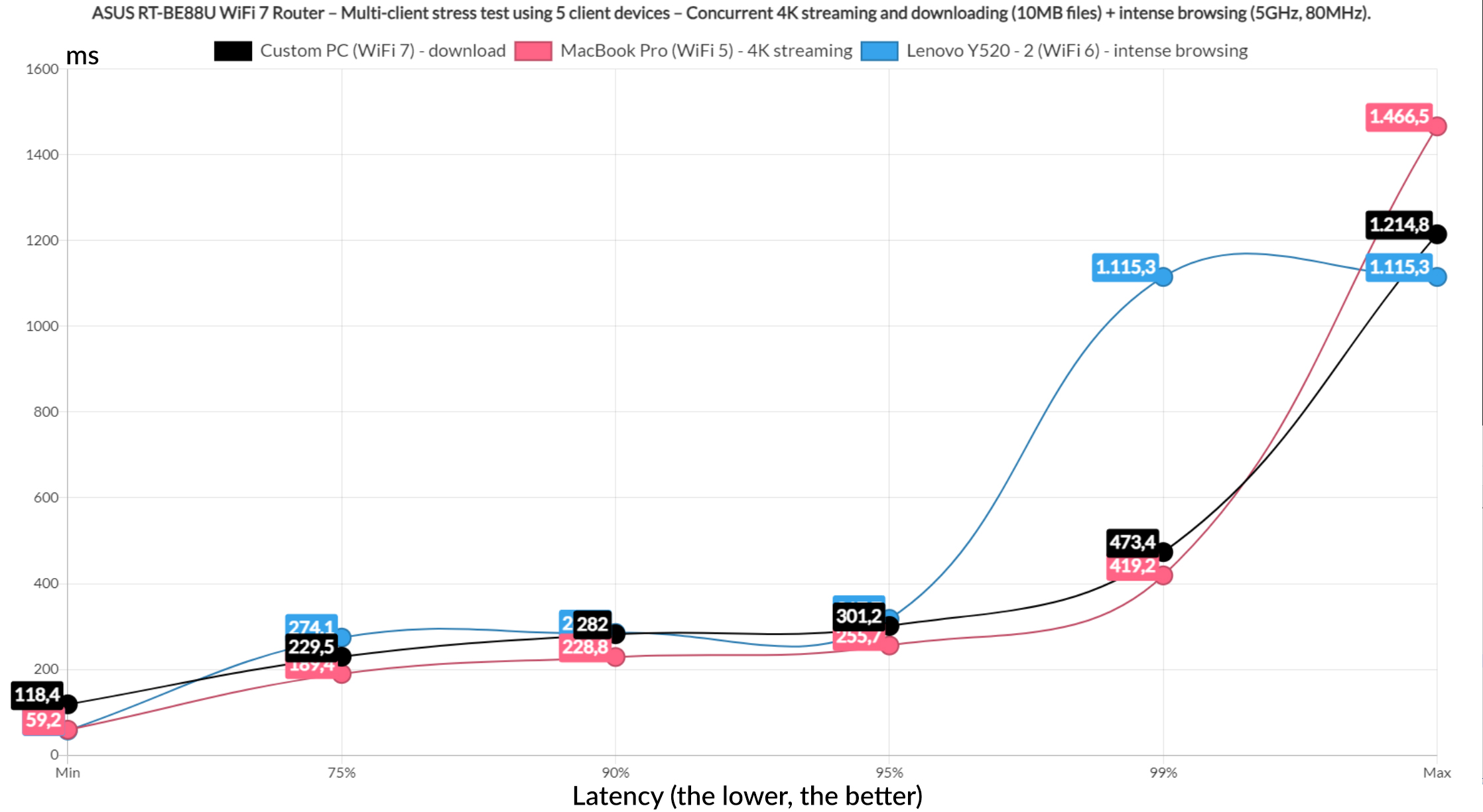
Let’s go a bit lighter and run the downloading site visitors alongside only a 4K streaming shopper and one which’s working intense shopping. The obtain latency didn’t get significantly better and the one shopper with acceptable values stays the extraordinary shopping gadget.
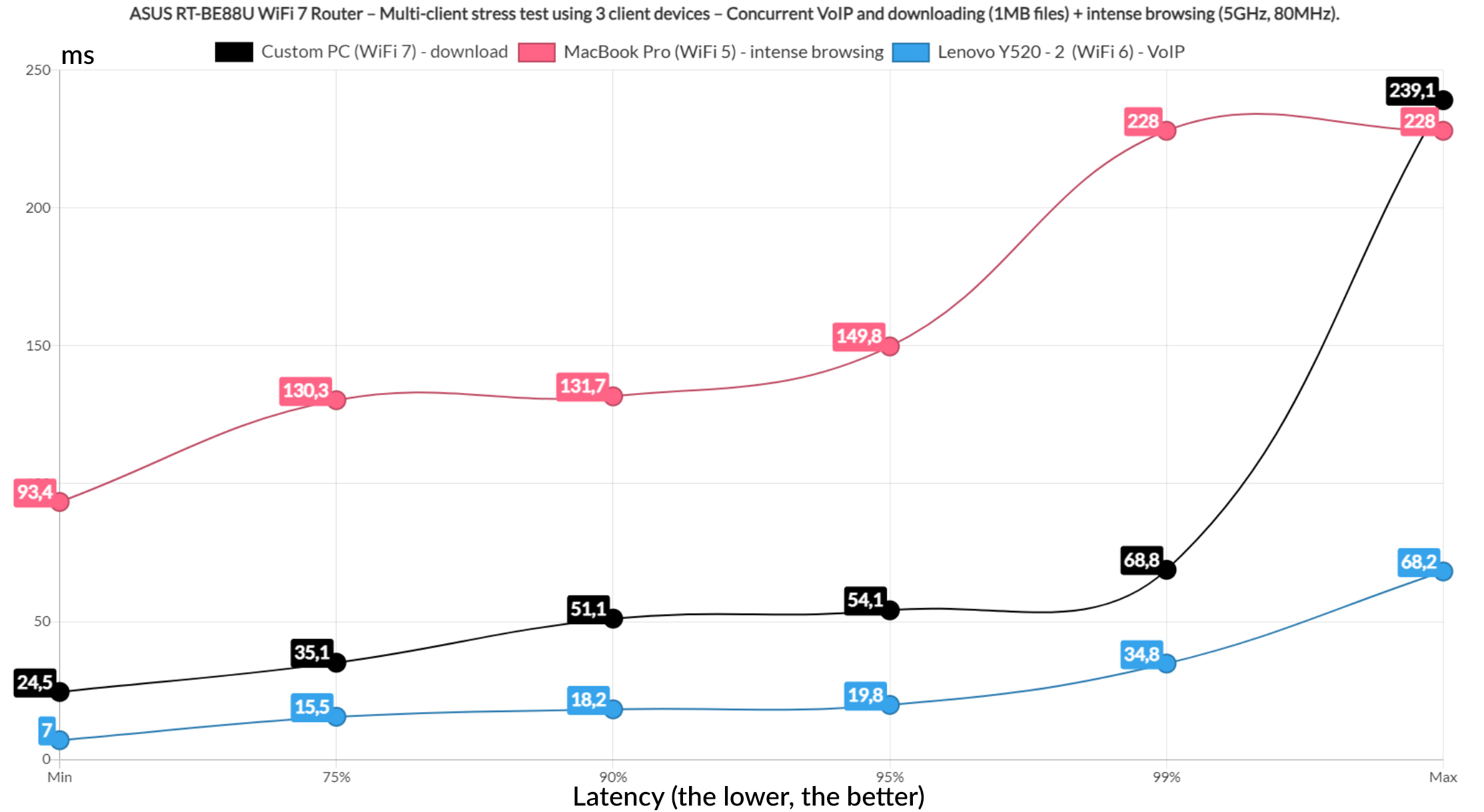
So, I made a decision to obtain a 1MB file repeatedly, whereas working intense shopping and VoIP on different two shopper gadgets. And, as anticipated, that is the purpose the place we lastly see first rate latency values throughout the board.
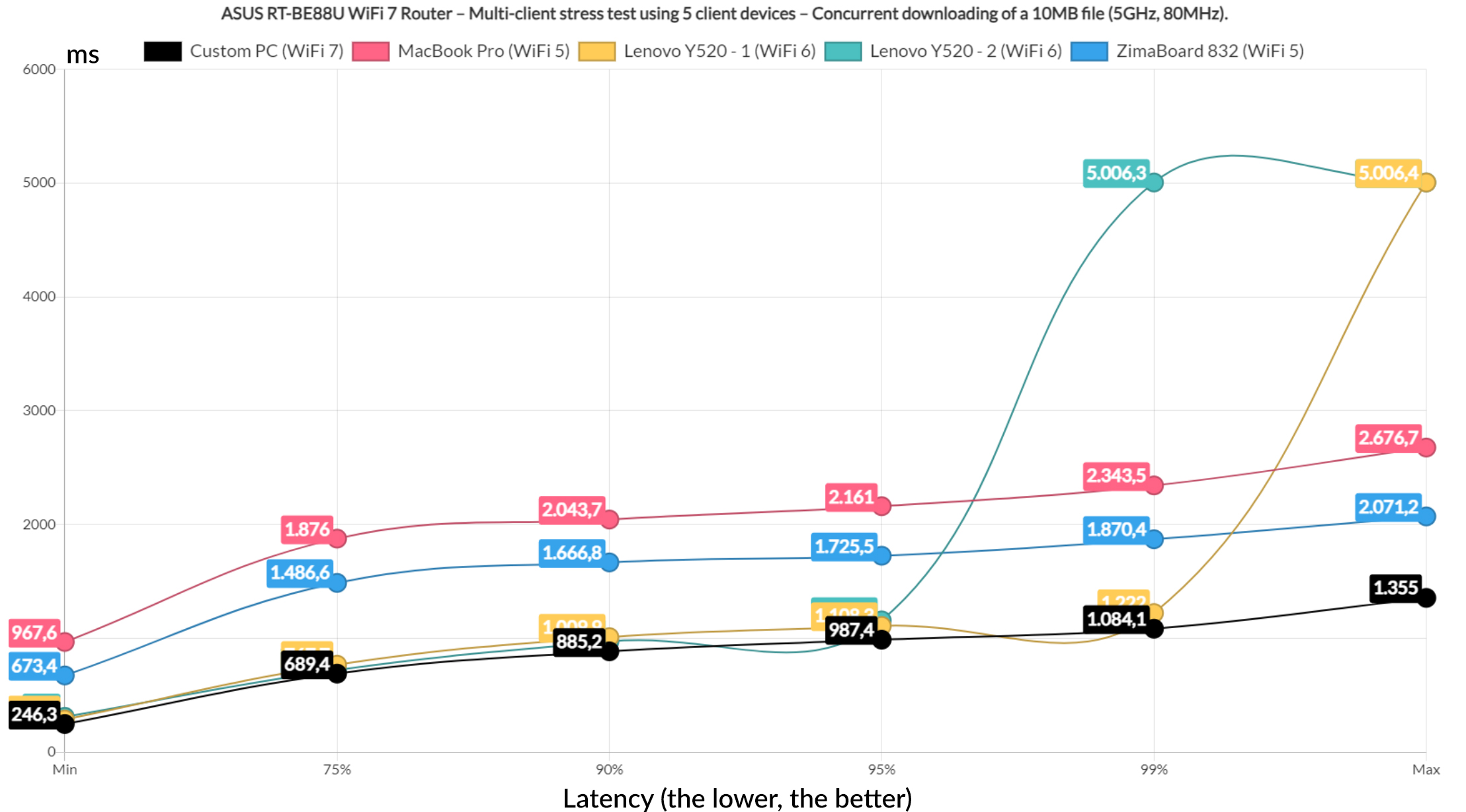
Lastly, I made a decision to run the 10MB downloading site visitors on all 5 shopper gadgets and that is the end result. I truthfully anticipated worse.
MLO Latency Discuss
Earlier than shifting ahead, I additionally wished to point out you the values that I collected working Flent to test for bufferbloat. And I initially ran it on the 5GHz radio solely to get a base latency. And, whereas utilizing the 80MHz channel bandwidth, we do see an preliminary rise, however then the typical latency does relax, though above 100ms however.
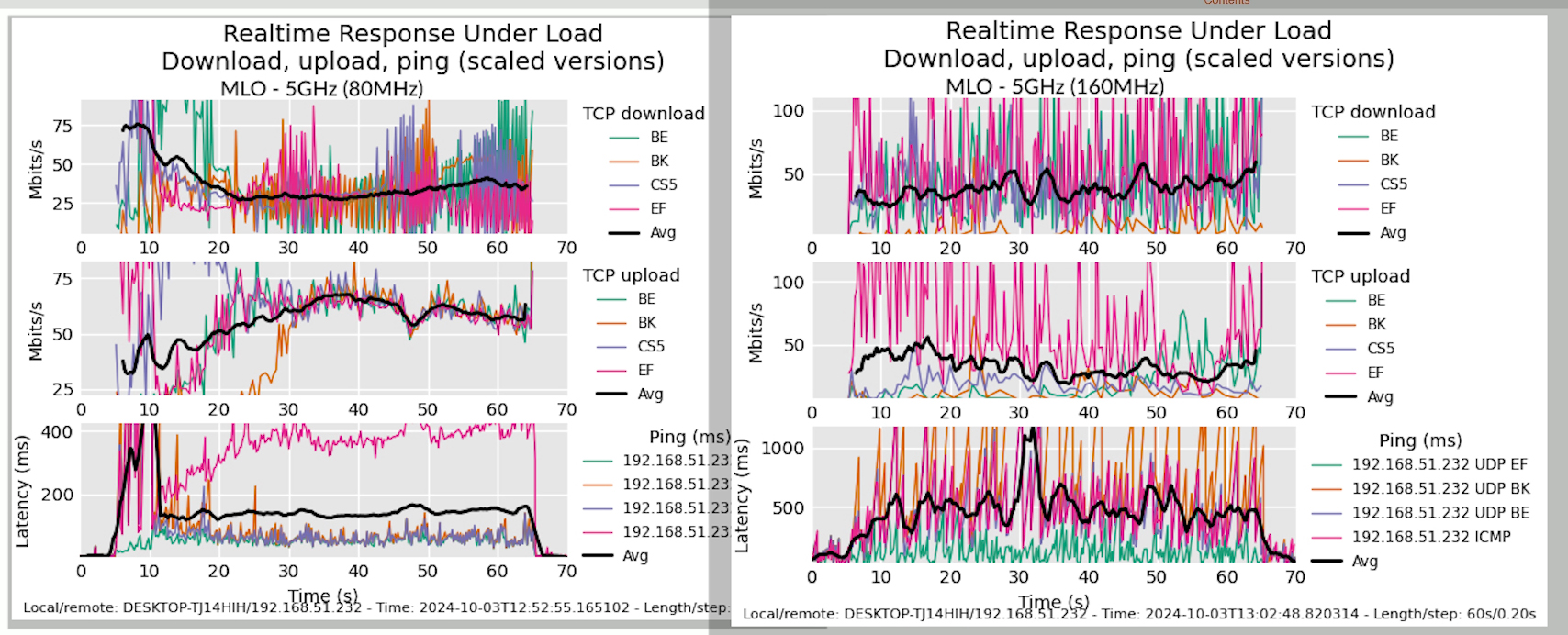
Transferring on to the 160MHz channel bandwidth, we see some loopy numbers, the typical shifting above and beneath 500ms. This was on channel 60, so I moved to 44. Issues get a tiny bit higher, however not by a lot, actually.
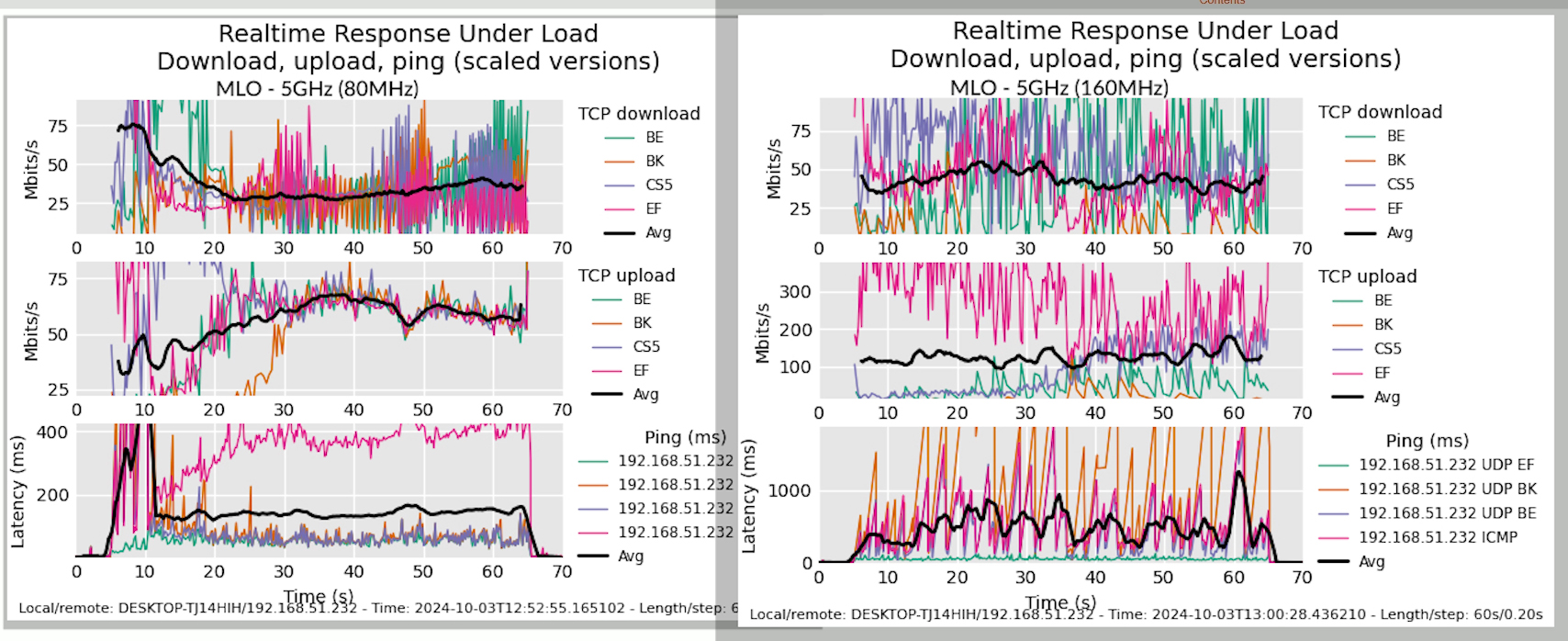
This sort of confirms the problems I had beforehand with the multi-client latency values. The ASUS RT-BE88U isn’t that nice on this regard. In any case, I additionally ran Flent after I arrange the MLO.
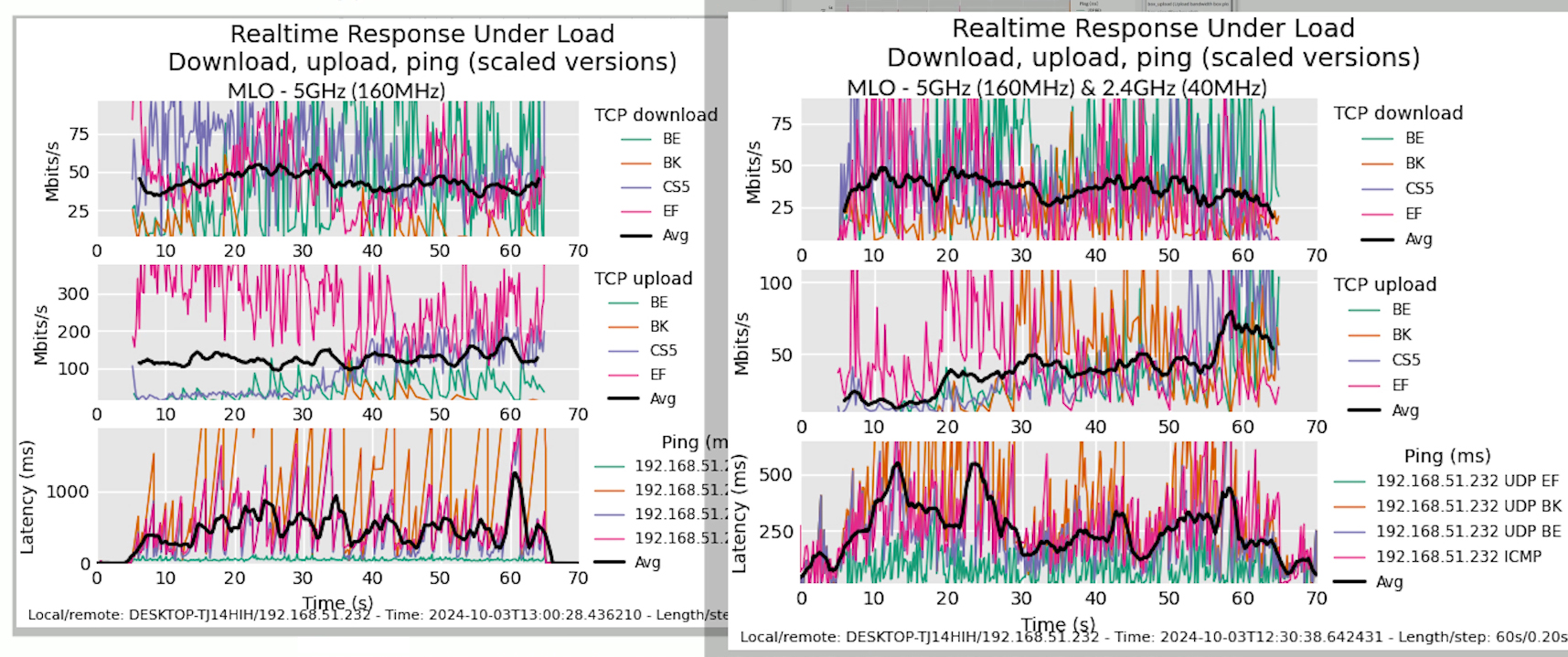
Utilizing the 160MHz channel bandwidth and the 40MHz width with the two.4GHz radio, we see higher common latency values. Nonetheless a lot of fluctuations although and a far cry from the values I received once I examined the Ubiquiti U7 Pro and the Zyxel NWA130BE MLO performance.
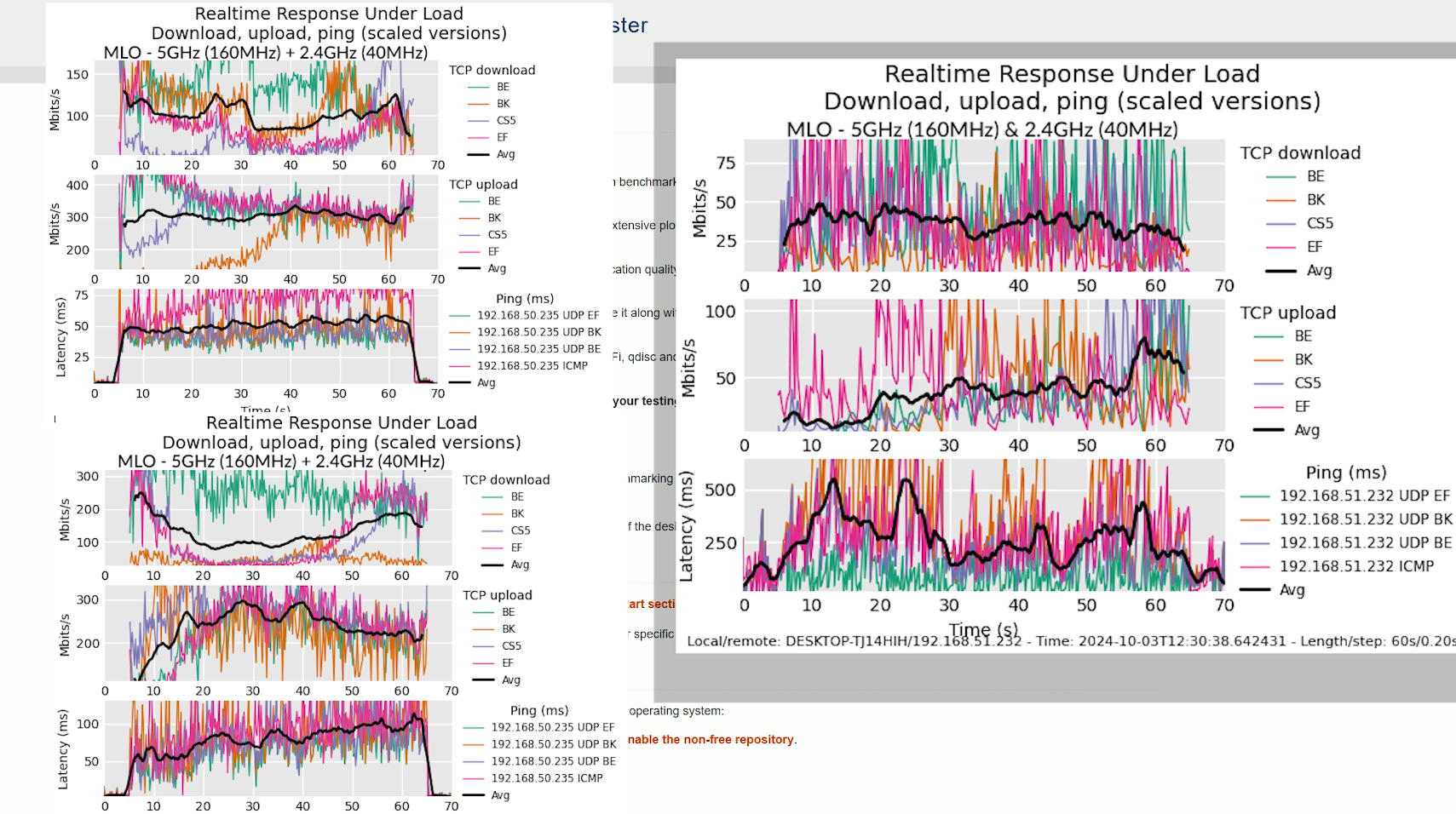
That’s a significantly better implementation of MLO and we additionally get the 6GHz radio band. Utilizing the 80MHz channel bandwidth on the 5GHz radio and the identical 40MHz for the two.4GHz radio band, we additionally see an enchancment by way of common latency. However once more, these are very excessive values and many fluctuations which is an indication of instability.
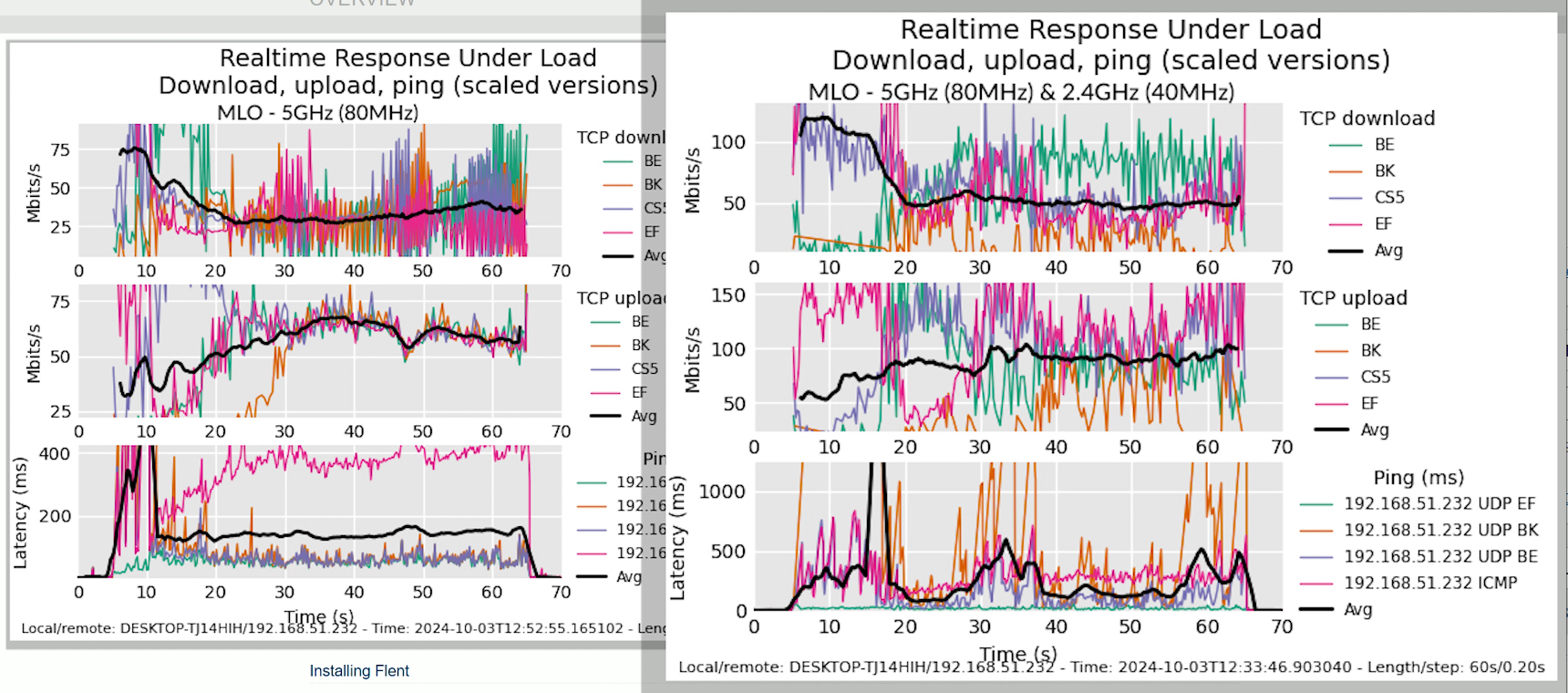
Hopefully, some future updates will make issues extra steady.
Twin WAN Efficiency
Now let’s transfer ahead and put all these Ethernet ports to good use. First, I’m going to take a look at the dual-WAN efficiency and to allow this function, go to WAN, select Twin WAN and easily allow it. Then, you’ll be able to select the Main WAN and the Secondary WAN, and you’ll choose any of the out there ports, together with the SFP+ and the 1GbE ports.
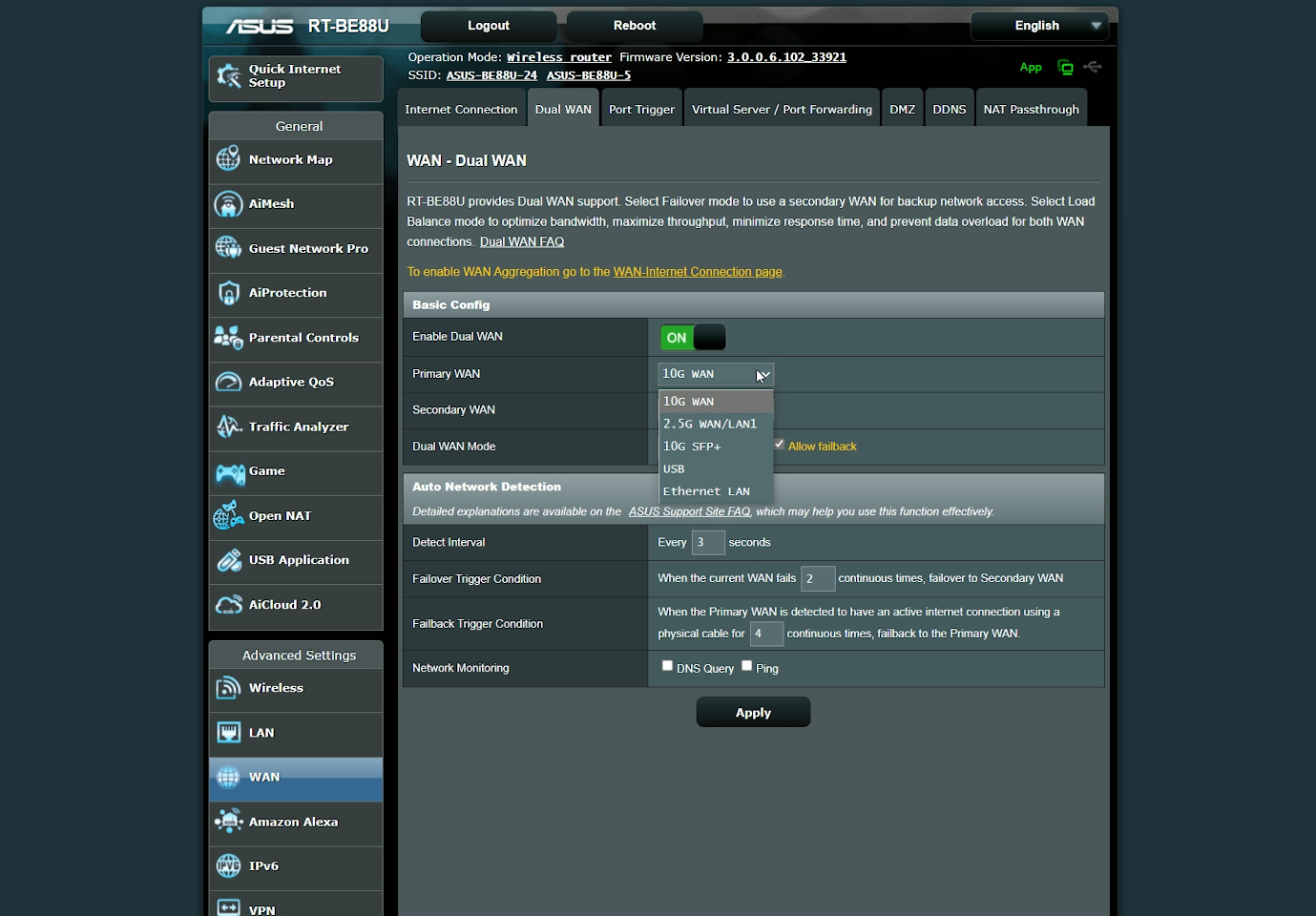
There’s additionally help for USB dongles. The supported modes are Failover and Load Steadiness. I selected the previous and after connecting the cables, I pinged two domains on the similar time. Then, I disconnected the primary hyperlink. It took a few tries to modify to the secondary connection which is best than what I noticed on the TUF BE3600.
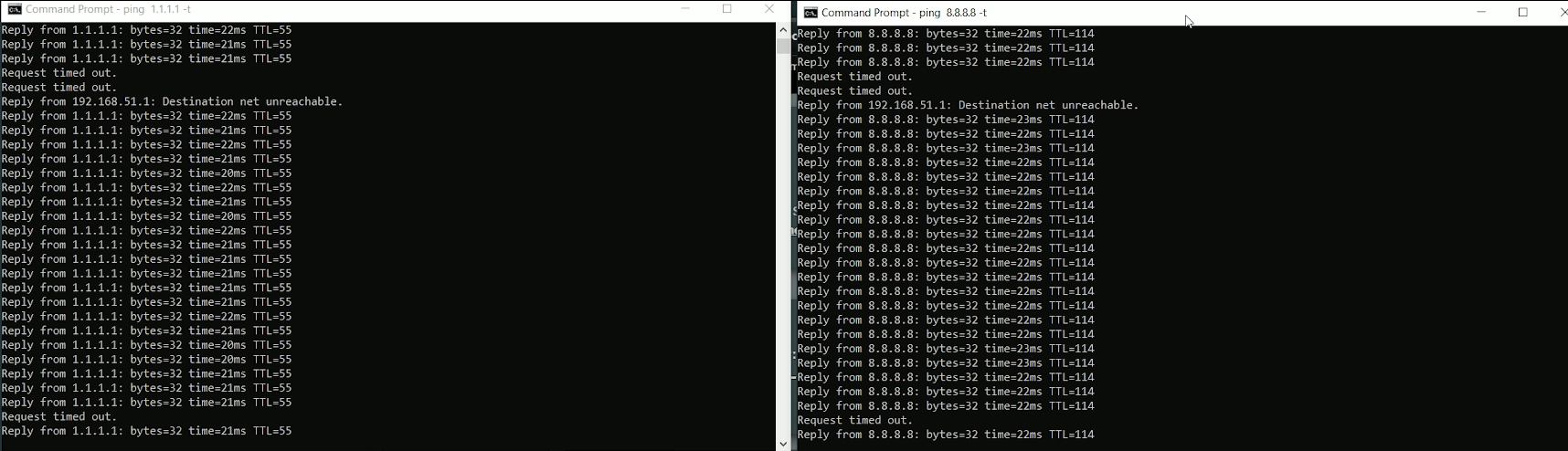
I reconnected the primary line, waited a couple of seconds and disconnected the secondary cable. It in a short time moved to the primary line, so it really works as supposed.
LACP Hyperlink Aggregation
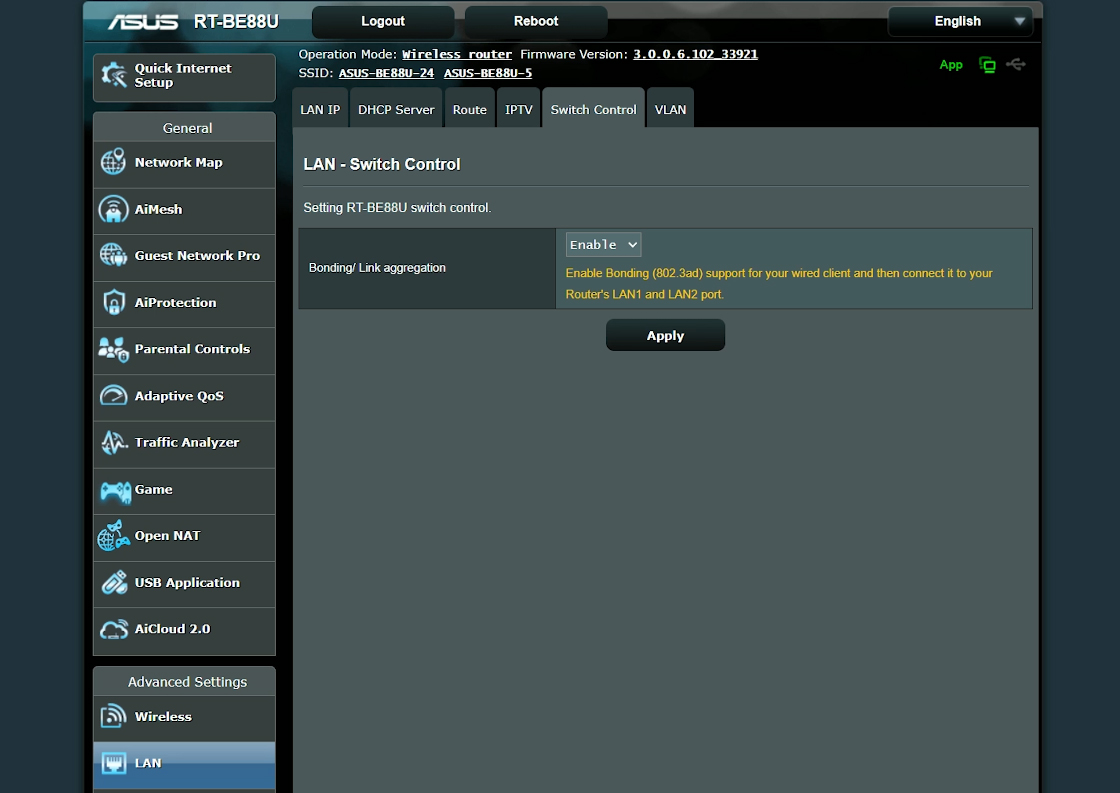
The following utility is the LACP aggregation which appears to be lacking from another fashions, however the 88U line is normally higher geared up. So, to allow it, head over to the LAN part, choose Change Management and allow the Bonding/Hyperlink Aggregation. Wait a couple of seconds and now you can use the LAN1 and LAN2 to attach a NAS.
I relied on a ZimaBlade SBC that was flashed with TrueNAS and I had some bother getting every little thing to work. I assumed that the NAS was flimsy, however I used to be mistaken. After troubleshooting for a few hours and settings up the NAS from the grounds-up, I noticed that it was the ASUS router.
Regardless that it mentioned that the LAN1 and LAN 2 have been aggregated, they weren’t. And I wanted about three reboots and full interface reconfiguration to verify it. We will see within the TrueNAS graphical interface that we rise up to 5Gbps bandwidth out there, so the aggregation certainly occurred.
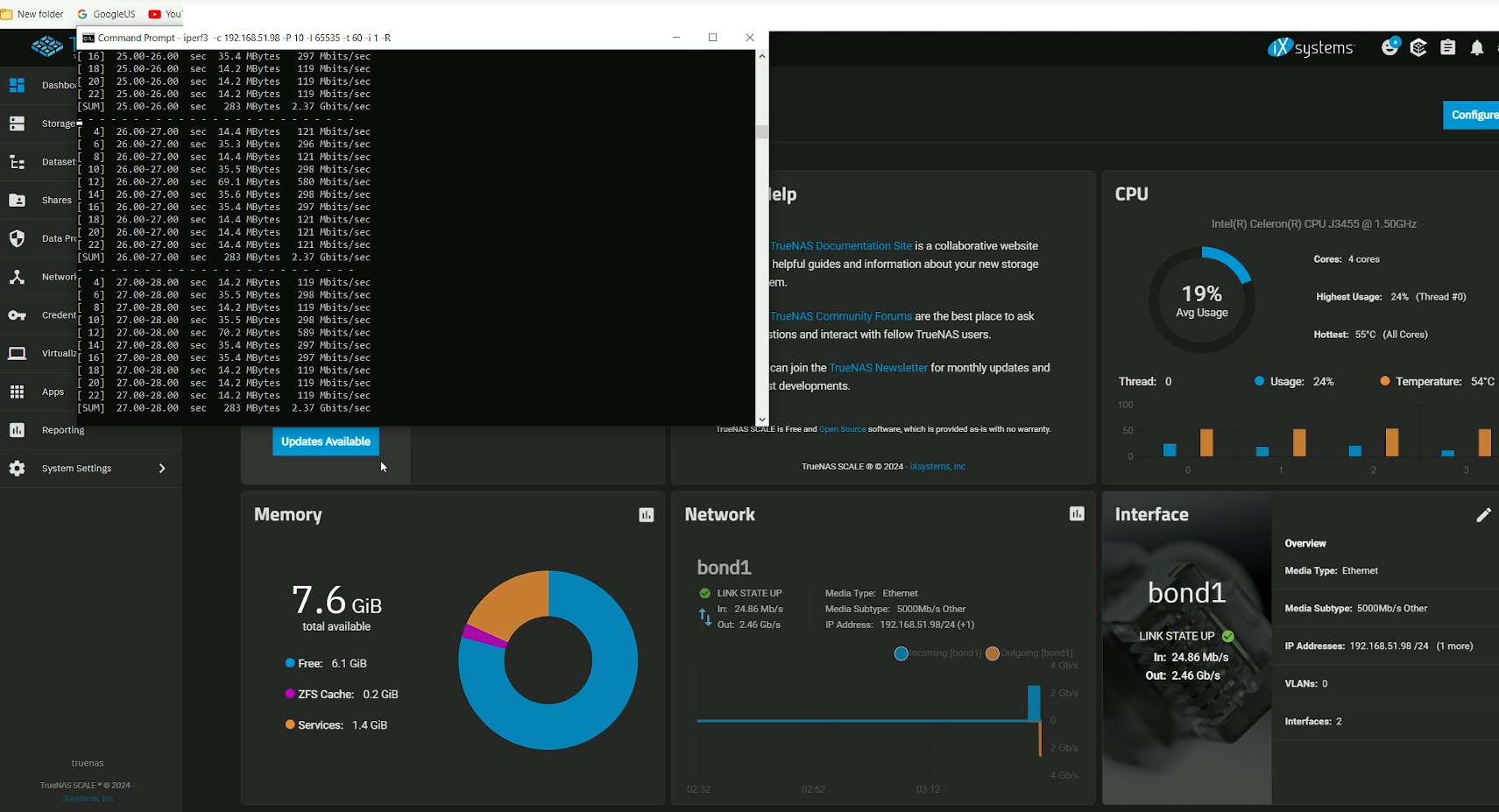
However what concerning the pace? I made a decision to run an iperf occasion and, as you’ll be able to see, upstream, we are able to see that it reaches as much as 2.5Gbps. Identical as downstream. I additionally want to say the router’s means to mixture two WAN hyperlinks, however sadly, I don’t have a suitable modem to check it out. I can also’t actually max the switching capability of the router with my present gear, so I’ll depart it to a future re-test.
The Energy Consumption
Earlier than shifting to the software program, let’s see the ability consumption of the router. I used the identical app related to the EVVR good relay and you’ll see the values whereas the router is in regular use.
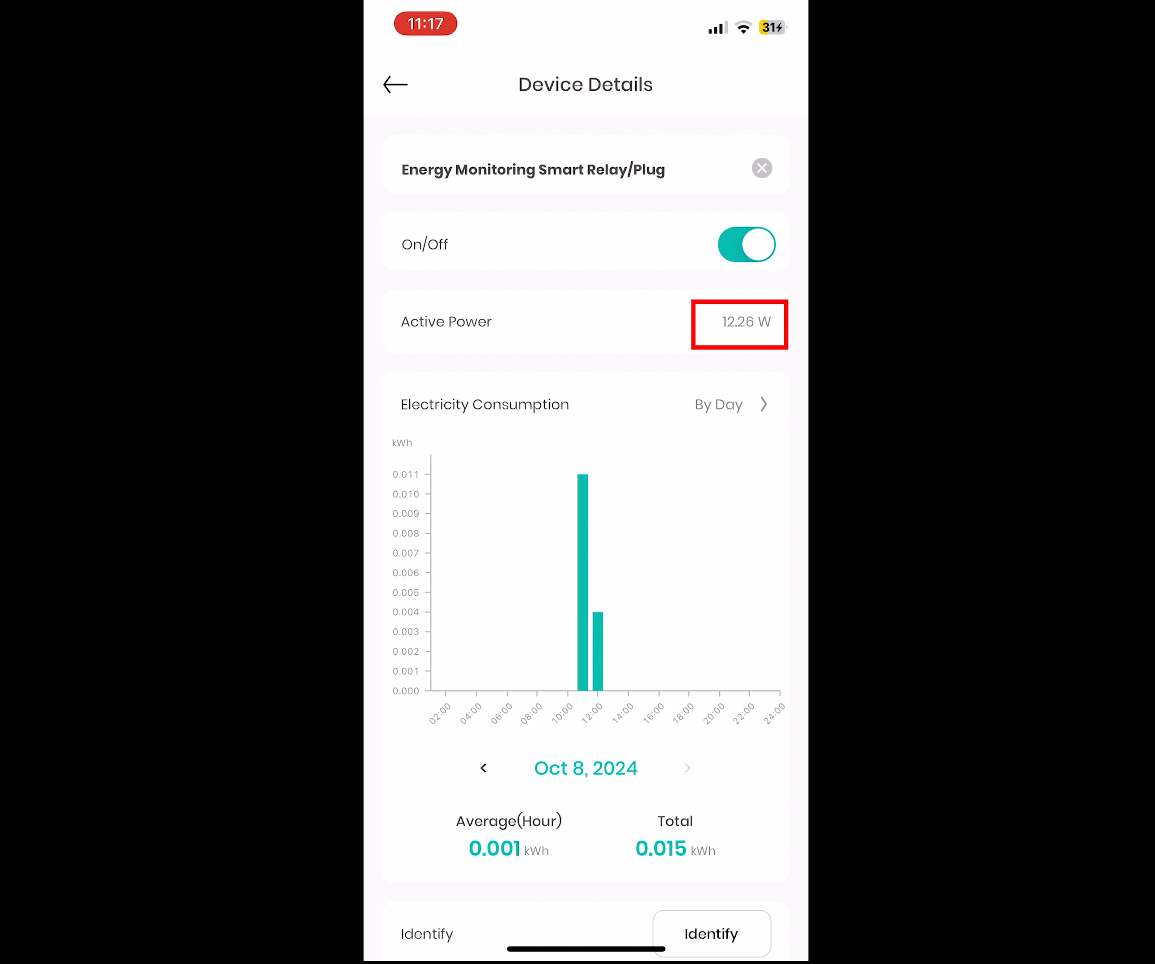
This isn’t the utmost energy consumption.
The Internet-based Interface
Now let’s have a fast take a look at the web-based interface. The structure is similar we received for a few years now, with some Normal settings, in addition to the Superior ones on the left aspect. I want to say revamped AiMesh part and I promise that I’ll check MLO with a couple of ASUS routers very quickly, particularly for the reason that builders insist that they made issues a lot smoother.
Then, there’s the Visitor Community Professional the place you’ll be able to configure varied varieties of networks, together with one devoted to IoT, MLO and there’s even one appropriate for Youngsters. The AiProtection is as complete as ever and we get some gaming-focused options.
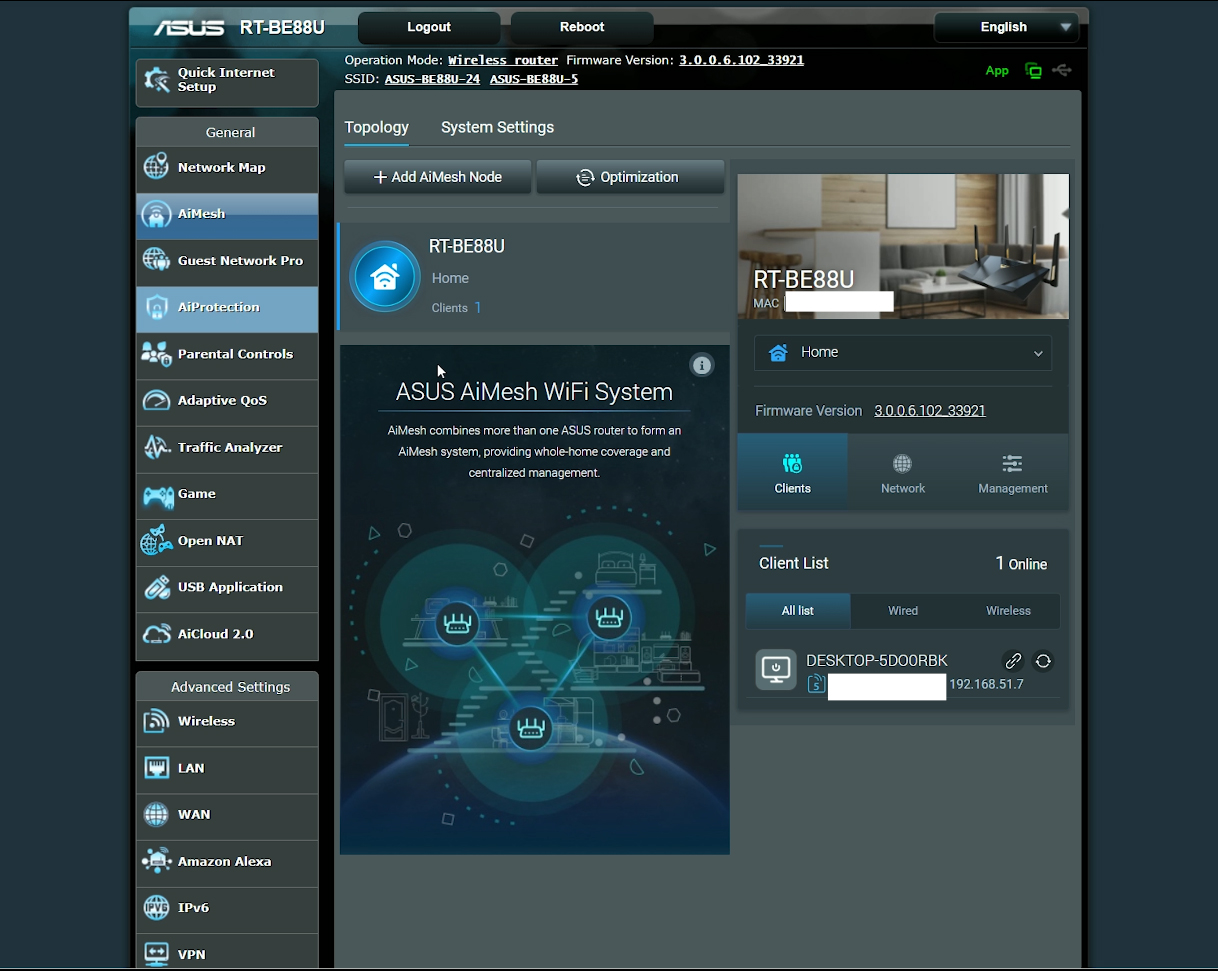
You’ll have observed that WTFast is lacking and that’s has been the case for some time now. It’s as a result of it’s a separate service which can be utilized by counting on an app. I’m not fond of additional apps and subscriptions, however you do you. The Superior Settings part is complete as all the time and we’ve already went by means of among the out there options there, resembling twin WAN, WAN aggregation and LACP aggregation.
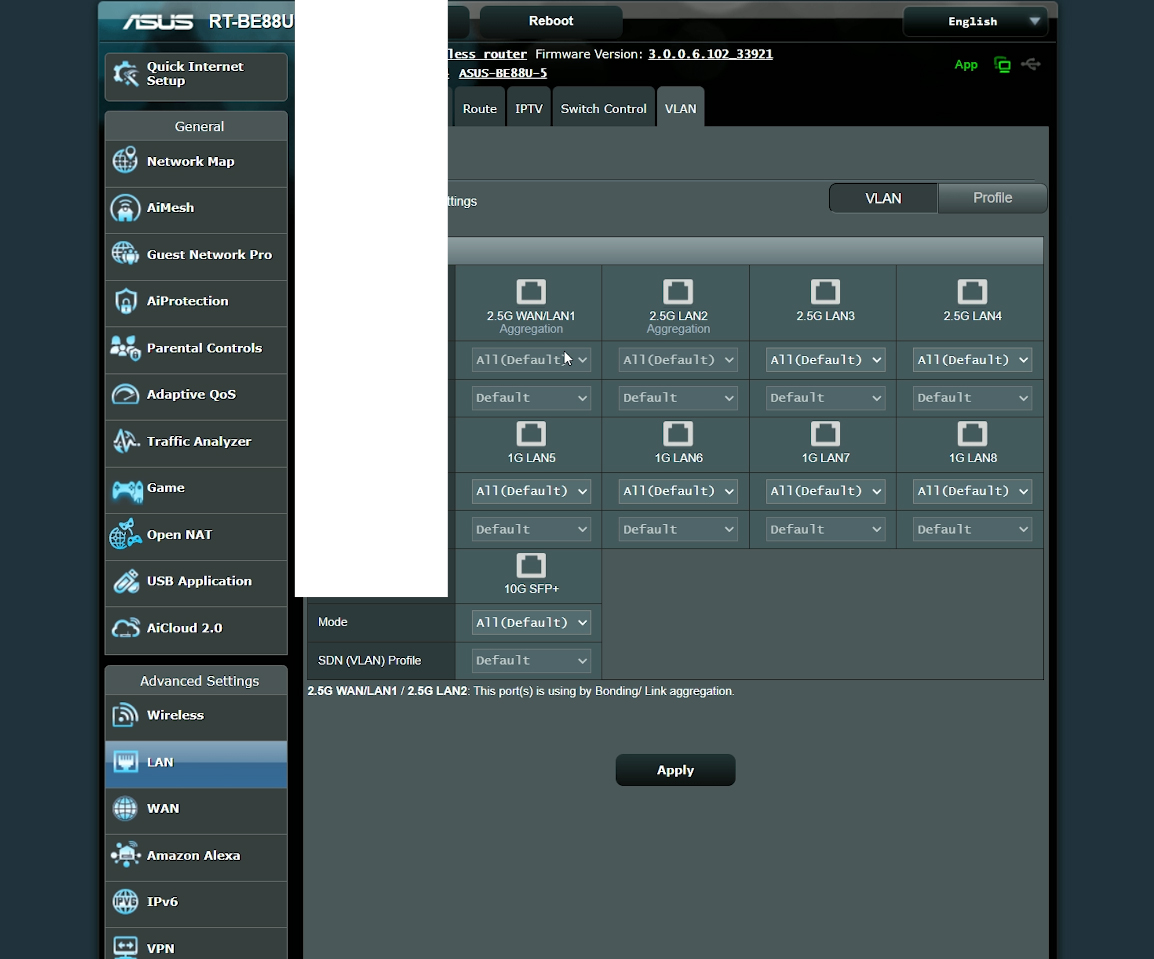
The help for VPNs can also be very good and there’s a Firewall part as nicely. I suppose I do want to say the VLAN part underneath LAN as nicely as a result of that is the place you’ll be able to affiliate ports to your Visitor Networks. There’s help for Amazon Alexa, however I wouldn’t contact it should you care about your privateness.
The Cell App
The structure of the app stays the normal one, with House web page displaying some Web Standing data, in addition to the AiMesh configuration and the Cell Recreation Mode which robotically prioritizes the cell gadget. Then, there’s the Units the place we are able to arrange its QoS precedence, allow Secure Searching based mostly on the preset profiles which do embody Advert Blocking.
It’s good to see that ASUS has acknowledged the present excessive invasive nature of the adverts. The Household part stays the identical as what we noticed on different ASUs routers, providing between age-based presets, the choice to arrange scheduled Web entry and choose what kind of content material can be blocked.
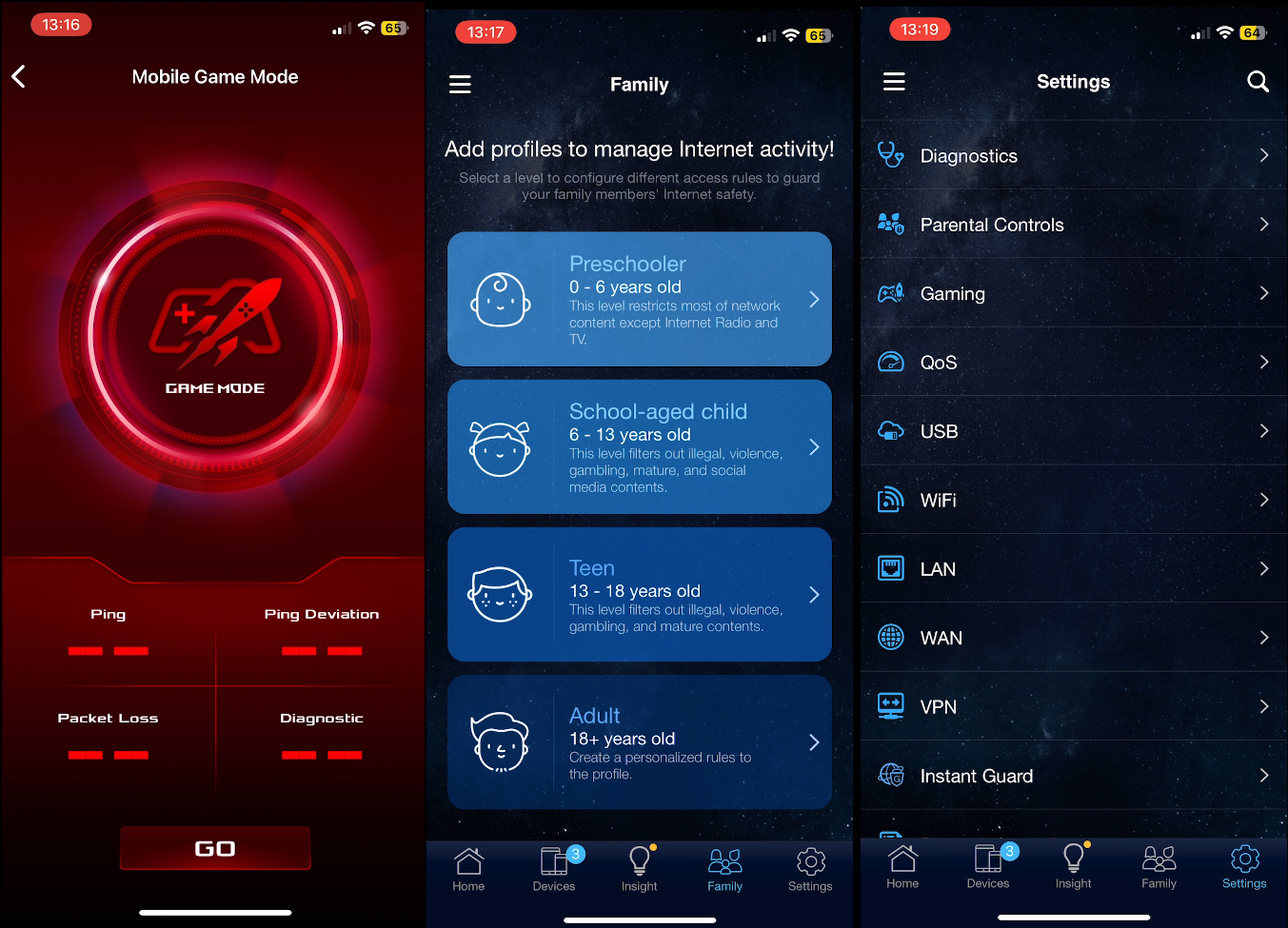
In fact, this is part of the TrendMicro suite of options that’s embedded inside the ASUSWRT, and there may be some knowledge assortment that’s taking place within the background. Then, we get to the Settings part which covers most of what we get on the web-based interface, however a bit much less in-depth.
The Conclusion
As we attain the conclusion, I’ve to say that the 10GbE ports could be a bit deceptive, elevating the expectation that together with the WiFi 7 label, we’d get phenomenal WiFi throughput. And that’s by no means the case. Don’t get me mistaken, the MLO works decently nicely within the sense that the throughput can go previous 2Gbps, though the latency is a bit unusual. And that additionally got here ahead within the multi-client checks as nicely, which signifies that some extra works must be accomplished right here.
That being mentioned, is the value tag justified? Proper now, it stays between 350 and 400 {dollars}, so it’s a bit expensive. A U7 Professional gives a greater efficiency and it does help MLO, whereas costing much less. However, should you add a gateway and a 10GbE change, you’ll simply go previous $500. I imply, it’s in all probability value it, nevertheless it’s as much as you to resolve. I’d additionally keep watch over the ASUS RT-BE92U which ought to be out quickly and could have a lot of the options of the BE88U plus the 6GHz radio. That’s all for now. Thanks for watching and see you subsequent time.