
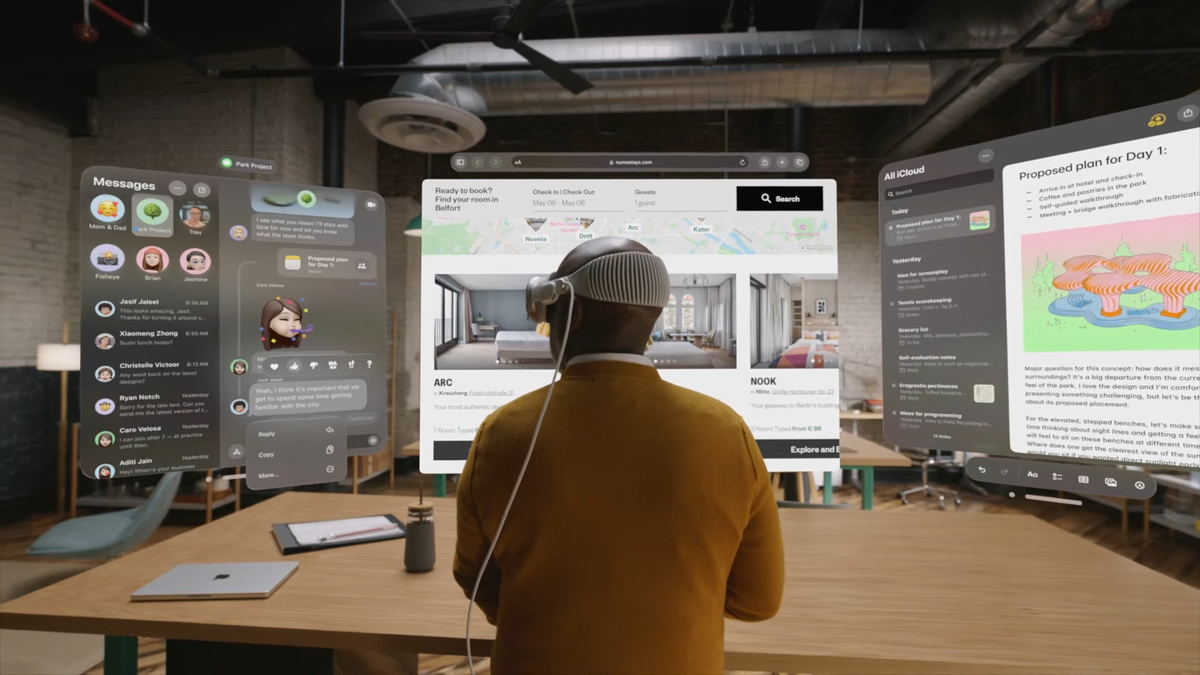
Apple leads the spatial computing wave — VisionOS, not the Vision Pro, shows how that wave can crest higher Leave a comment
When you by no means get a second probability at a primary impression, a second impression might be stronger than a primary one. So it typically is in tech, the place the primary launch of a tool’s software program typically has purposeful gaps and shortcomings which can be typically addressed and typically promised in subsequent releases. Even on the earth’s largest tech corporations, the early reception of a product can have an outsized weight on its future within the fixed battle for growth assets.
The previous few years, for instance, have seen the demise of such product traces as Meta’s Portal video calling gadgets, Amazon’s Halo well being gadgets, Google’s Jamboard sensible whiteboard, and (unofficially) a slew of Microsoft’s Floor household gadgets, together with the Studio desktop, Duo smartphone, headphones and earbuds.
Apple’s imaginative and prescient for the way forward for computing
With Apple’s alleged decade-long flirtation with getting into the automotive market ending in retreat and its dwelling robotic aspirations mere output of the rumor mill for now, the Apple Imaginative and prescient Professional stays the corporate’s most bold product by way of envisioning the way forward for computing (or at the very least stationary computing). Certainly, it’s the boldest product with the broadest platform potential that Apple has launched since at the very least the iPad. Whereas that machine, initially marketed as a “tweener” product between the iPhone and MacBook, has matured into one thing extra of a Mac competitor than a complement for a lot of duties, Apple’s different platform launches have gravitated towards leisure (tvOS) and well being (watchOS).
If spatial computing is to go mainstream, it gained’t be behind immediately’s Apple Vision Pro, with its lofty price ticket, cumbersome weight, and exterior battery. Nevertheless it’s no coincidence that the product’s preliminary setup features a rendering of a script “good day,” a signature picture from the launch of the unique Macintosh. If limitations resembling weight, measurement, and energy consumption might be overcome, why couldn’t spatial computing — with its bigger “screens” and richer interactions — substitute immediately’s desktop and pocket book experiences? The benefits are as clear as evaluating a desktop wallpaper to one of many visionOS immersive environments resembling Bora Bora or Yosemite (no disrespect, macOS 10.10).
Such a transition, if it ever occurs, will take a few years. Nevertheless, Apple’s foundational work in enabling it shined by in visionOS 2. They included new gestures that choose objects and entry the Management Middle in a literal pinch, in addition to entry time and quantity controls as familiarly because the again of your hand and recognizing and displaying a bodily Apple keyboard in immersive settings to ease typing. Talking of enter, Messages gained the flexibility to remodel speech to textual content after a look on the enter area. The replace additionally launched new spatial options, resembling help for TabletopKit, which facilitates the event of experiences, resembling spatial “board” video games, on a close-by floor.
That stated, as broad because the potential is for spatial computing usually, it helps to have a hook. And for visionOS, it’s spatial photographs and movies. Starting with the iPhone 15 Professional and Professional Max, after which the iPhone 16 fashions, Apple enabled all iPhones to seize spatial photographs and movies. Nevertheless, the payoff is within the Apple Imaginative and prescient Professional, the place you’ll be able to view what is actually a deeply compelling spin on private media as a result of it lets you relive moments of your vital individuals, pets, and locations virtually as in case you are there in particular person. These photographs and movies, which can proliferate at an explosive price due to how straightforward they’re to seize on an iPhone, supply higher-quality representations than the holographic movies we have typically seen in motion pictures, like Tom Cruise’s character viewing his son in Minority Report. These movies can, after all, be edited in Closing Reduce Professional.
And people are simply two examples of how tightly built-in the Apple Imaginative and prescient Professional is with different Apple software program and providers. Not like the iPhone, which got here to market at a time when the hot-selling iPod obscured the restricted attain of Apple’s Mac platform, visionOS grew to become the newest neighbor within the now bustling neighborhood of the corporate’s applied sciences, together with Safari, FaceTime, AirPlay, and SharePlay. And Apple hasn’t even hinted at how Apple Intelligence could issue into its future but.
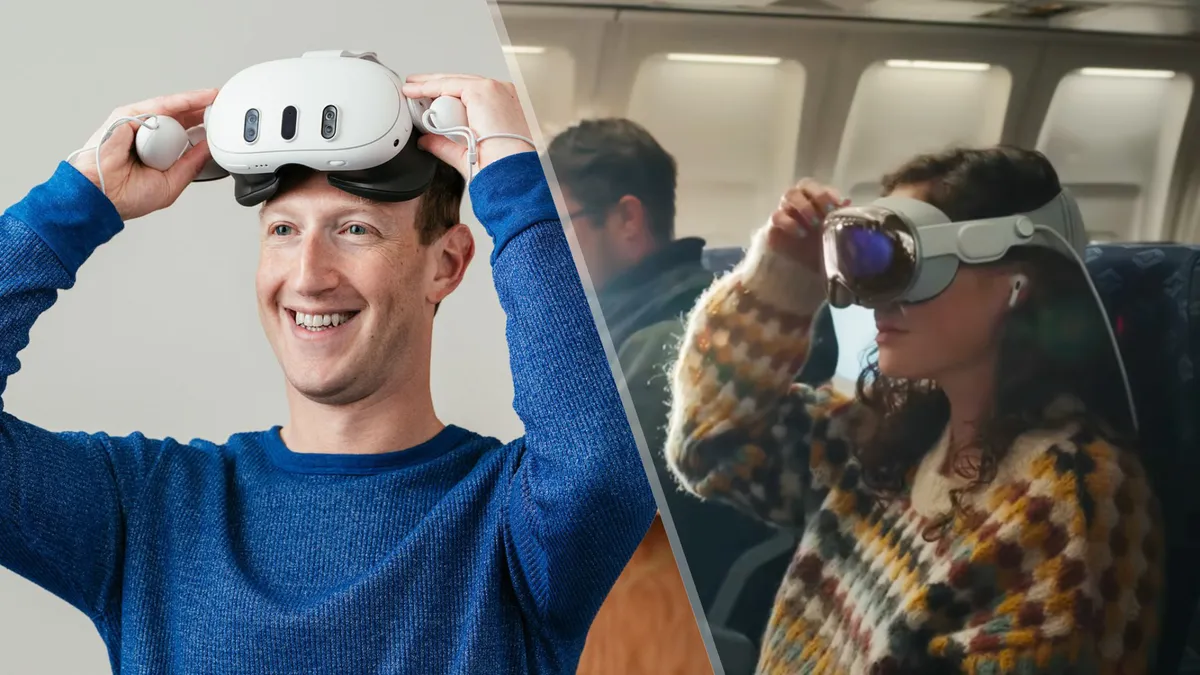
Competing for the spatial computing crown
After the discharge of the Apple Imaginative and prescient Professional, Mark Zuckerberg released a video the place he referred to as the Meta Quest 3 a greater product — not simply, because the Quest’s far lower cost would help a greater worth — than the Imaginative and prescient Professional. The Meta CEO identified a number of product attributes that favor the Quest. However to me, the video echoes one wherein former Microsoft CEO Steve Ballmer infamously laughed at the iPhone, stating benefits that Home windows telephones had on the debut of that game-changing machine.
Meta’s extended efforts in prolonged actuality have yielded a number one library of VR video games and a few pioneering way of life apps. Nevertheless, they haven’t come near creating what it can take to construct the next-generation computing platform Apple is clearly specializing in. The subsequent wave of rivals will come from Android XR. Whereas Google hasn’t had a lot success constructing Android-powered machine classes past smartphones, the platform has the potential to spawn a spread of headsets that might compete with Meta on worth and Apple on options.