
The Weirdest Case So Far: HYTE X50 & X50 Air Case Review & Benchmarks Leave a comment
We additionally used our Schlieren imaging setup for instance this, which makes use of a parabolic lens and a few lighting methods to visualise the air density gradient across the case.
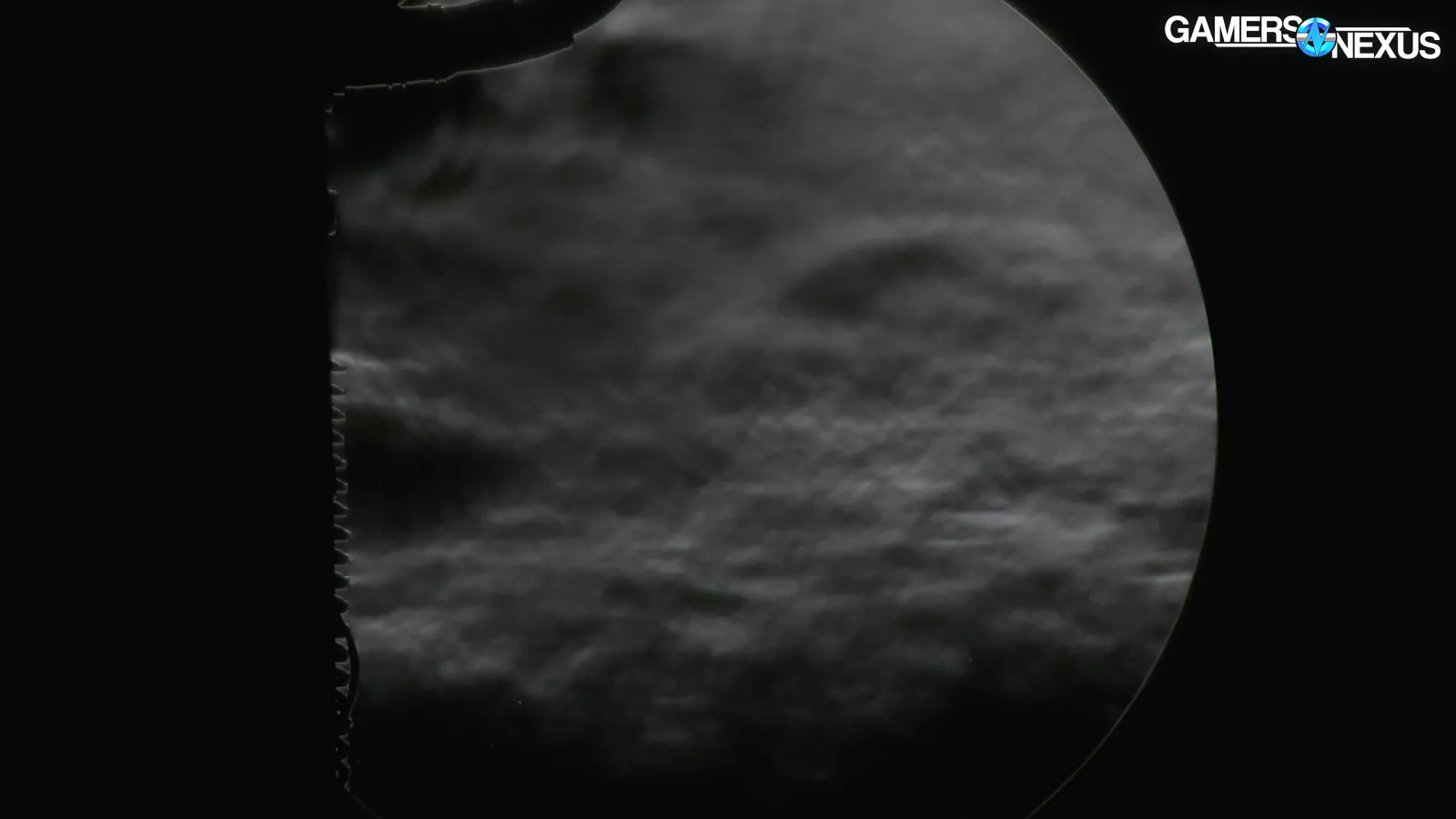
Somewhat than utilizing smoke flow testing with its many inaccuracies and limitations, similar to fog density, we will as an alternative take a look at the refractive index modifications attributable to air density gradients that distort parallel gentle beams.
A greater exhaust path isn’t Hyte’s solely declare we’re validating:
Hyte says: “Laminated acoustic glass considerably enhances passive noise damping by decreasing transmission of sound with a Shatter-Proof(ish) bonding layer.” Sometimes, laminated glass simply retains the glass collectively within the occasion it shatters, which Hyte additionally says, however the acoustic declare is new to us.
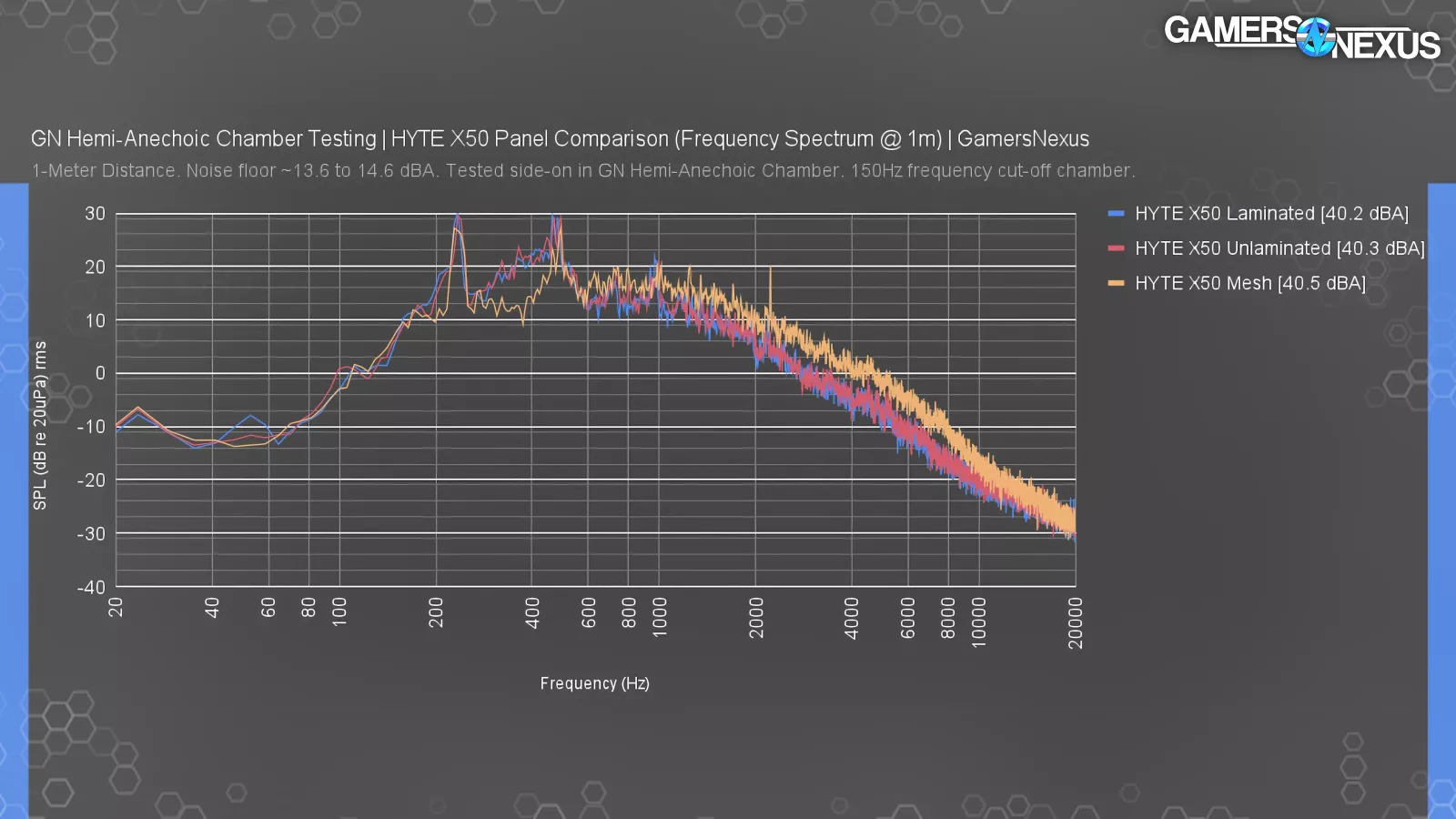
So we requested Hyte to ship us a non-laminated panel with its laminated panel to check the idea in our acoustic chamber, which produced these frequency spectrum plots that we’ll discuss down under.
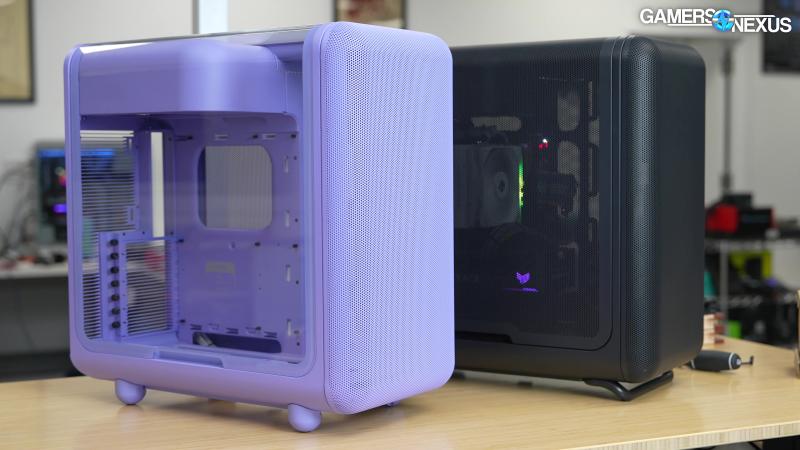
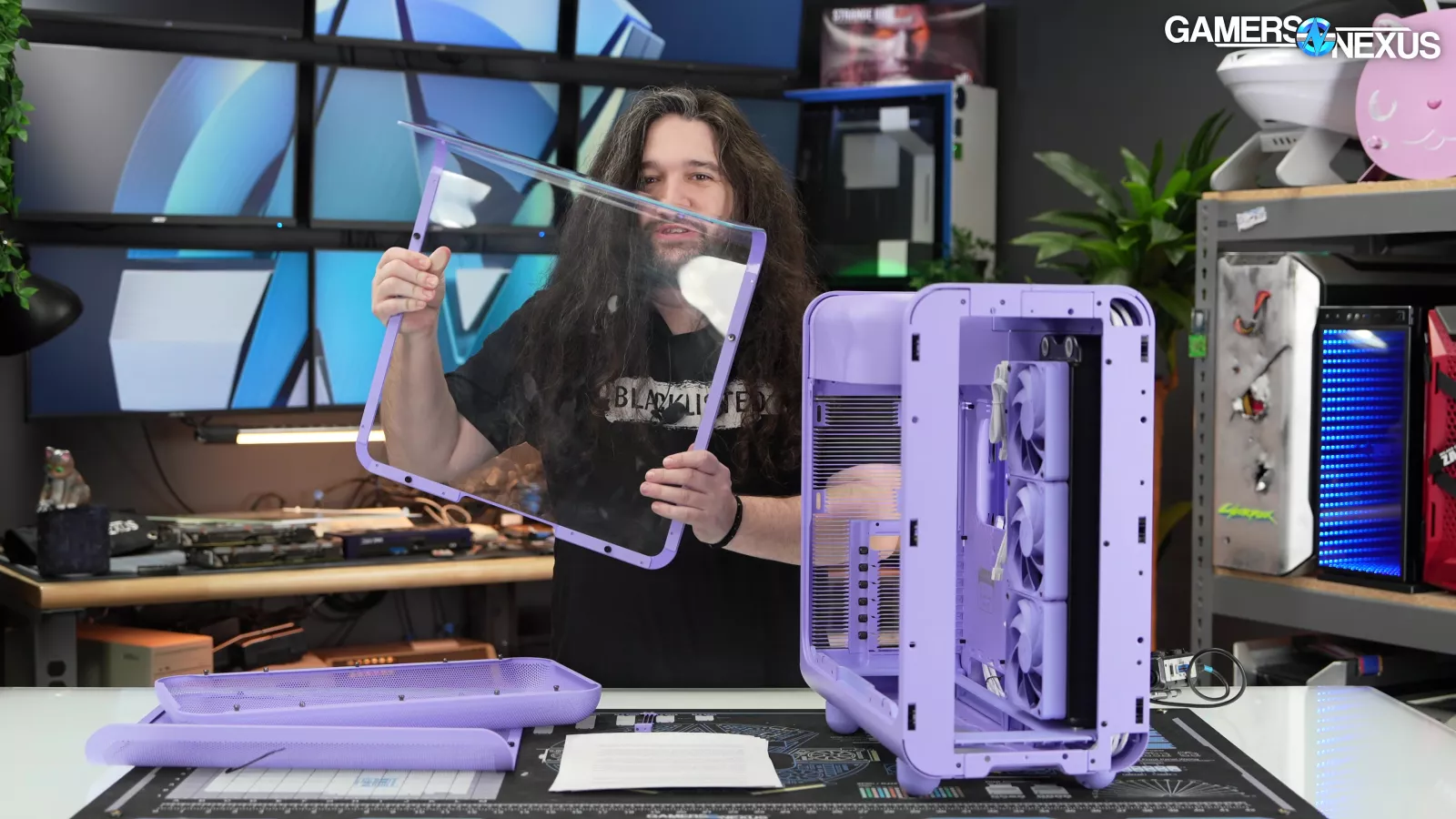
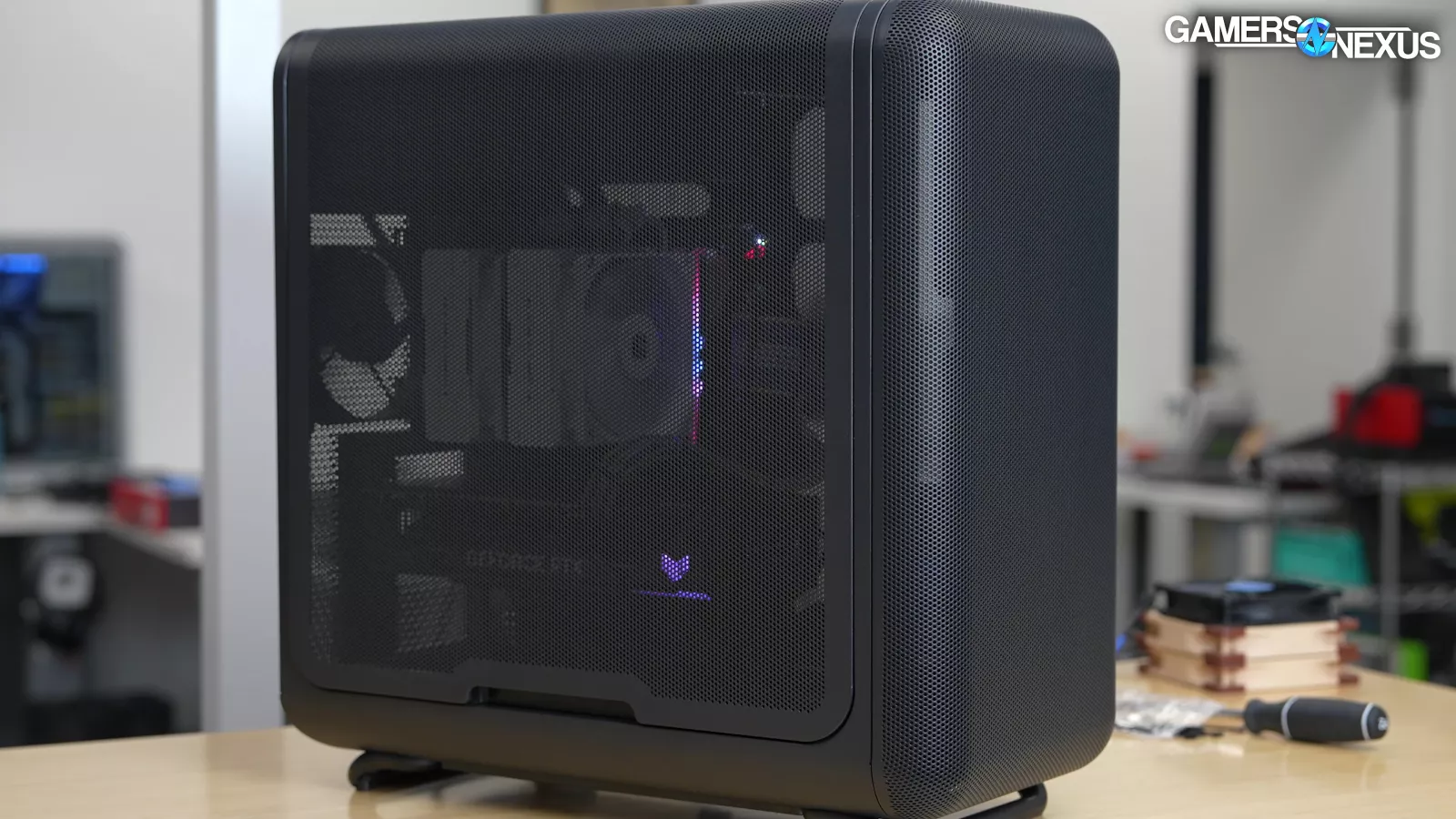
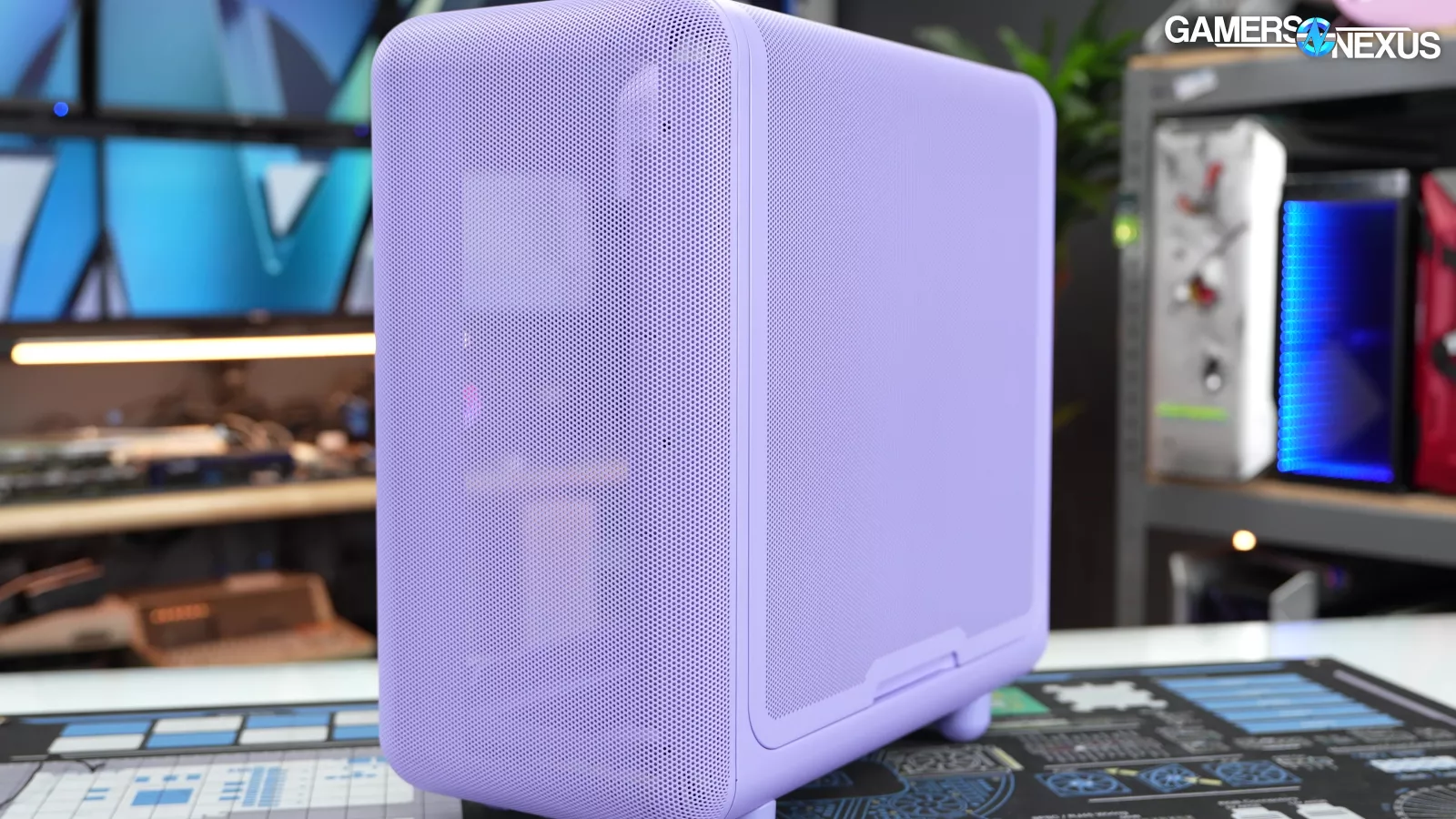
Mechanically, the case is exclusive and executed with wonderful construct high quality: The X50 makes use of a steady panel across the facet and high in both glass or double mesh, with a mesh entrance panel that has edge-wrapped perforations for cooling.

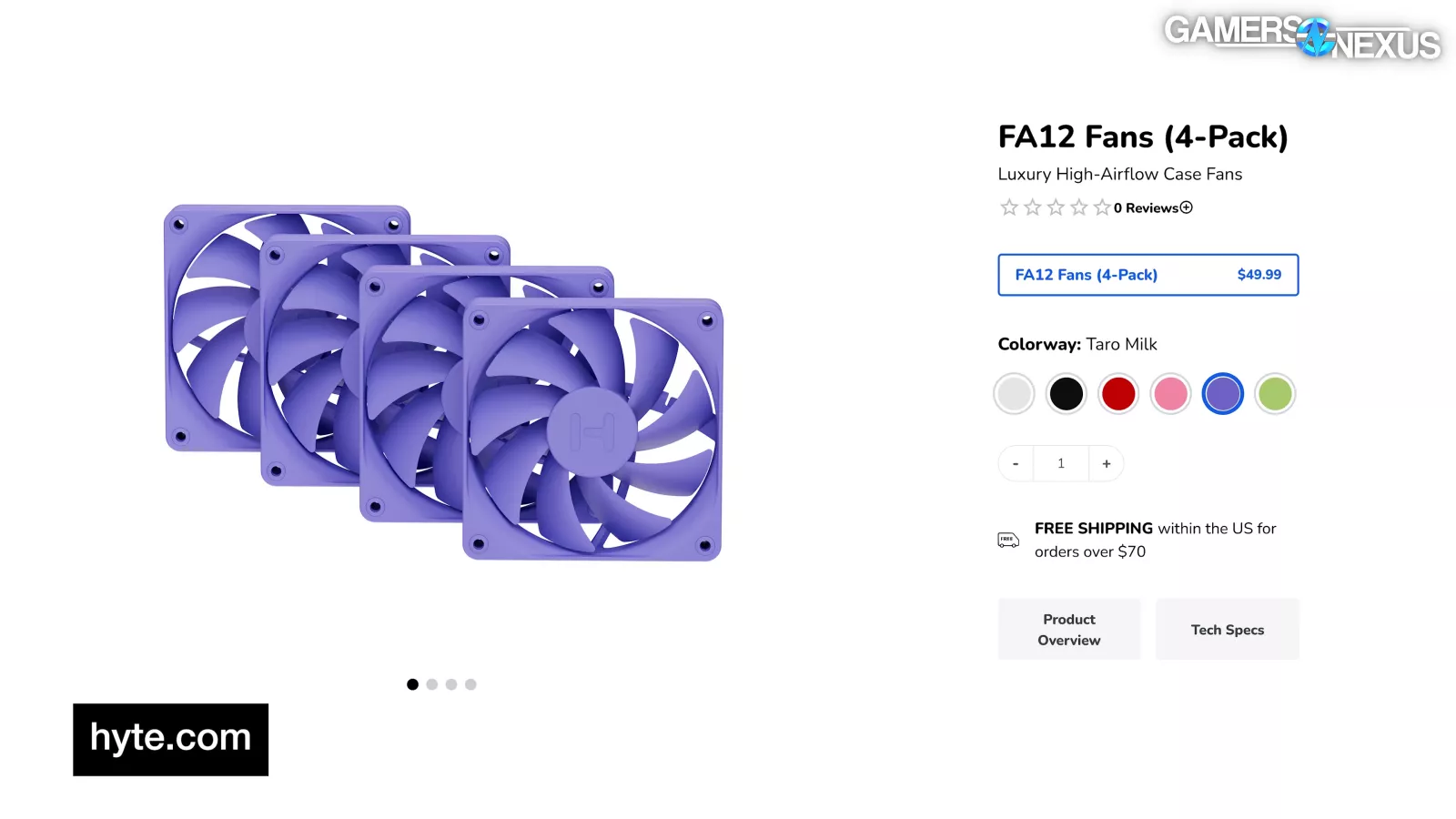
Pricing with tariffs within the US is $160 for the X50 with a glass facet panel, or $130 for the X50 Air with a mesh facet panel. Worldwide pricing is $150 for the X50 and $120 for the X50 Air. Neither case comes with followers, though they do promote color-matched followers.
Lastly, at the least for the assessment samples, Hyte included extremely dangerous smelly candles.
Specs
| Type Issue | ATX Mid-Tower |
| Quantity | 63L |
| Case Dimensions | 485mm (H) x 510mm (L) x 255mm (W) |
| Chassis Materials(s) | 1mm Thick Metal, ABS |
| Window Materials(s) [non-Air] | 4mm Thick Laminated Acoustic Glass |
| Grommet Materials(s) [non-Air] | Whole Protection Silicone |
| Motherboard Help | E-ATX (as much as 10.6”), ATX, MATX, ITX |
| Energy Provide | As much as 223mm |
| GPU Help | As much as 430mm Size, 160mm Peak |
| Aspect Fan Help | 3x 120mm |
| Entrance Fan Help | 3x 120mm / 140mm |
| Backside Fan Help | 3x 120mm as much as 32mm Thick |
| Rear Fan Help | 1x 120mm |
| Aspect Radiator Help | As much as 360mm Lengthy & 70mm Thick |
| Entrance Radiator Help | As much as 360mm Lengthy & 105mm Thick |
| Rear Radiator Help | 120mm |
| Max CPU Cooler Peak | 170mm |
| Storage Help | 2x 2.5” Drives, 1x 3.5” Drive |
| Enlargement Slots | 7 Horizontal (Full-Measurement) |
| Entrance I/O (Audio) | 3.5mm Combo Jack |
| Entrance I/O (USB) | 1x USB 3.2 Gen 2×2 Kind-C, 2x USB 3.2 Gen 1×1 Kind A |
| Entrance I/O (Energy) | Tactile Mechanical Energy Change with LED |
| Mud Filters | Backside, Magnetic |
| Up to date Toes | [ONLY with these colorways] Snow White, Pitch Black, Wild Cherry |
| Paw Toes | [ONLY with these colorways] Taro Milk, Strawberry Milk, Matcha Milk |
| Guarantee | 4 Years |
| Colour(s) | Snow White, Pitch Black, [Following colors for non-Air only] Wild Cherry, Taro Milk, Strawberry Milk, Matcha Milk |
Specs copied from producer supplies, please learn assessment for our personal measurements and opinions
Overview
The rounded curves of the X50 are its most distinguished function, in addition to the toughest to fabricate. The design is promising for airflow, with perforations that stretch across the fringe of the curve for max floor space. Particularly, getting the bent form with mesh on the edges was tough to fabricate with out utilizing plastic.
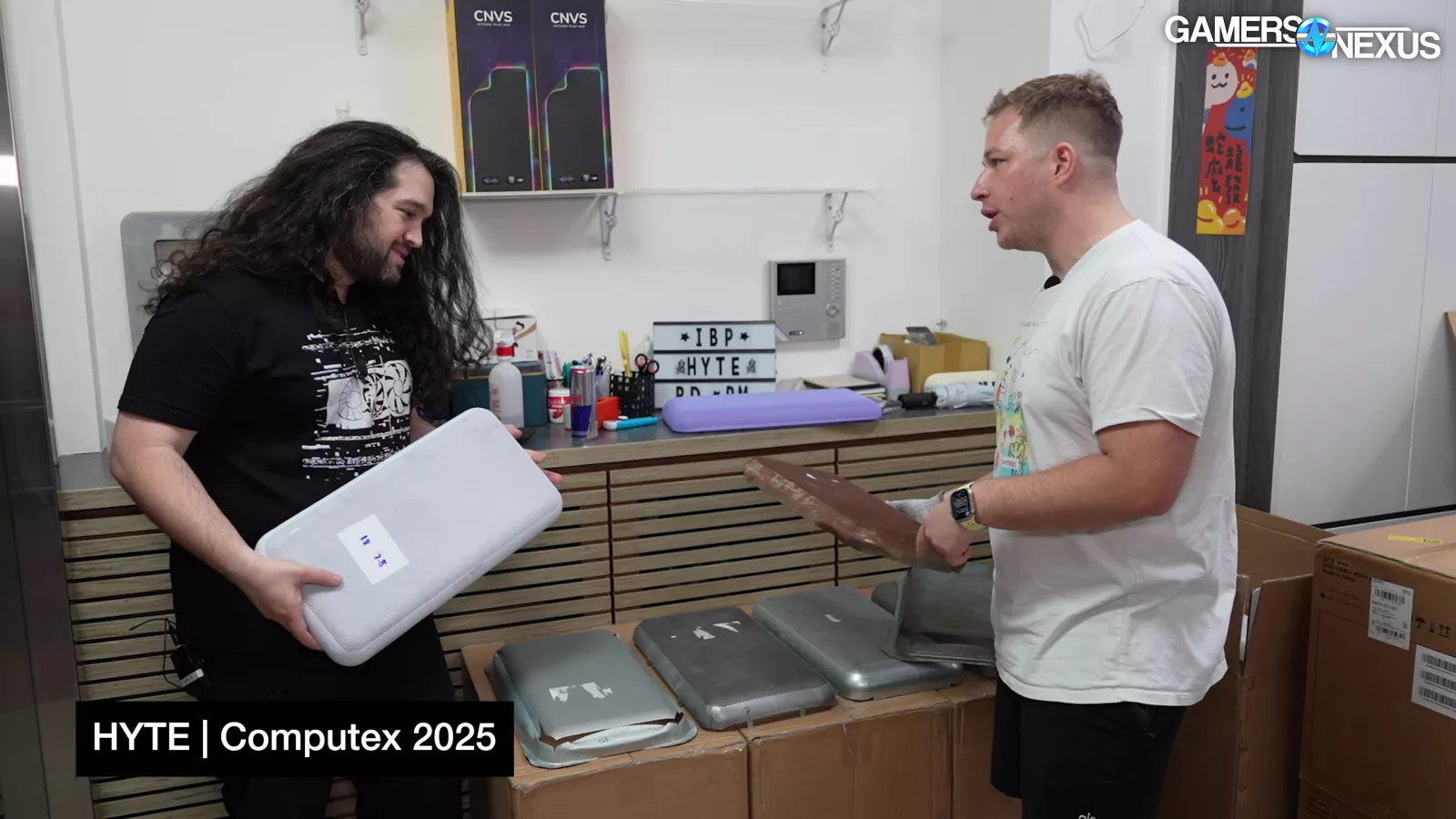
Throughout a visit to HYTE’s office earlier this 12 months, we confirmed a number of completely different panel designs that Hyte had experimented with, all of which had been making an attempt to unravel distinctive manufacturing challenges posed by what they in the end went with. It’s best to verify that article out to see how down-to-the-wire the ultimate idea got here.
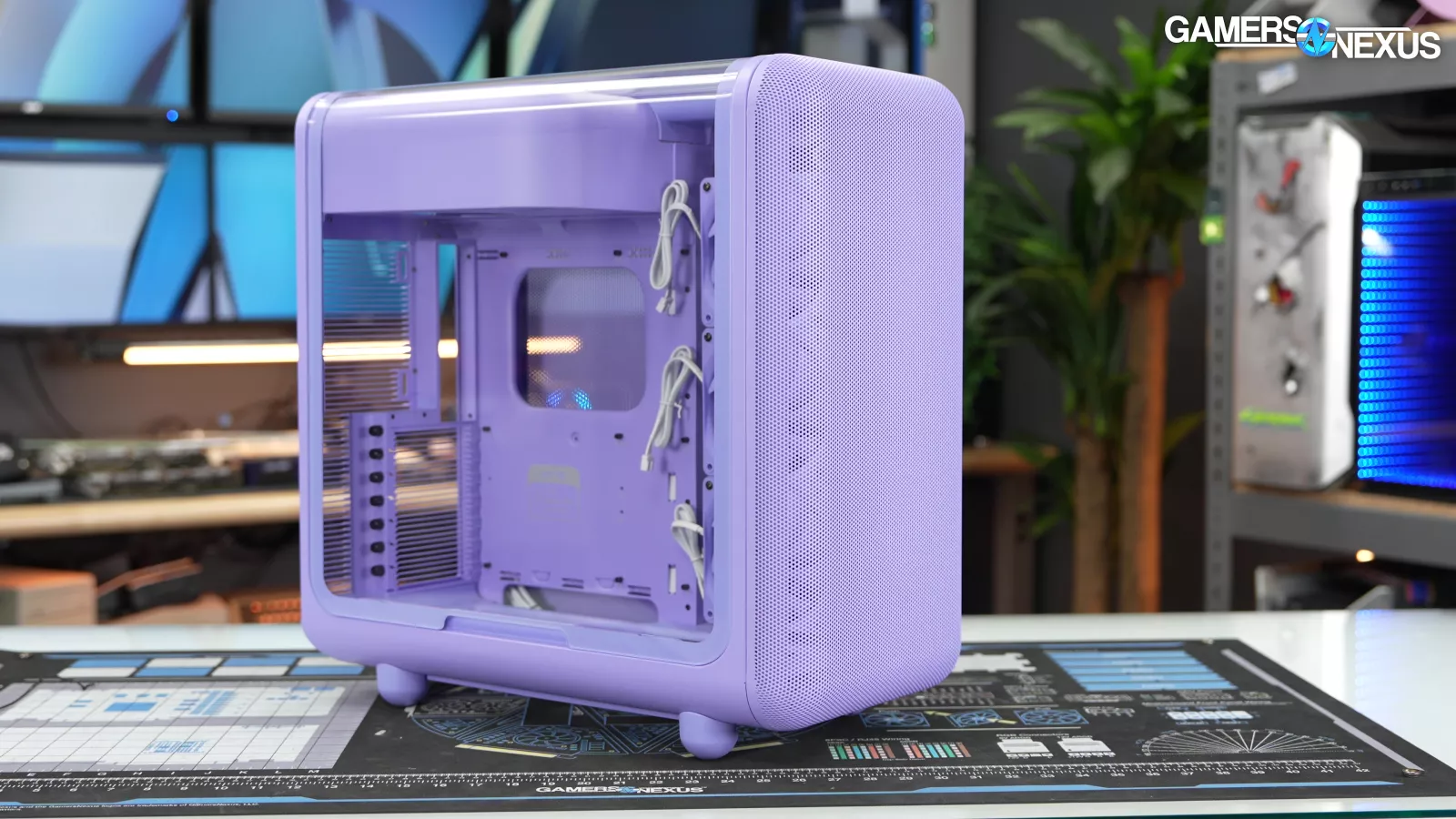
At the same time as it’s, among the most advanced items are plastic. Colour matching is not good, however on our purple assessment pattern, it is impressively good on condition that the paint, plastic, and silicone components all must be matched, and that just about every bit of the case has colour.
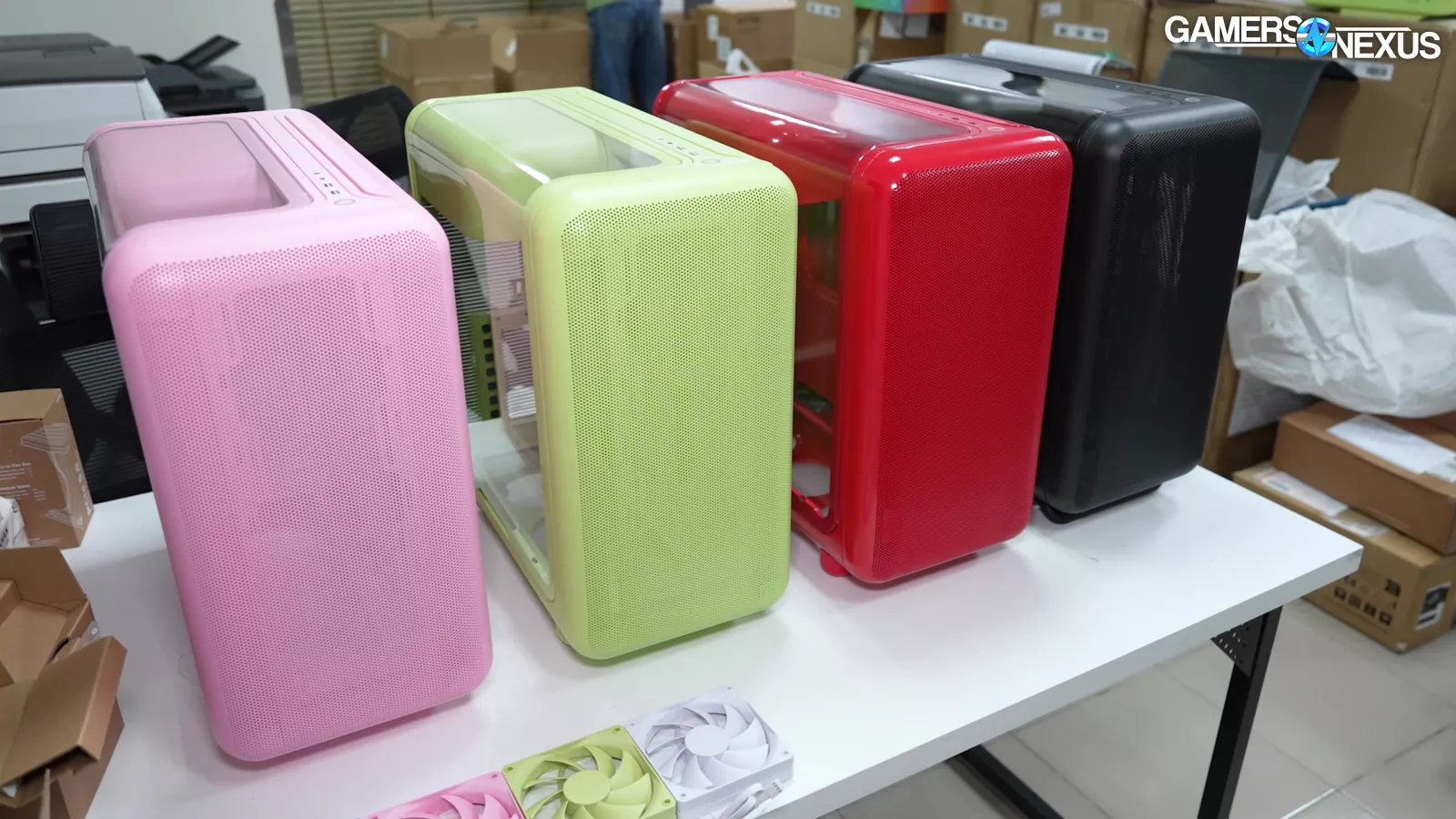
We have now photographs of among the different colours, like shiny purple, inexperienced, and pink from Computex. Hyte has been experimenting with non-black-and-white colours for a number of case iterations now.
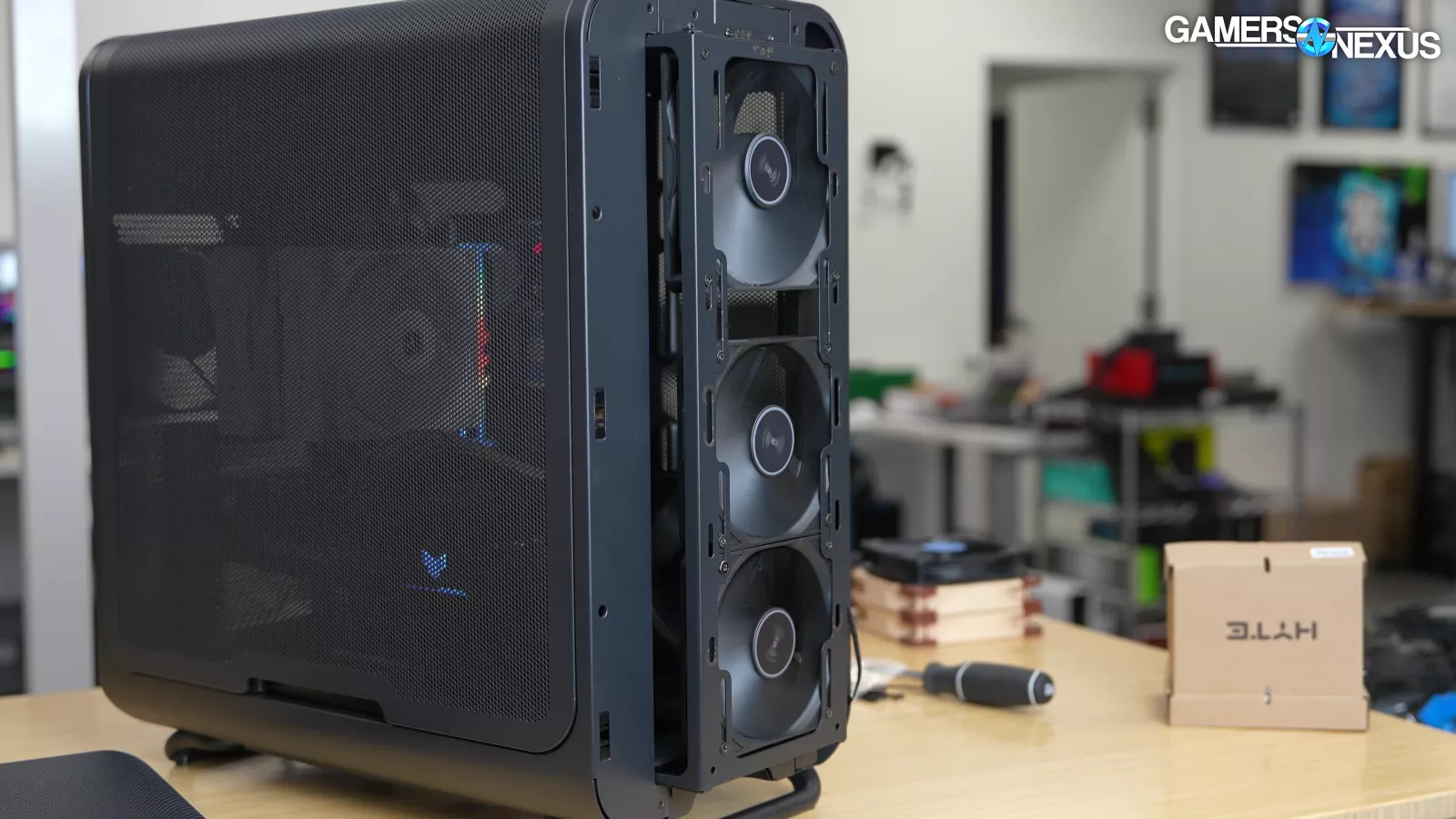
The Hyte X50 helps as much as 3x 140mm front-mounted followers and has facet and backside assist for 3x 120mm followers every. The case additionally suits one rear 120mm fan, so total, fan sizes are comparatively restricted, largely to 120mm followers. The entrance mount has 425mm of clearance from high to backside, so typical 360mm radiators will match and 420s won’t. Radiators as much as 105mm thick on the entrance and 70mm on the facet are formally supported, however not concurrently: assuming 25mm thick followers, you’ve got about 25mm of radiator house on the facet and about 35mm on the entrance earlier than the 2 battle with one another. As a result of the ability provide is within the once-traditional top-mounted place, its fan additionally acts as exhaust. Energy provides are examined in ambient temperatures of 40-50 levels Celsius, to allow them to deal with this warmth higher than most elements.
The entrance mount is the one one which’s detachable. It may be adjusted out in increments of 10mm, ranging from both 0mm or 15mm, relying on which method the mounting {hardware} is flipped. The utmost 45mm offset proven within the guide would not really match with the entrance panel. Happily, we don’t assume that may have an effect on compatibility for anybody. Pushing the bracket again to 0mm signifies that it is flush with the entrance of the steel chassis; in different circumstances, we have discovered that this will help with thermals, however setting a 0mm offset makes it a lot more durable to succeed in the cutouts for fan cables on the entrance of the chassis.
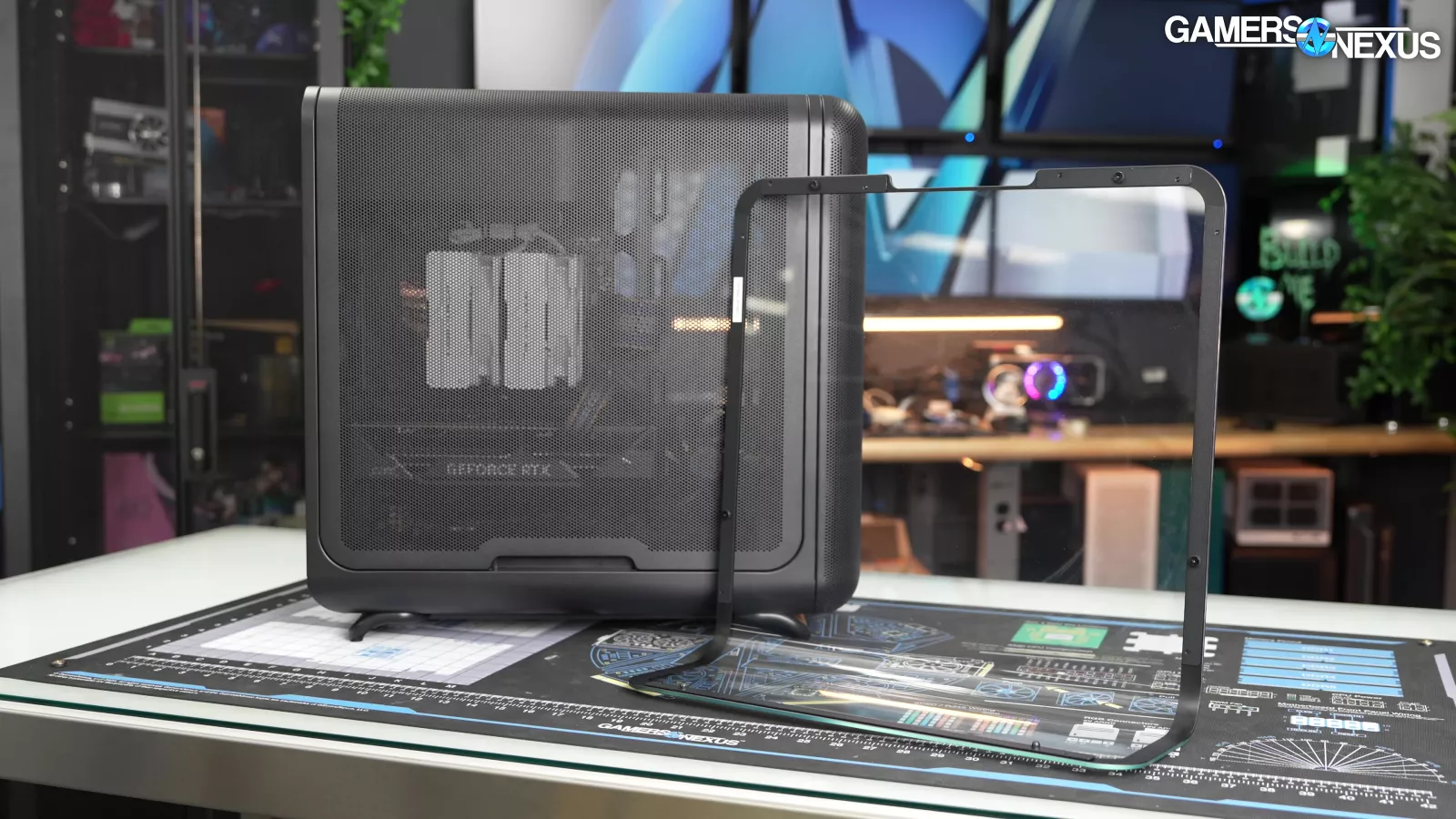
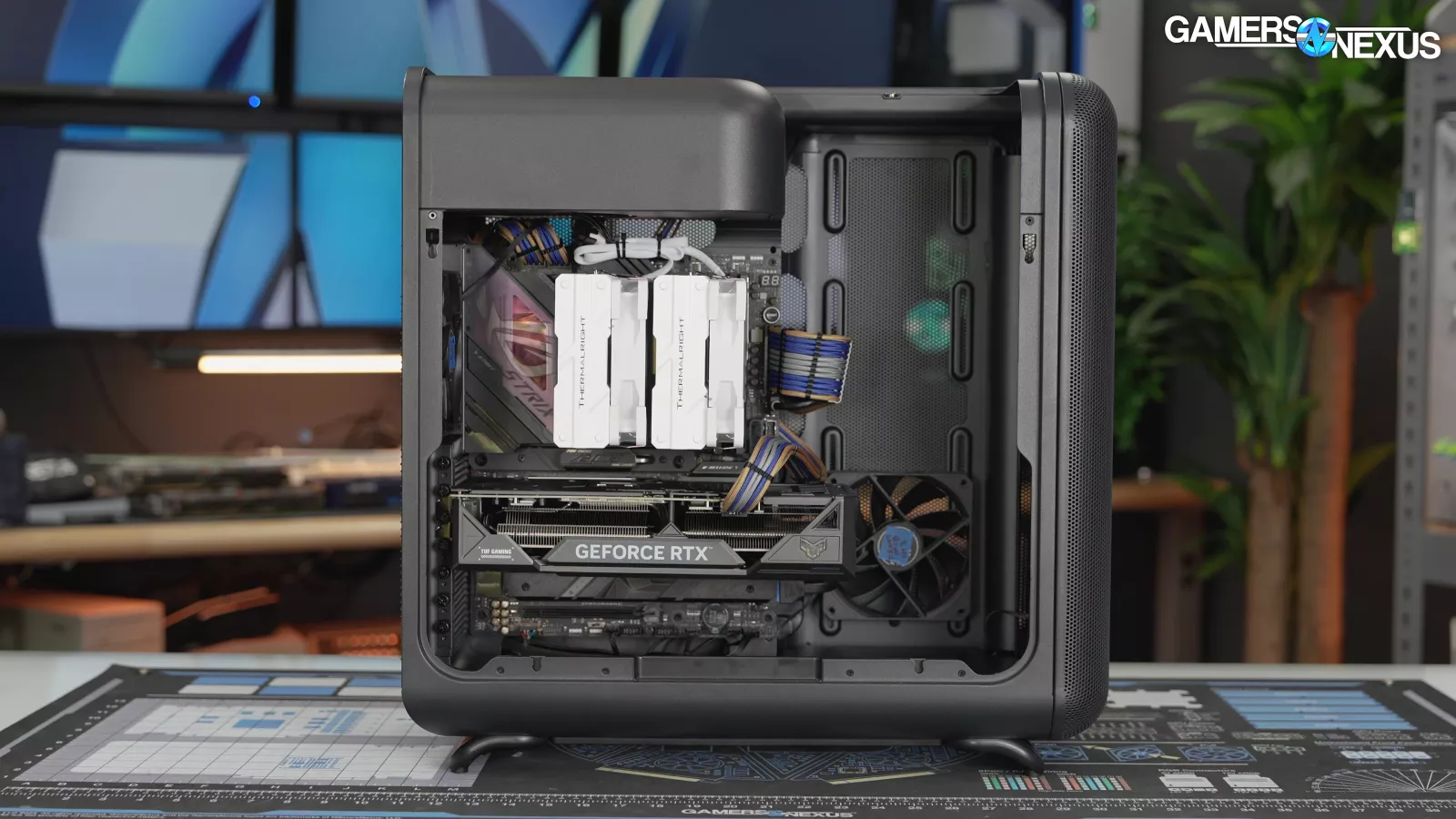
The X50 Air replaces the laminated tempered glass panel with a less expensive mesh panel. Neither variant consists of followers, and all different panels are the identical between the fashions. There isn’t a facet mount for followers to take direct benefit of the Air’s mesh panel (just like the North’s facet fan bracket, for instance), though downdraft CPU coolers and a few GPU configurations may benefit from it.
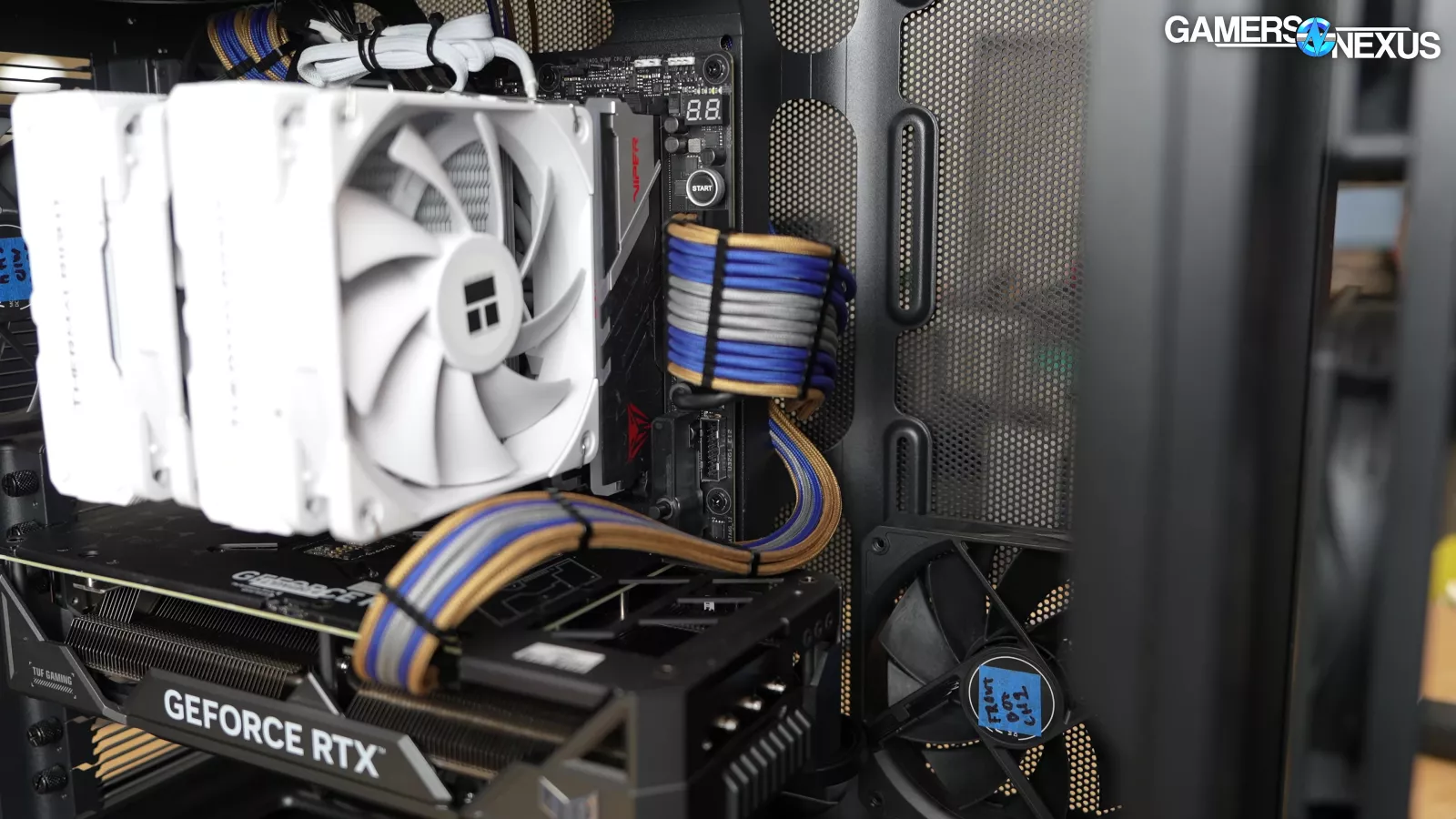
Claimed motherboard assist goes as much as 10.6″ for so-called “E-ATX”, however commonplace 9.6″ ATX boards line up exactly with the sting of the motherboard tray and look a lot neater.
Mechanically, the case is generally a regular field however refined.
The facet panels slide down onto the case and pop into place, with the bigger panel that wraps excessive assisted by magnets. The magnets result in some flexing of the Air’s mesh, however the panel is supported on all edges by the form of the chassis. The X50’s panels must be pressed in opposition to the chassis similtaneously they’re pressed down or they will not land flush, which the guide highlights. As we so incessantly level out, there isn’t any method to screw down the panels for delivery, though the way in which the panels are hooked up makes it unlikely they’d ever come off with the case standing vertically.
The facility provide shroud is a strong piece of metal and is absolutely enclosed besides the underside inside. It will assist with CPU tower cooler exhaust, however we’d wish to have seen an choice that might be flipped to reap the benefits of the highest ventilated panel as nicely. Perhaps this was a selection to make sure customers of the glass panel don’t unintentionally orient the ability provide the flawed method, or possibly it was for value management, however the energy provide can solely pull from internally. Happily, they’ll deal with the warmed air higher than most components. Entrance-to-back, the shroud has 270mm of house (together with cables) with an marketed 223mm most PSU size. Good consideration to element means there’s an included velcro tie-down inside the ability provide shroud, though less-good consideration to element means tough to get entry to as soon as an influence provide is put in.
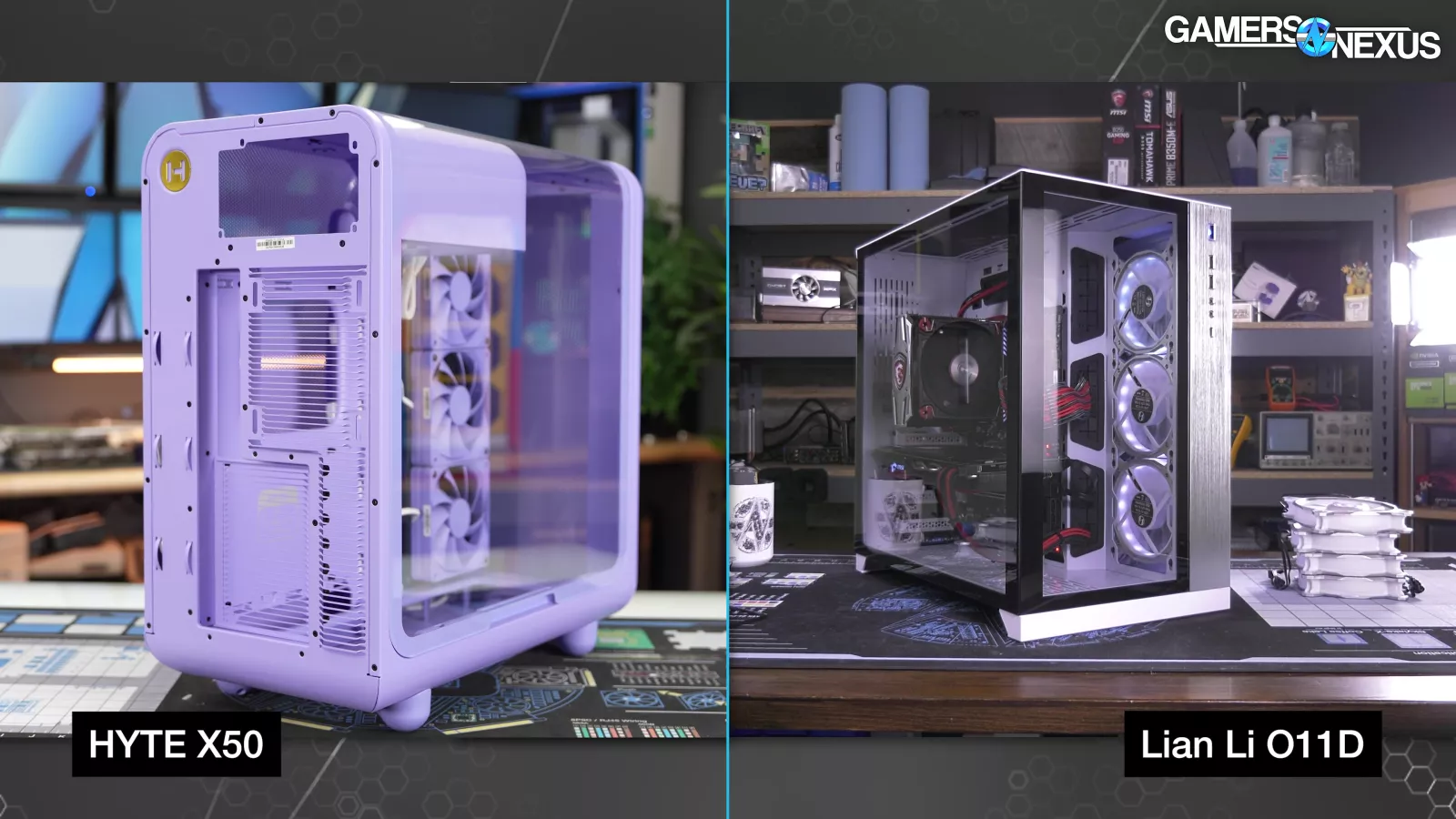
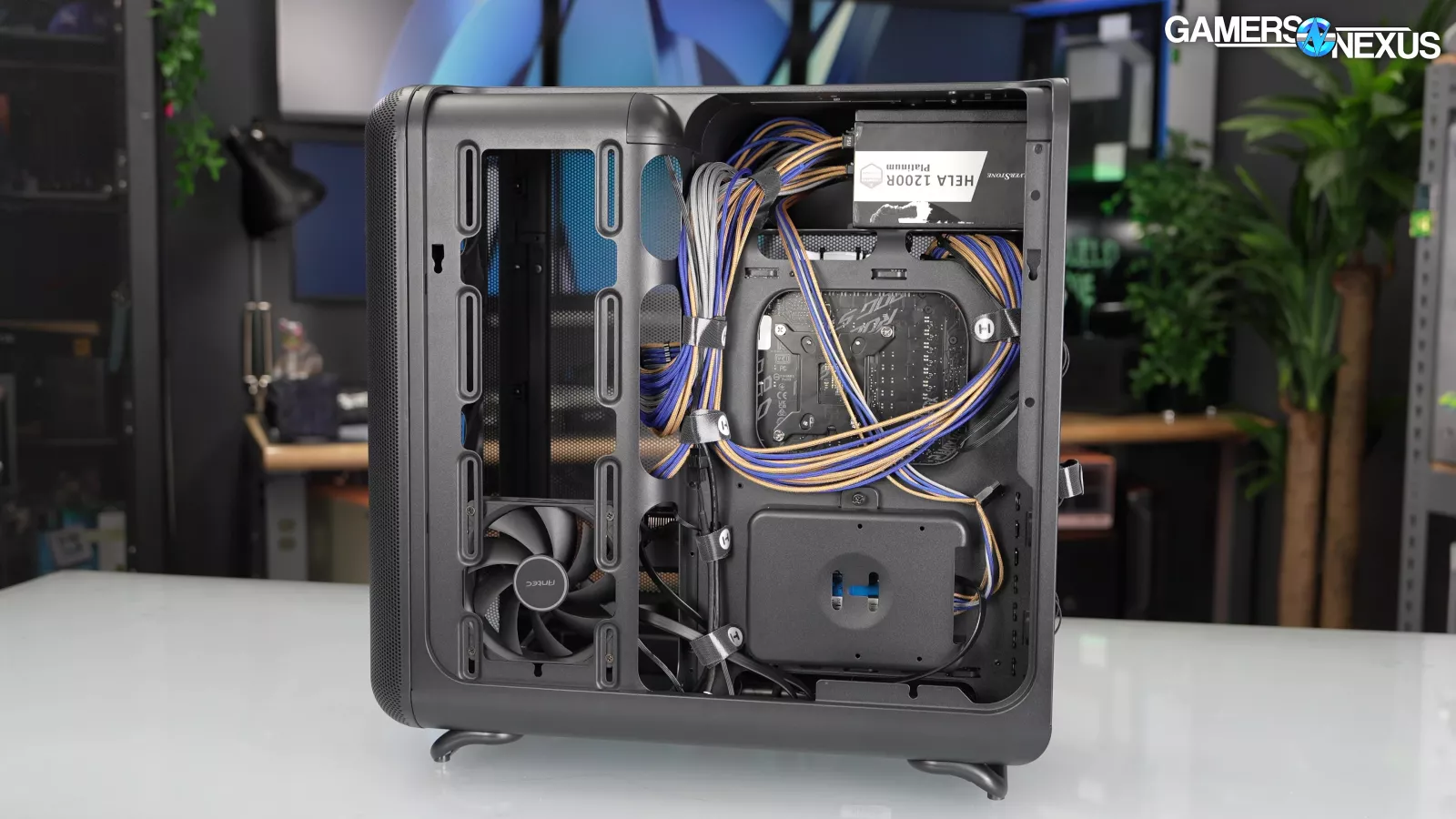
The X50 is sort of as large as the unique dual-chamber O11D (at 25.5cm versus 27cm), which leaves about 5.5cm between the motherboard tray and the facet of the case for cable administration. Typical mid-towers have round 2-3 cm of cable administration clearance.
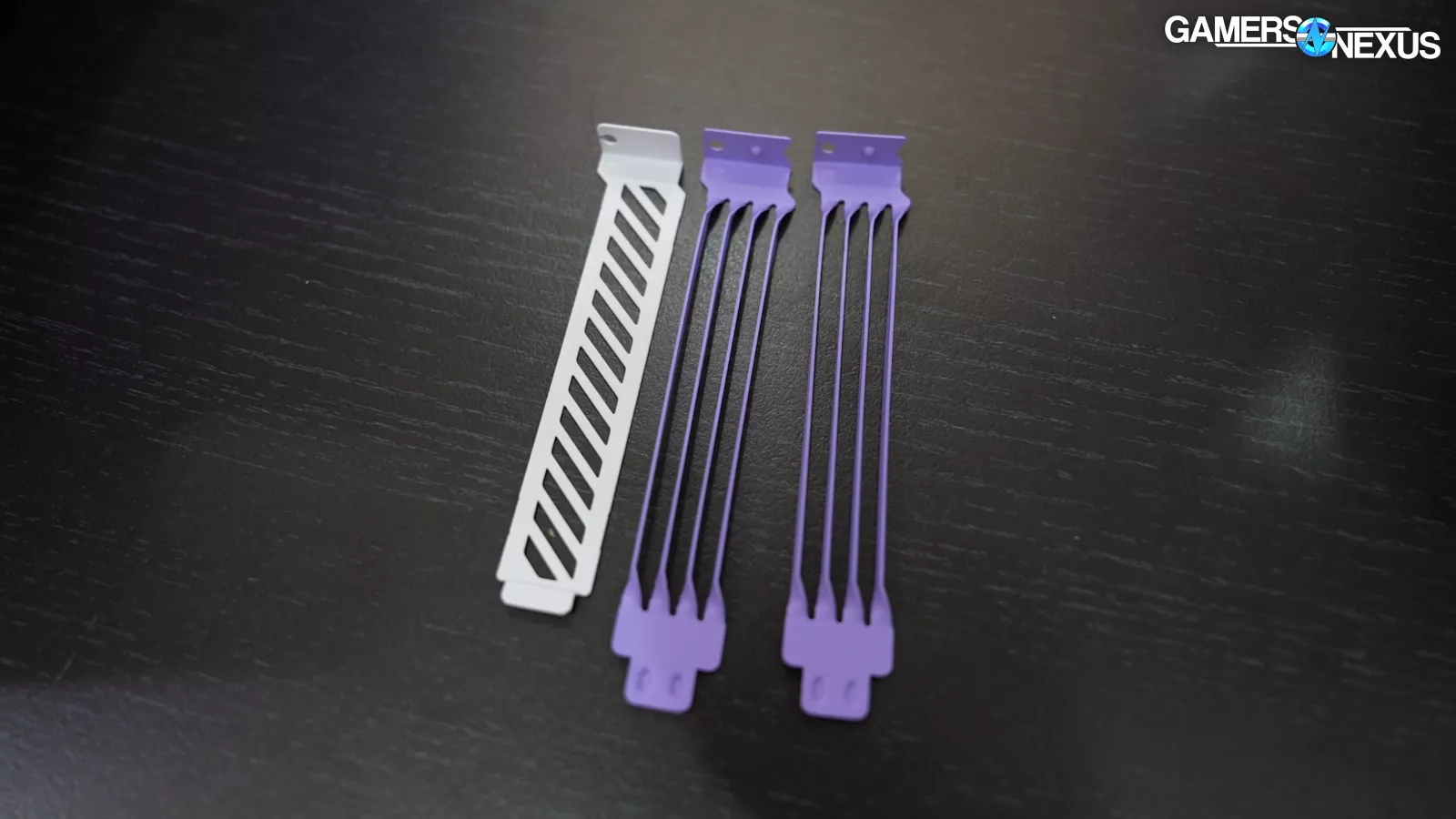
The hidden paths for fan cables are wonderful. The underside, entrance, and facet mounts every have entrances into the molded plastic channels on the high and backside of the case, though you might want to make use of some extensions if you wish to route every little thing completely by way of these paths. The tie factors across the fringe of the motherboard tray aren’t fancy, however they’re efficient together with the included velcro ties. Alternatively, among the ties may be moved to the again of the case for bundling energy and I/O cables, a function that Fractal has been pushing for a number of years now.
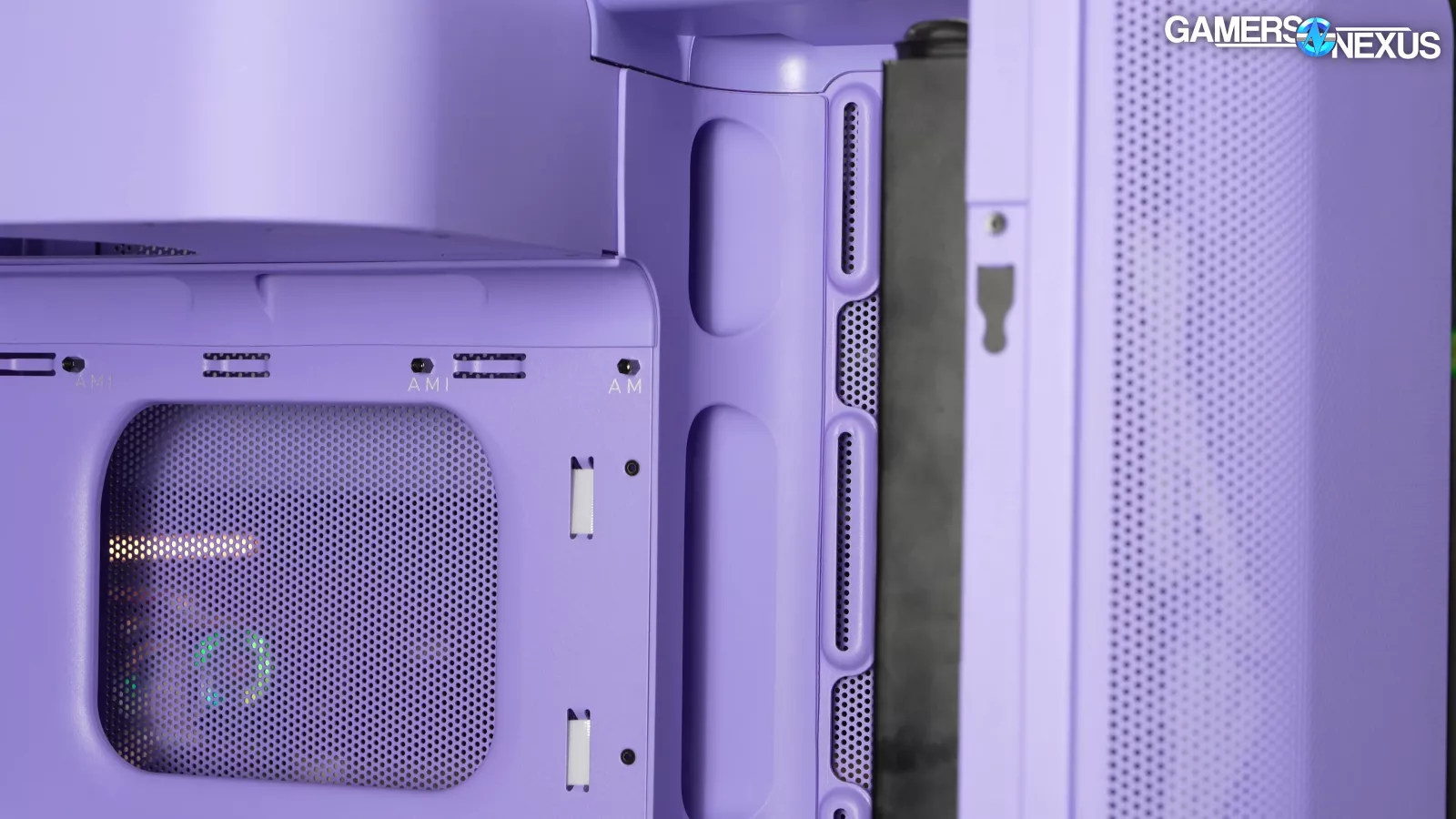
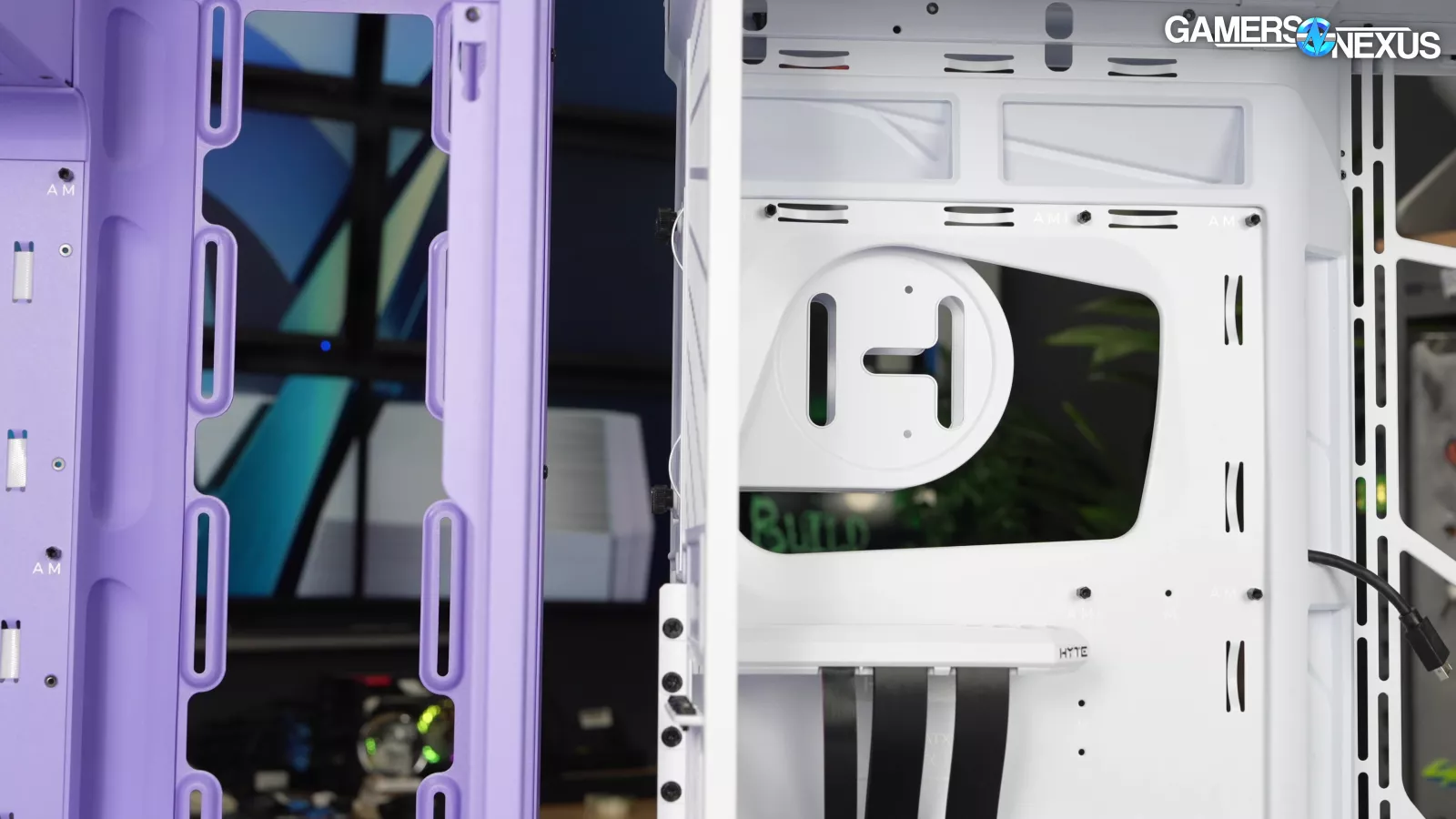
Persevering with on cable administration: Hyte says the silicone cable grommets are the one most costly piece of the X50 by quantity. These are big, molded items within the fashion of the Y70.
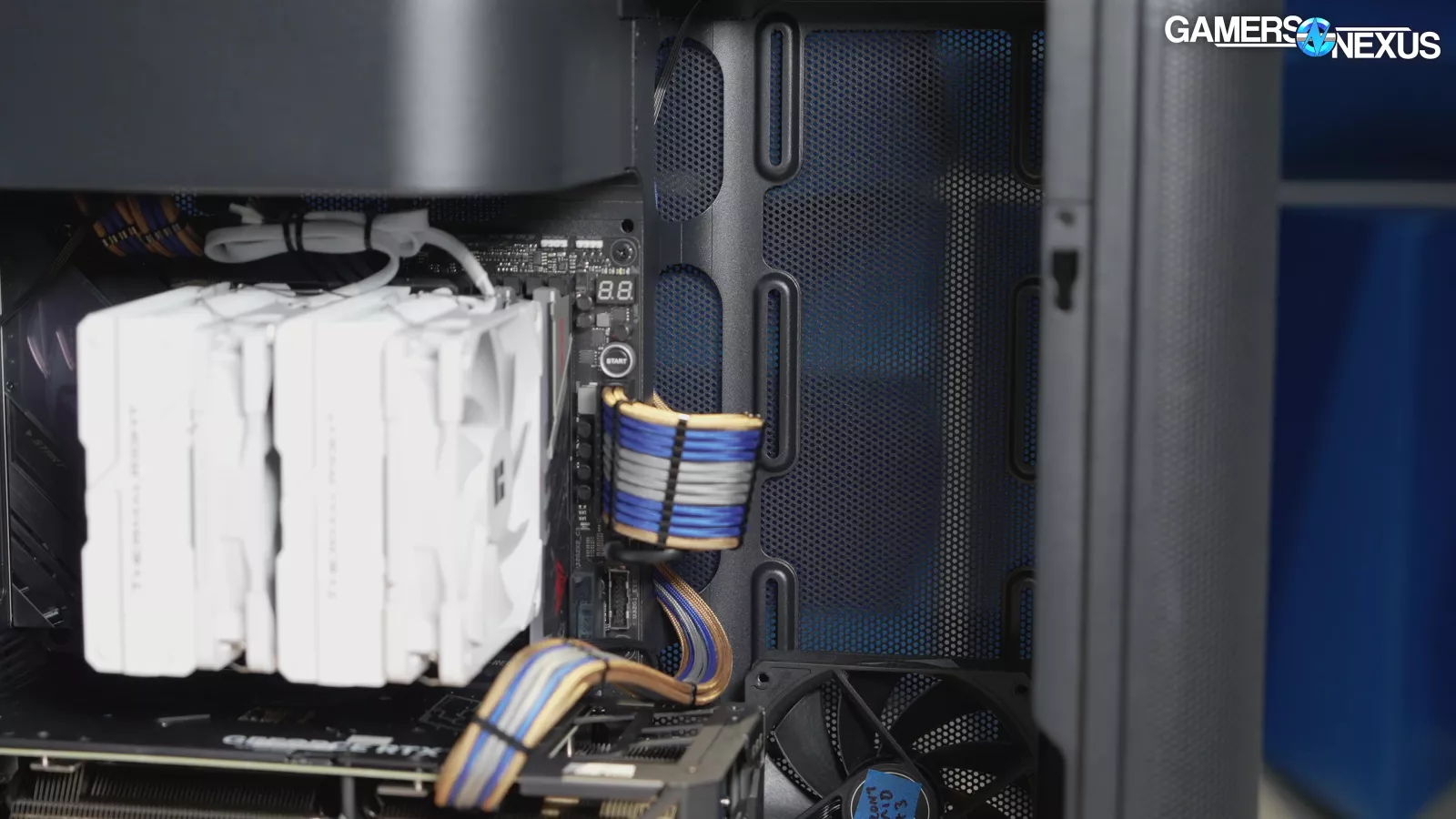
Grommets aren’t included with the cheaper Air SKU, with the justification that they cannot be seen by way of the facet panel anyway.
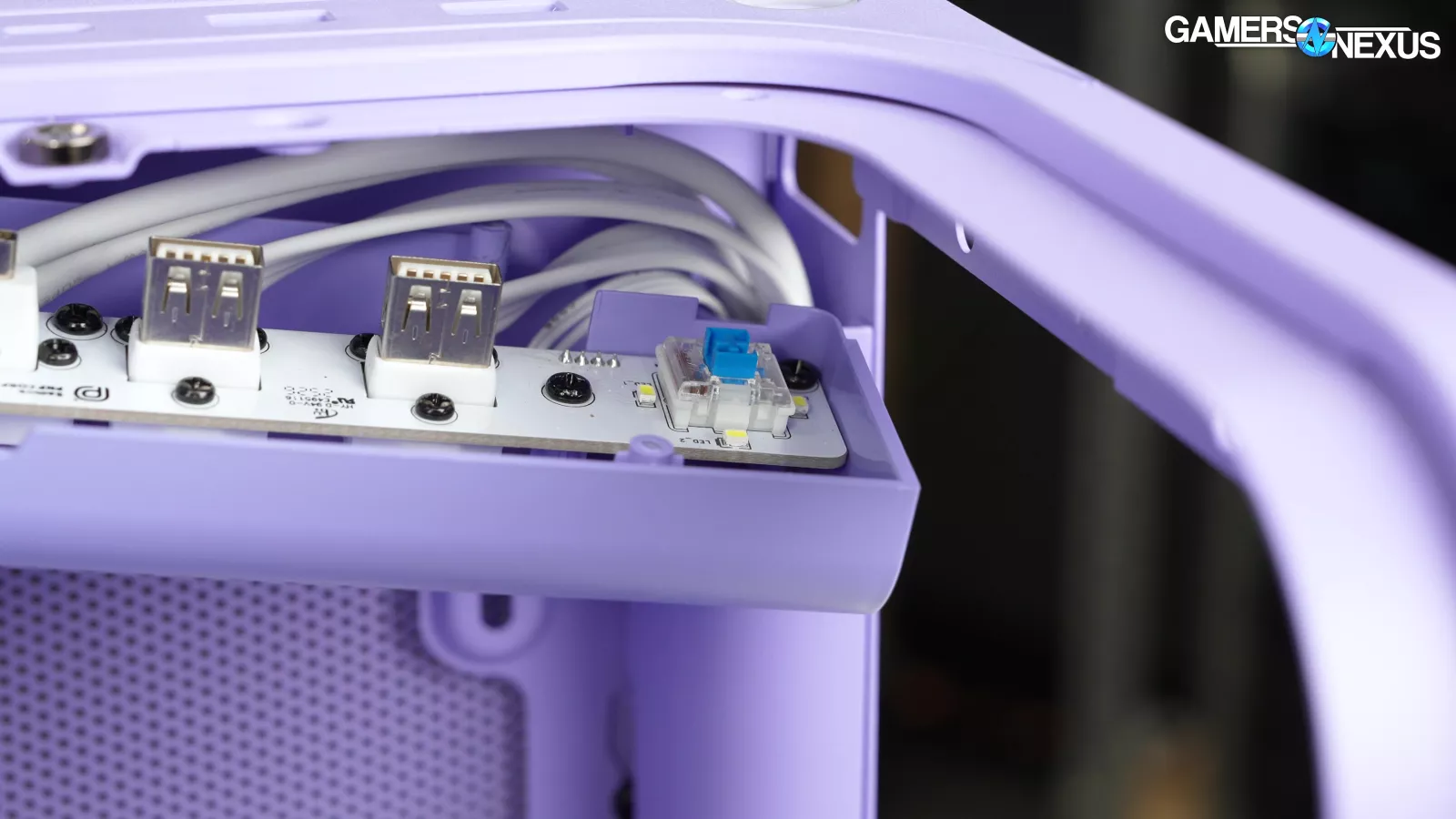
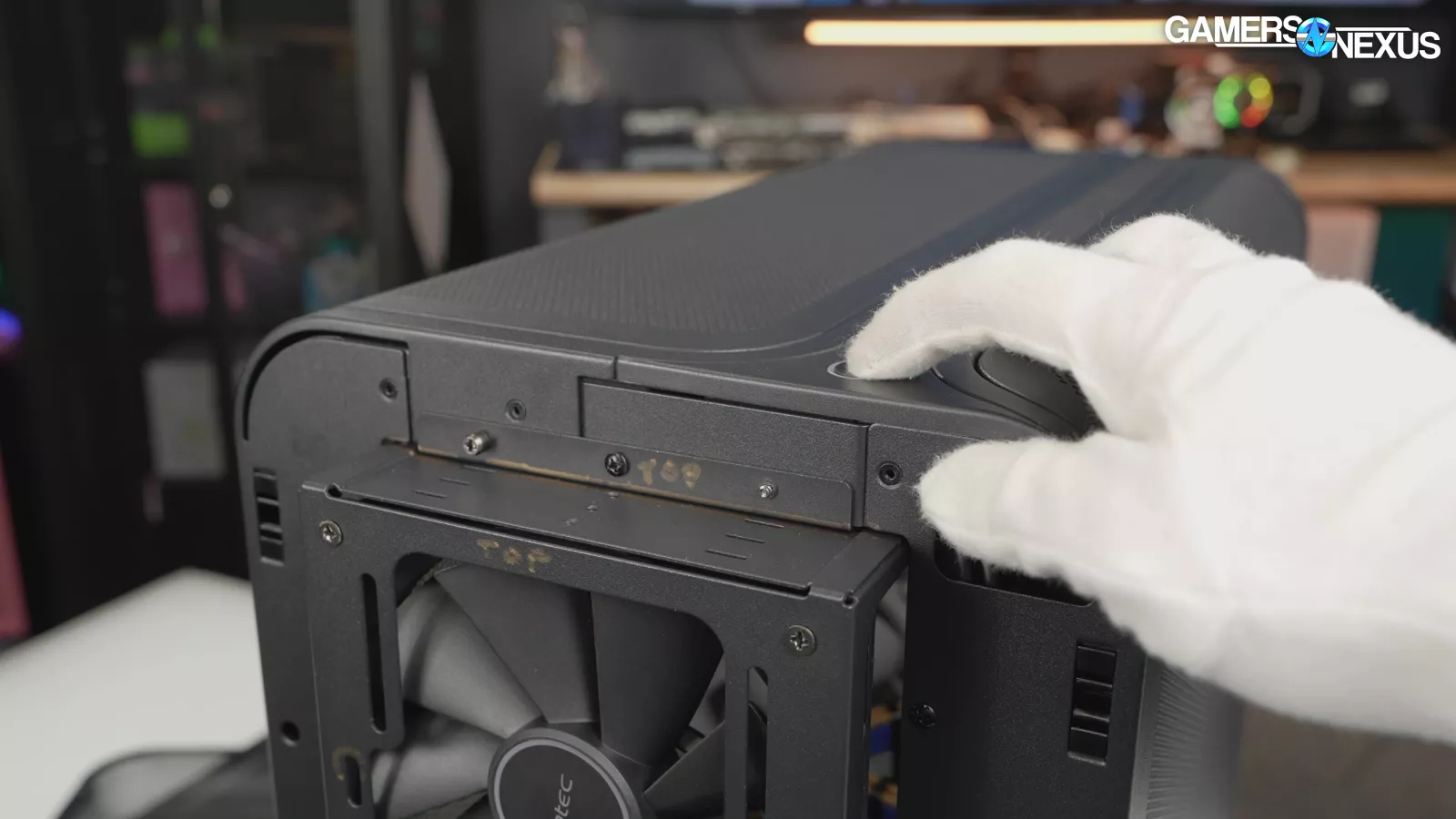
Hyte additionally has various areas of smaller consideration to element within the case. The facility button, for instance, makes use of what seems to be a GTMX low profile change, much like a Cherry MX Blue keyboard change. Utilizing a keyboard change right here is 100% on-brand for HYTE, as is the truth that it requires 4 LEDs simply to light up the round white energy button. The one draw back is that the tactile click on would not line-up with actuation, so you may click on the button with out turning your PC on.
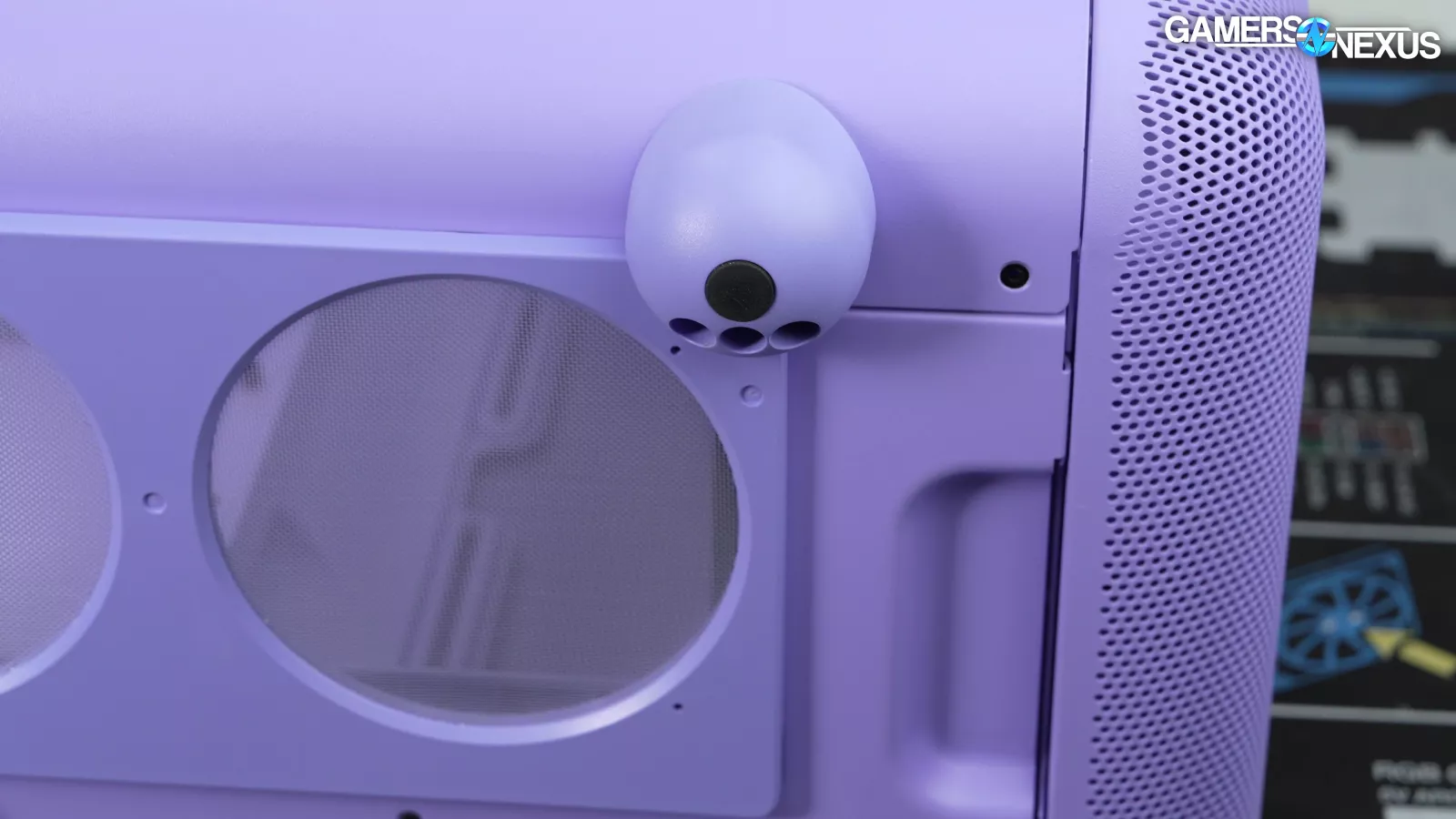
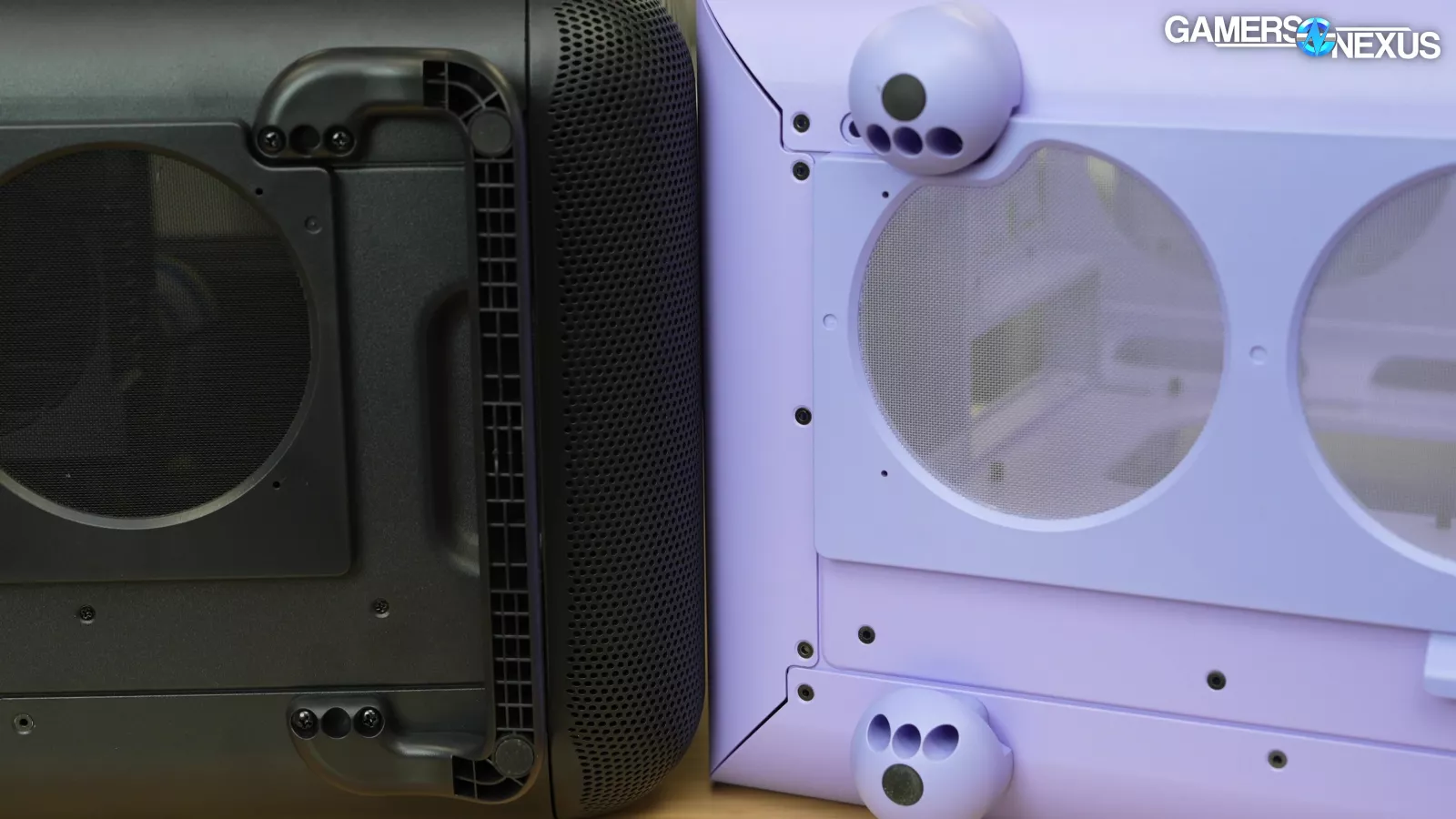
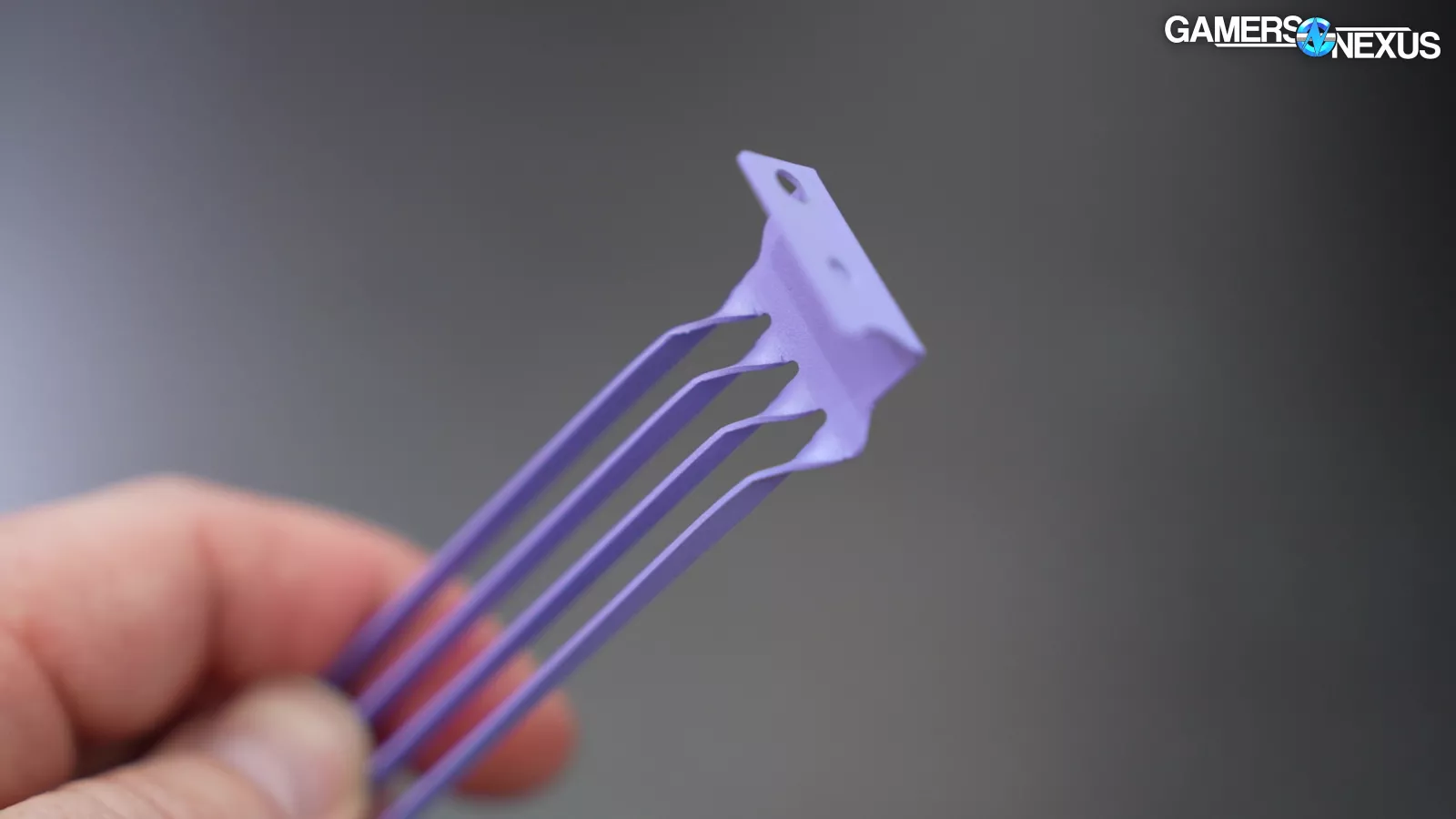
The “paw” and “up to date” foot kinds are additionally distinctive. These are locked to particular colorways: so-called paws include purple, pink, and inexperienced circumstances, and up to date toes include white, black, and purple circumstances. These should not out there as standalone equipment.
The X50’s elaborate, rounded drive cage helps 2x 2.5″ drives and 1x 3.5″ drive concurrently. The truth that the X50 can match 2x 2.5″ drives and a full-sized laborious drive all stacked on high of one another behind the motherboard tray is a testomony to the unusually giant cable administration space and the additional width of the case. Sadly, all three drives have to be put in with plugs going through the rear of the case, so there isn’t any tidy cable path from the ability provide to the drive cage.
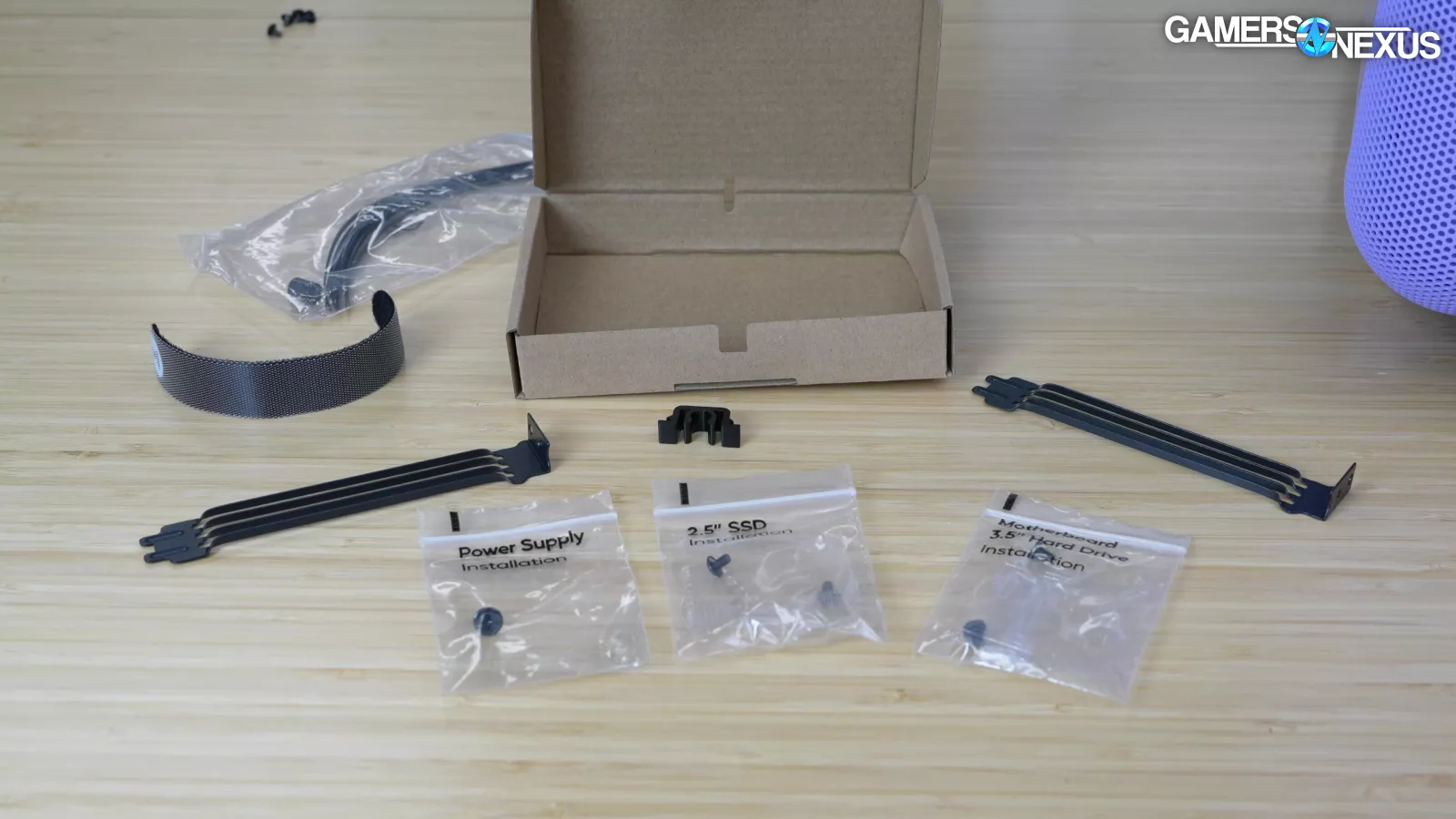
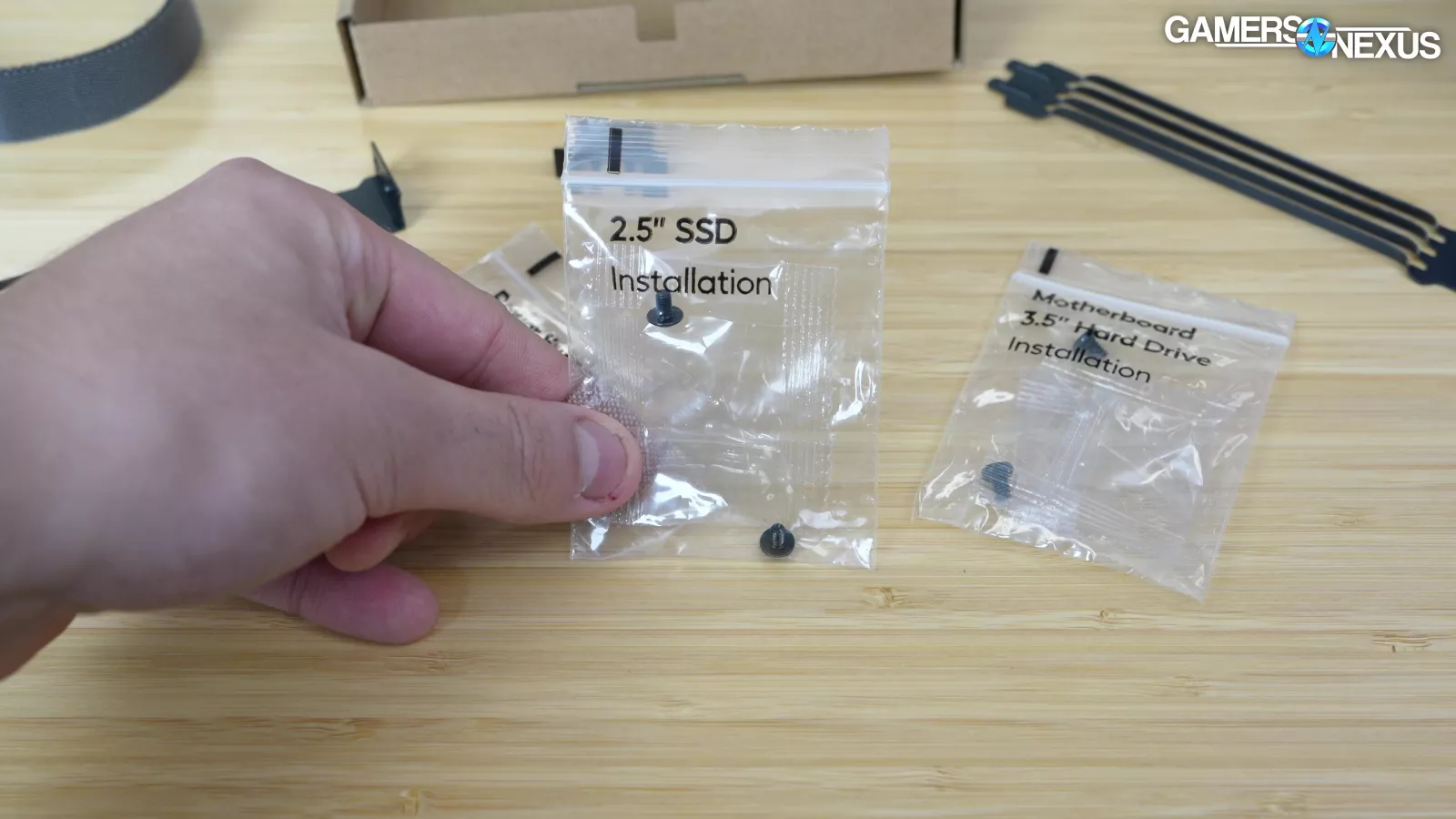
On packaging, there’s some cognitive dissonance on the environmental friendliness: We made some extent of praising the BF 360 (learn our review) for delivery screws in labeled reusable luggage. Hyte additionally does this, besides Hyte’s reusable luggage comprise smaller disposable luggage, which is simply completely pointless.
Thermals & Noise
Because the X50 would not include followers, we gave it the HYTE HS 420 remedy by swapping in a set of followers from a aggressive high-airflow case. Based on HYTE, “optimum airflow for many configurations are going to contain 3 entrance consumption followers with a single rear exhaust fan.” This proved tough: the Antec Flux Pro (learn our review) has greater than three 140mm followers, the BF 360 Flow (learn our review) has 180mm followers, the Lancool 217 (learn our review) has 170s, the Meshify 3 solely has three followers whole, the Montech XR Wood is from a unique worth class, and so forth and so forth. The compromise we settled on was the Antec Flux non-Pro; though it is a less expensive case, it comes with 4 120mm followers and one 140mm, which all match concurrently into the X50. We positioned the one 140mm fan within the entrance high slot as consumption, two 120mm followers as consumption within the different two entrance slots, one other 120mm fan as consumption within the facet backside slot, and the one reverse-blade 120mm fan as rear exhaust. The underside slots had been left empty.
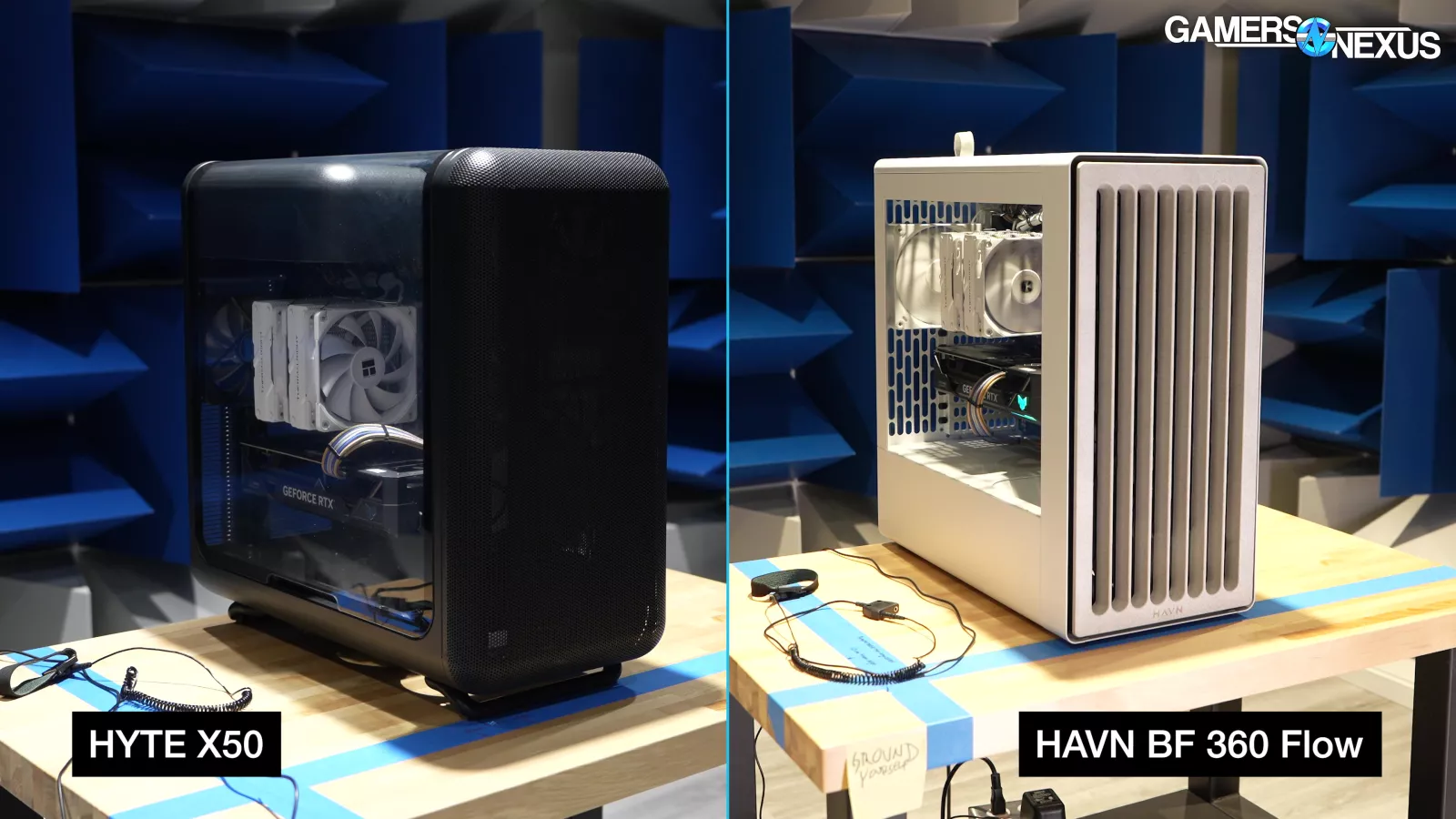
The HAVN BF 360 is the head-to-head competitor for the X50 in some methods as they’re each thermally focused, adopted by possibly the Antec C8 Curve (we have now outcomes for the C8 ARGB, which incorporates followers). Of the circumstances that HYTE selected to match the X50 in opposition to in reviewer supplies, we agree most with Fractal’s Torrent (watch our review) and North XL (learn our review) (and the NZXT H7 Flow 2024, however we do not have check information for that one).
Acoustic Glass Testing
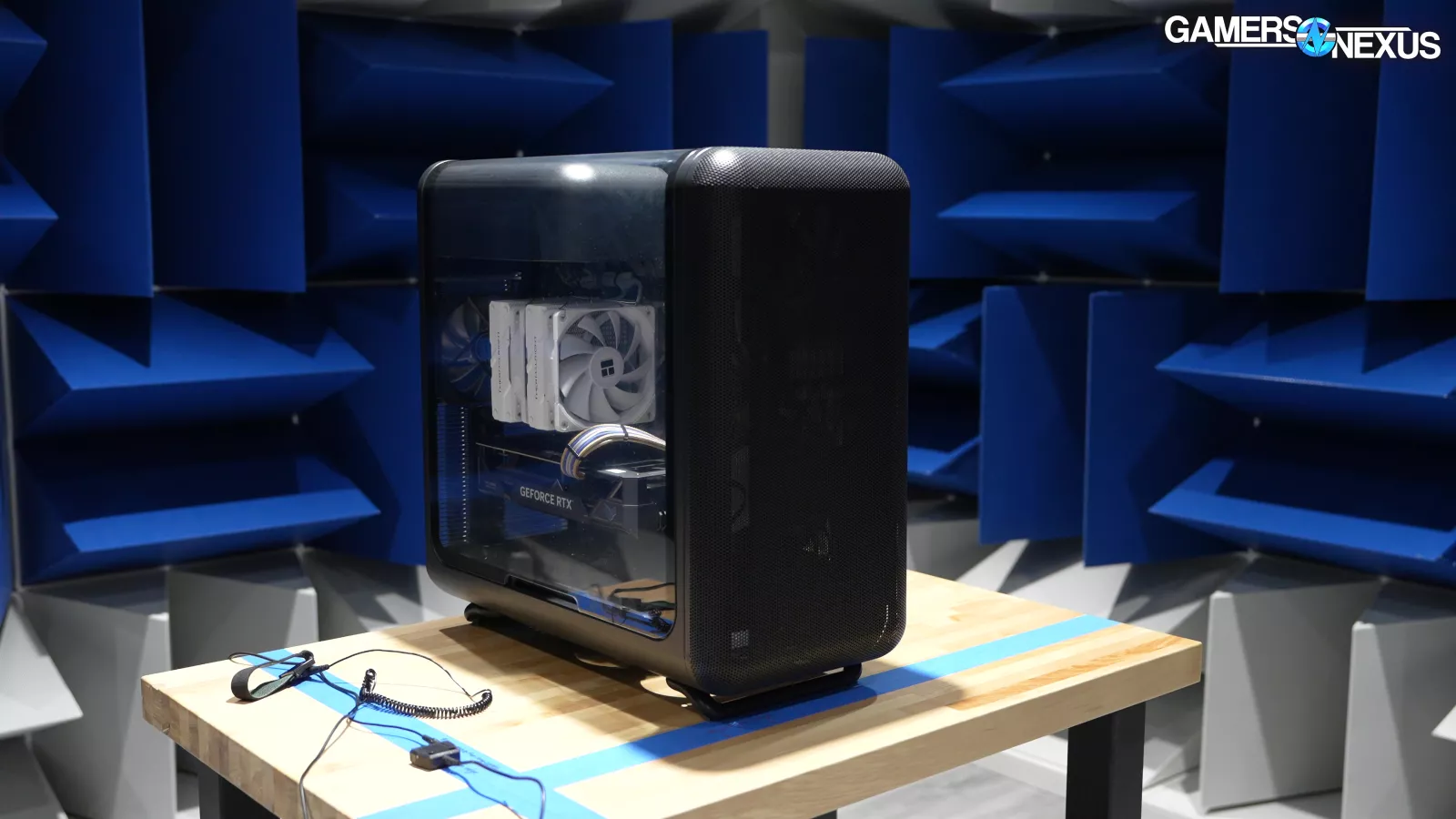
To start out, we did some checks within the hemi-anechoic chamber with our microphone positioned one meter away from the case.
Frequency Spectrum Comparability
An vital observe first: Our standardized acoustic testing for circumstances measures straight-on on the entrance panel, which we did take for our noise-normalized course of and for which the X50 ran at round 44-45 dBA beneath these situations.
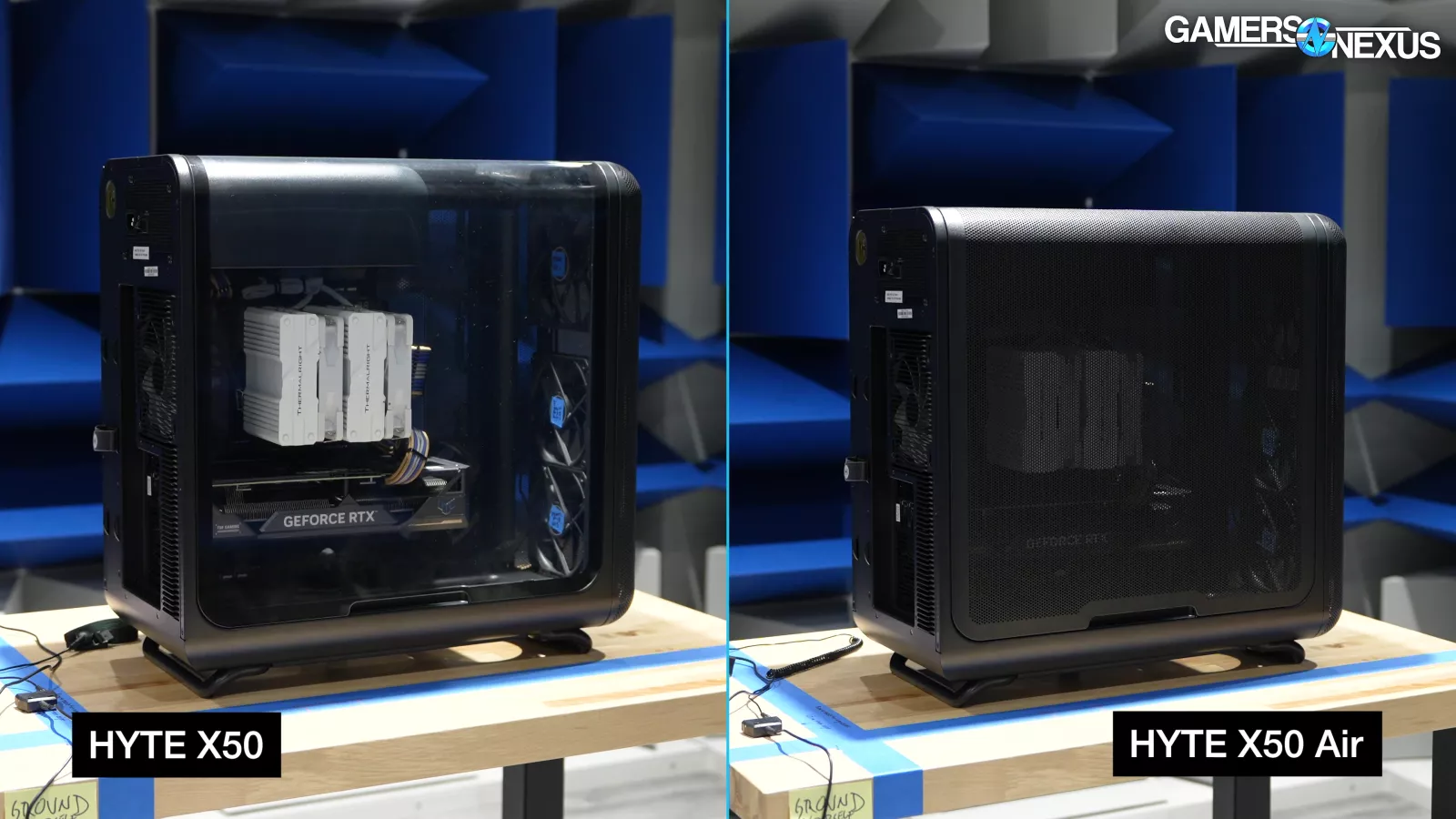
For the panel comparisons although, we’re taking pictures straight on on the facet panels as an alternative since glass on the facet received’t have an effect on front-facing noise a lot apart from emitting extra of it ahead than a mesh panel.
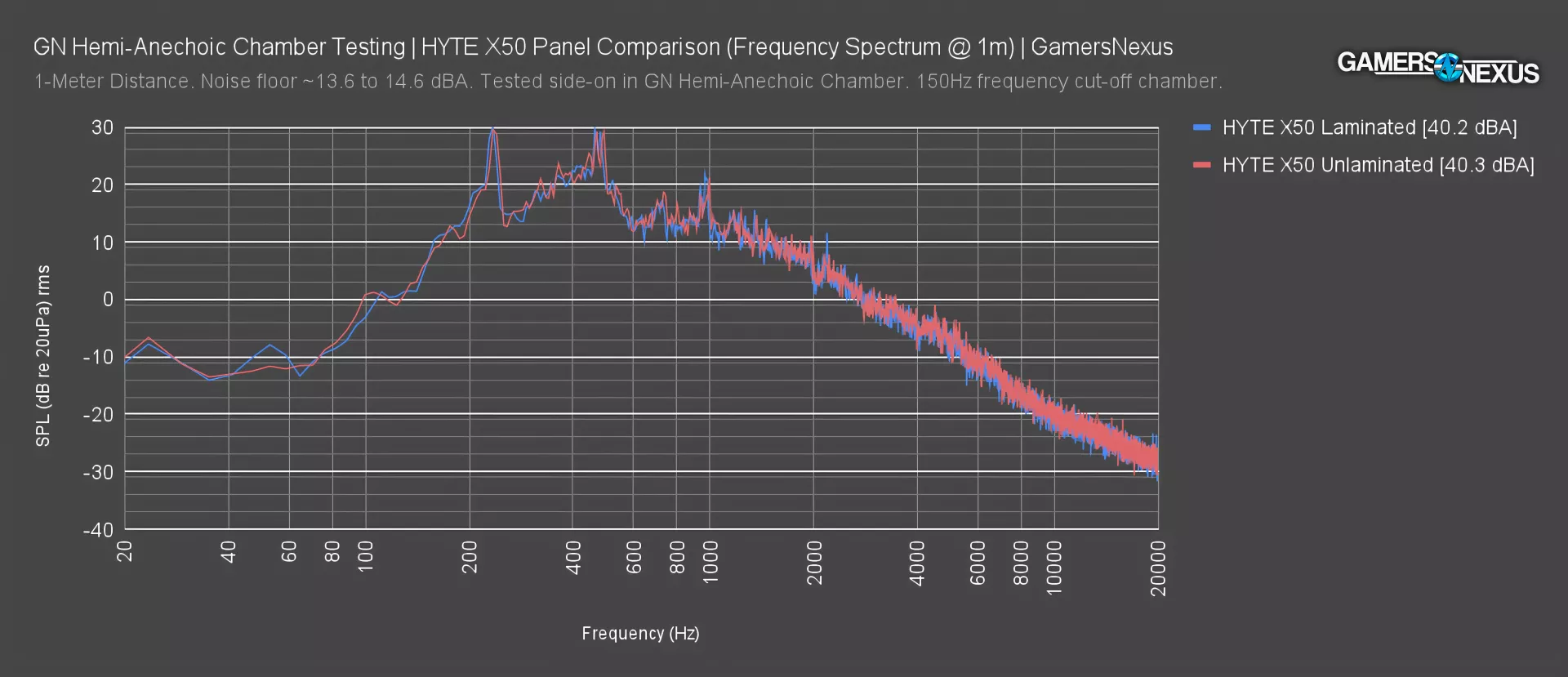
For the frequency spectrum comparability, the laminated acoustic panel is sort of similar to the unlaminated panel. On a technicality, the laminated panel shifts a few of its peaks barely left on the frequency plot, similar to at about 220-230 Hz, about 500 Hz, and about 900 Hz. They spike on the similar factors, however the laminated panel could be very barely decrease frequency. It’s hardly measurable and tough to know if that is variance or not. We don’t assume it’s variance, although.
The noise ranges are the identical: The laminated panel measured at 40.2 dBA and the unlaminated panel measured at 40.3 dBA. 0.1 dBA is totally inside variance and error, and so these are successfully similar.
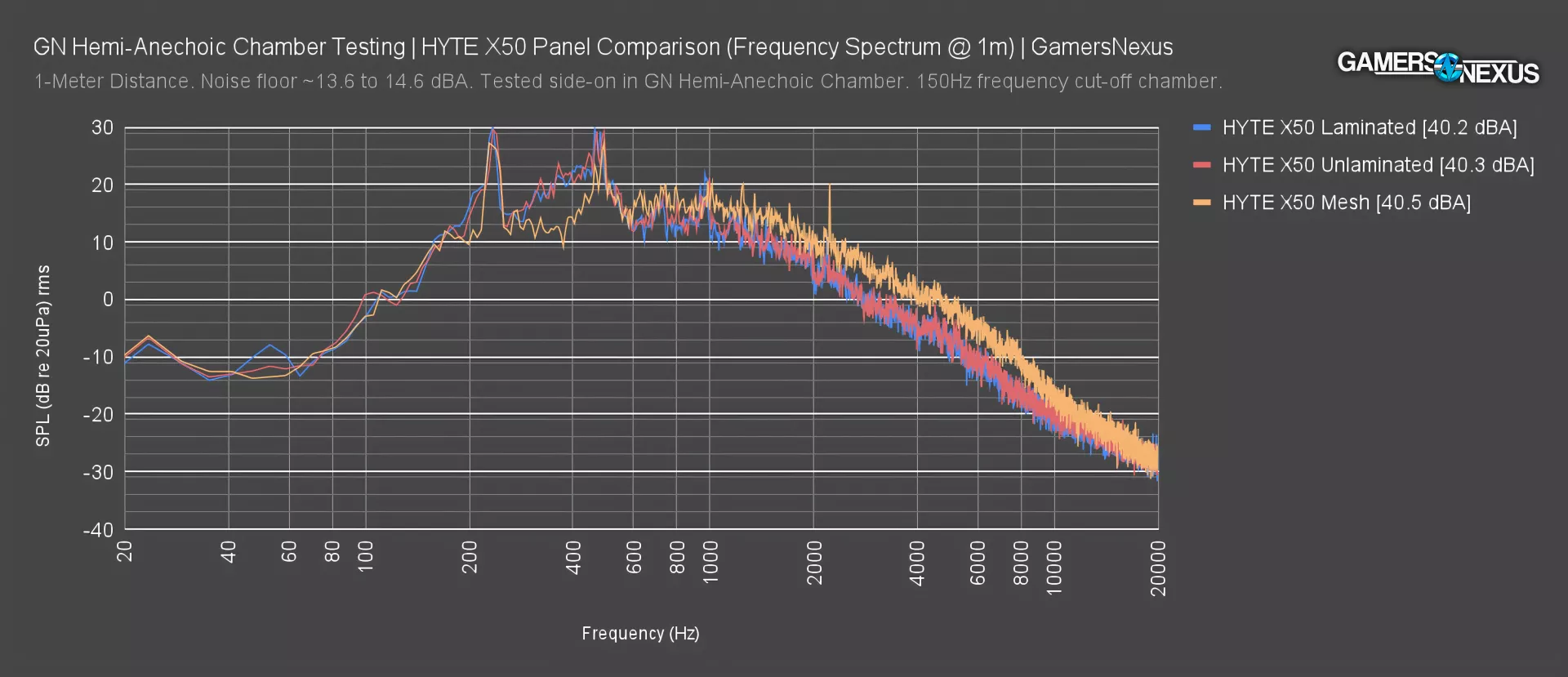
Including the Mesh panel model to the charts, we see a 40.5 dBA outcome, so solely barely increased. The frequency shifts considerably although, regardless of solely a 0.2 dBA improve in dBA SPL. The mesh panel has louder excessive frequencies on common, particularly after the 1000 Hz marker. The vary of 1,500 to five,000 Hz specifically will increase.
Additionally notably, the mesh panel sees a dip in noise ranges for the frequencies within the vary of 250 Hz to 500 Hz. The identical spikes nonetheless exist, with the 230 Hz or so spike current however quieter, whereas the 450-500 Hz spike has shifted barely proper on the frequency axis.
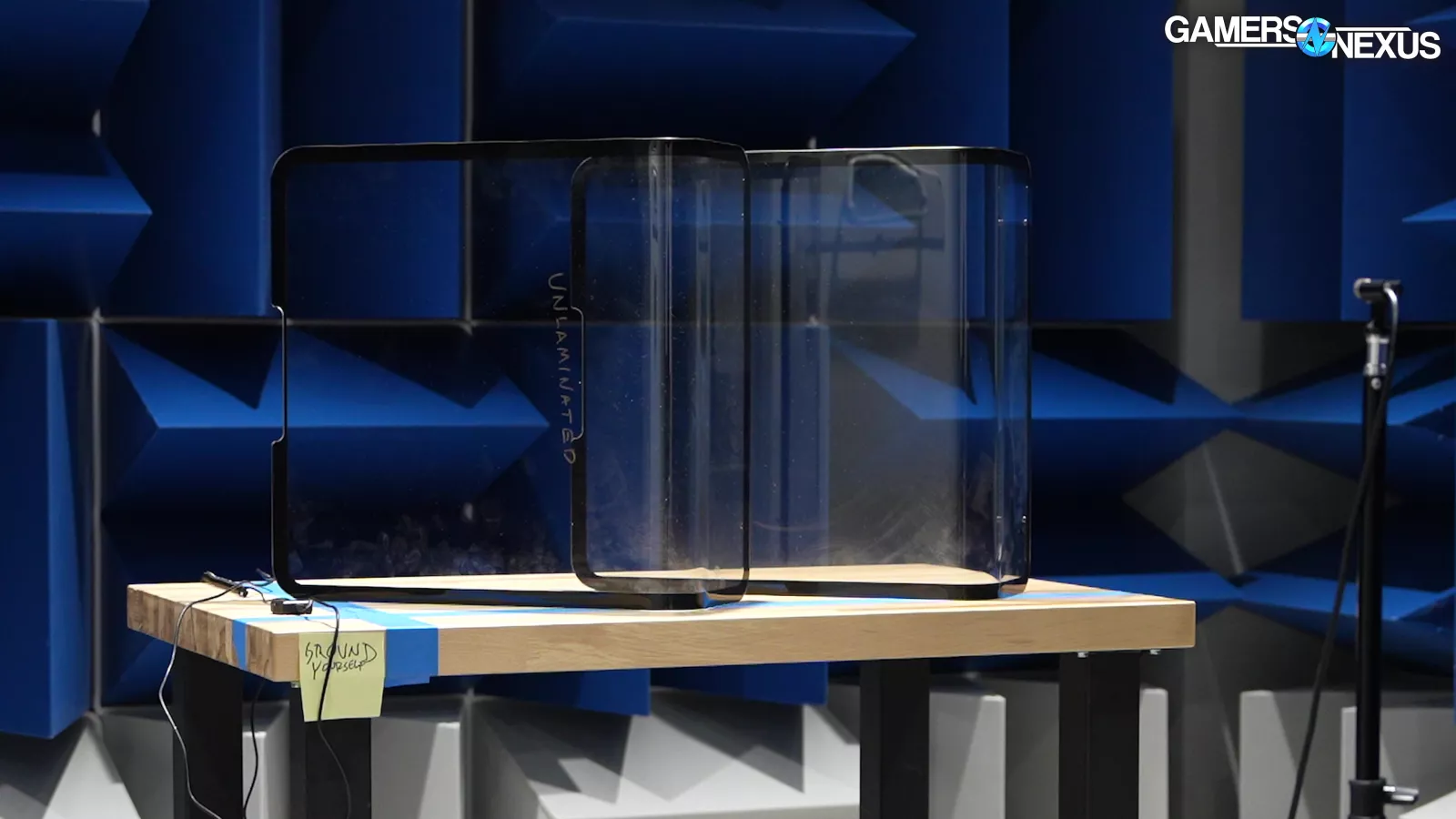
We definitely imagine that so-called “acoustic glass,” or laminated glass, can do one thing, however on this context, it looks as if opportunistic advertising that retrofits itself into the precise objective of the lamination, which is just that the panel must be made that method by the manufacturing unit.
It would not harm, however the entrance of the case is mesh with a bunch of holes in it, and the facet panel would not change that.
CPU Full Load Thermals – Noise-Normalized
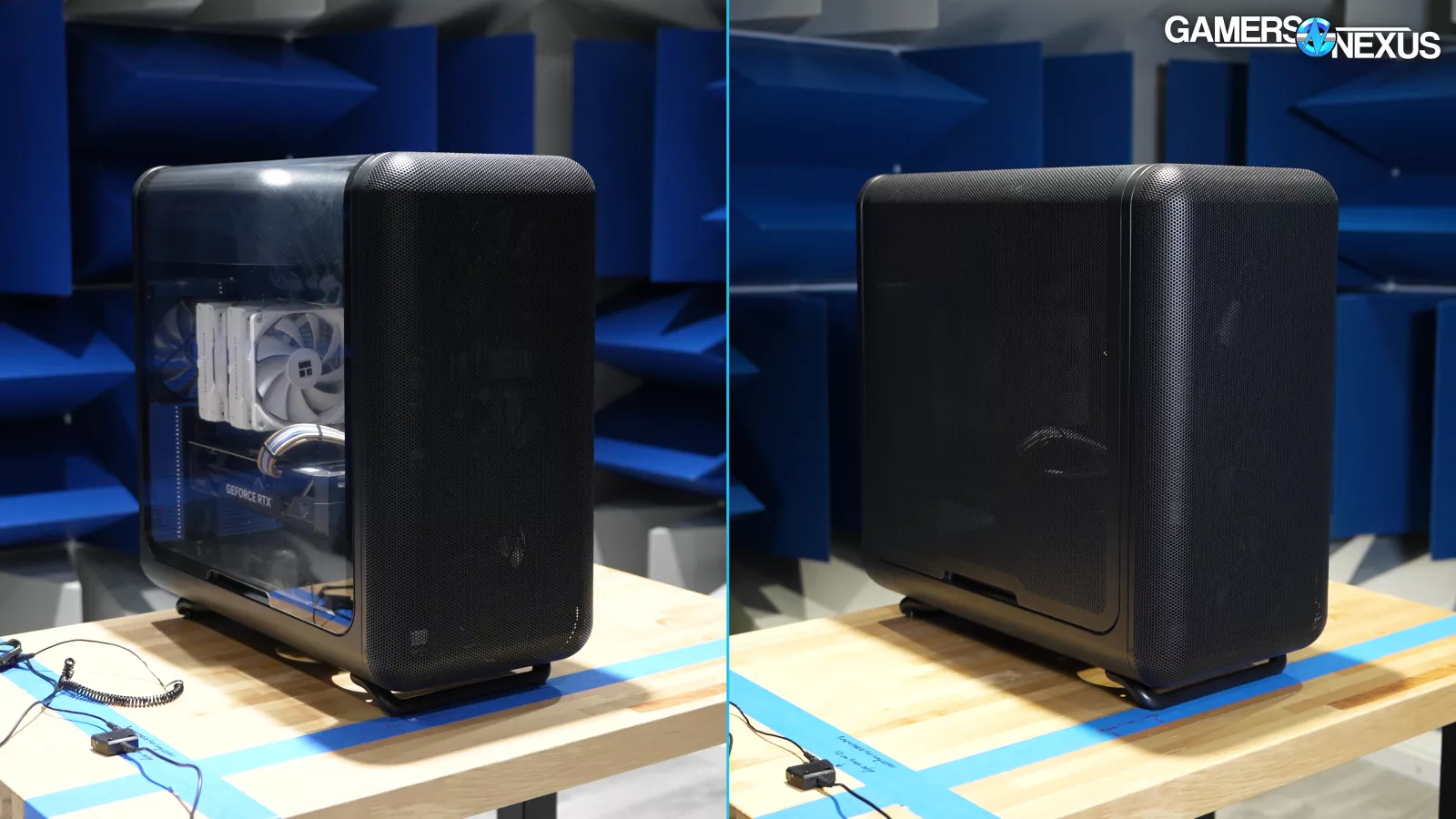
For noise-normalized testing, we decrease the speeds of all case followers till the whole noise degree measured at one meter in our hemi-anechoic chamber drops to 27 dBA SPL. This required very barely completely different fan speeds for the X50 and X50 Air, however that’s precisely why we have now this chamber. Room-level measurements would have had us at about the identical noise degree, which might barely have an effect on the outcomes.
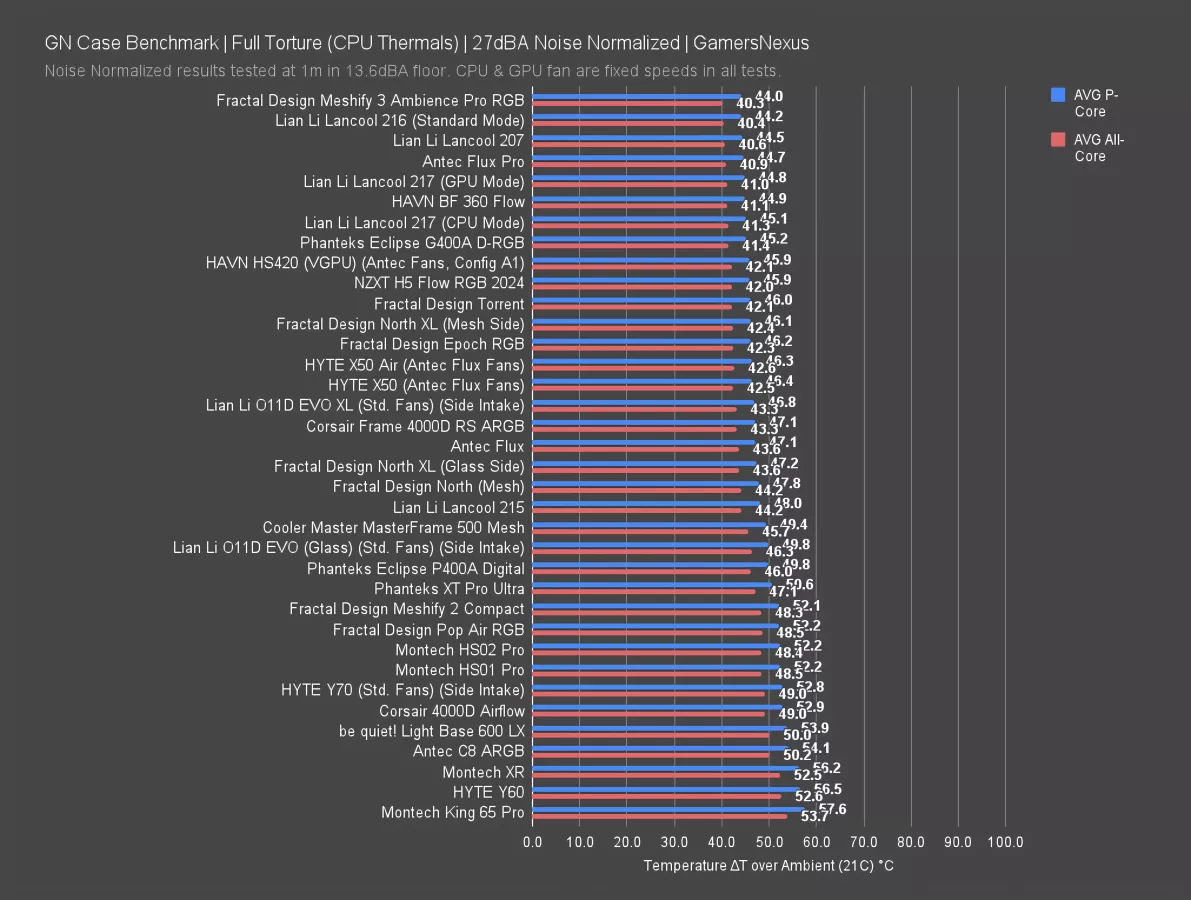
Adjusting for this, the CPU thermals within the two circumstances are similar at 43 levels Celsius above ambient for all-core and 46-47 levels for the P-cores. These outcomes had been gathered with the Antec Flux’s inventory followers.
The BF 360 had a powerful exhibiting in our recent review, and it is forward of the X50 right here with a big lead from its 41-degree all-core common. The once-king Torrent is mainly tied with the X50, as is the mesh-sided North XL. Appropriately, the Antec Flux is just a bit hotter than the X50 (utilizing precisely the identical followers) at 44 levels, tied with the glass-sided North XL. Aside from margin of error, the opposite variations would emerge from the case design.
The Antec C8 with its backside consumption averages considerably worse for CPU thermals at 50 levels.
GPU Full Load Thermals – Noise-Normalized
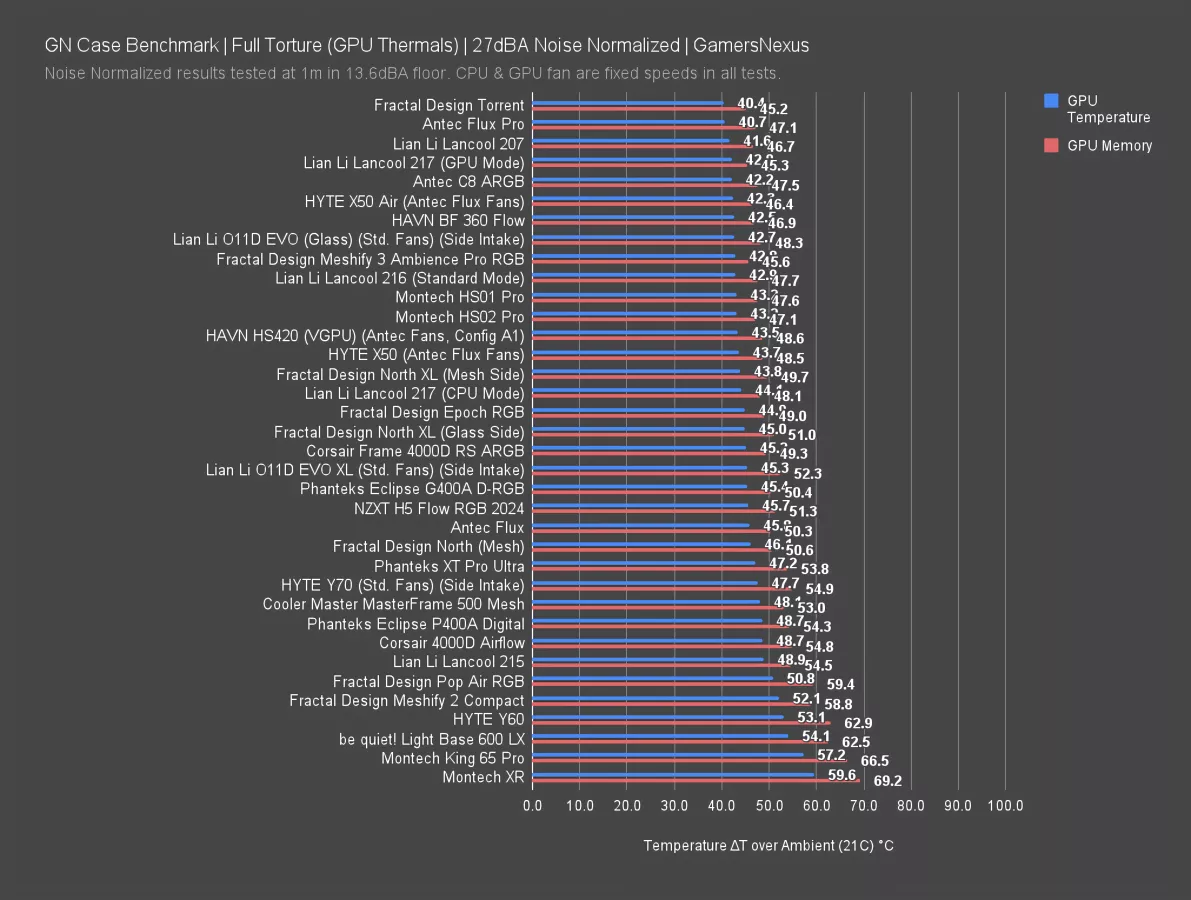
In the identical check, the X50 and X50 Air are extra differentiated when contemplating GPU thermals. The X50 averages 44 levels Celsius above ambient on the GPU and the X50 Air averages 42, which is a comparatively giant hole for GPU thermal testing in our suite, particularly for a similar body and followers.
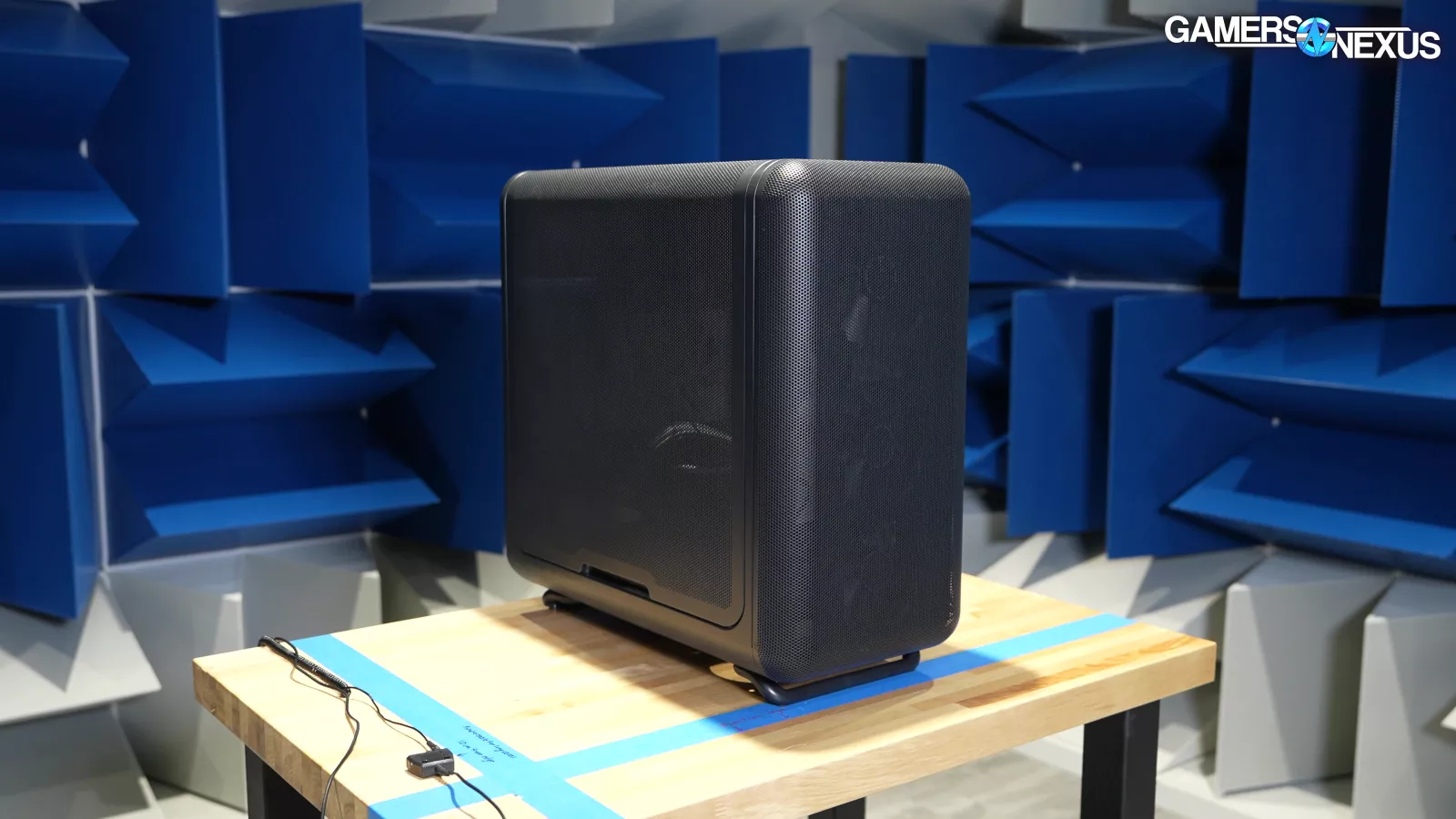
This is smart, for the reason that mesh panel provides the GPU exterior entry to air and its exhaust from the highest of the video card may simply exit the facet panel.
The BF 360’s efficiency is robust on this check at 42.5 levels, as is the C8 ARGB because of the backside consumption, however the X50 Air ties each for GPU thermals. The Torrent stays greatest on the chart with a 40 diploma common, whereas the higher of the 2 North XL outcomes ties the X50 non-Air, and the Flux falls behind at 46 levels.
CPU Full Load Thermals – Full Pace
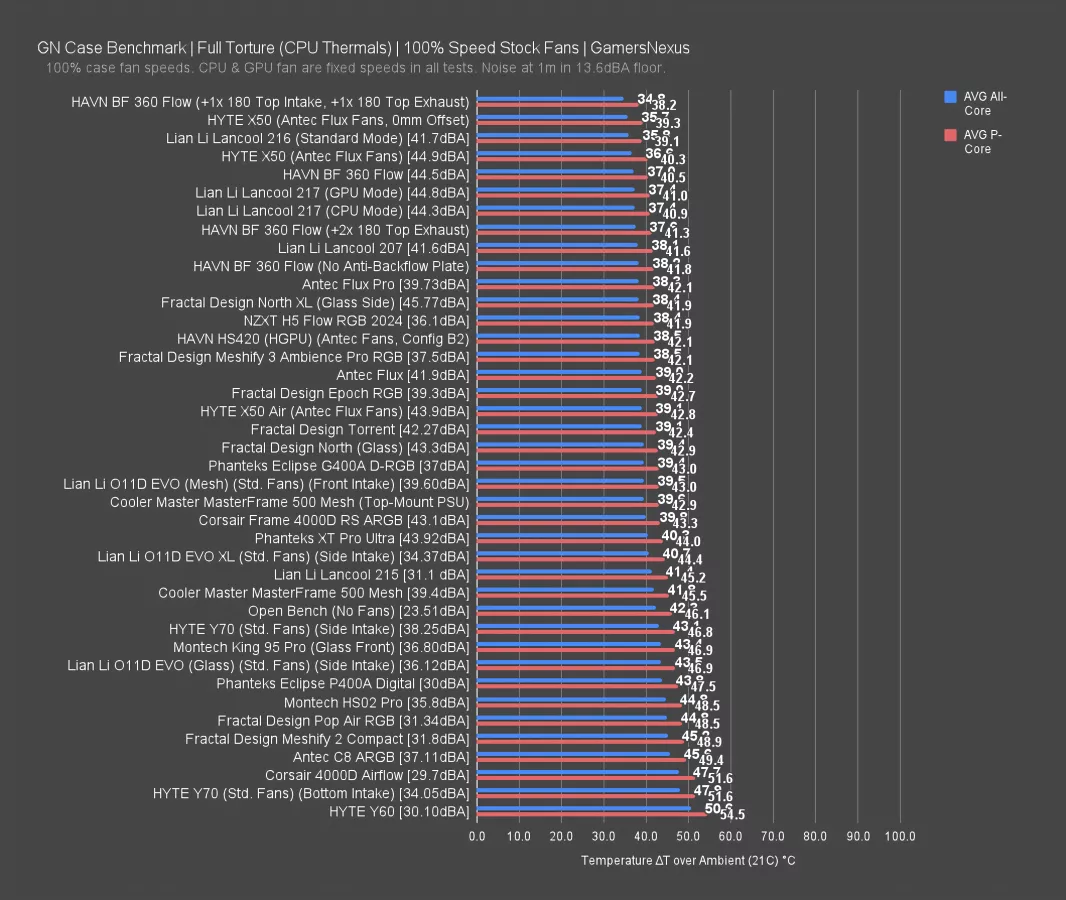
Shifting to checks with the case followers at max velocity, the perfect CPU temperature common was scored with the entrance bracket within the 0mm offset place, with a 36 diploma all-core common and 39 on the P-cores. That is adopted by the common X50 at 37 levels all-core, after which lastly the X50 Air at 39 levels all-core. For CPU thermals, it is smart that the glass panel would assist because it ensures all consumption makes it to the CPU (quite than having a few of it escape out of the facet panel previous to hitting the cooler).
That is getting sophisticated, so we’ll give attention to the common X50 for comparability right here. The BF 360 Stream ended up at 40.5 levels for P-core thermals when operating at 44 dBA, with the X50 on the similar noise degree — so we’re mainly noise-normalized once more — and tying it. The X50 Air falls behind right here at 42.8 levels since we’re shedding CPU-bound air by way of the facet panel.
The Torrent’s 42-degree common at 42.3 dBA remains to be respectable, however the flood of excessive airflow circumstances lately has pushed it down the chart, the place it sits alongside the Antec Flux. The Flux being at 41.9 dBA and 42.7 levels exhibits that its case kills extra of the noise than HYTE’s X50 (which is about 3 dBA louder) since they’ve the identical followers right here, although the X50 will get extra air into the case.
The C8’s CPU thermals proceed to be comparatively weak with a 46 diploma all-core common, though that is accompanied by a comparatively quiet 37.1 dBA noise studying.
GPU Full Load Thermals – Full Pace
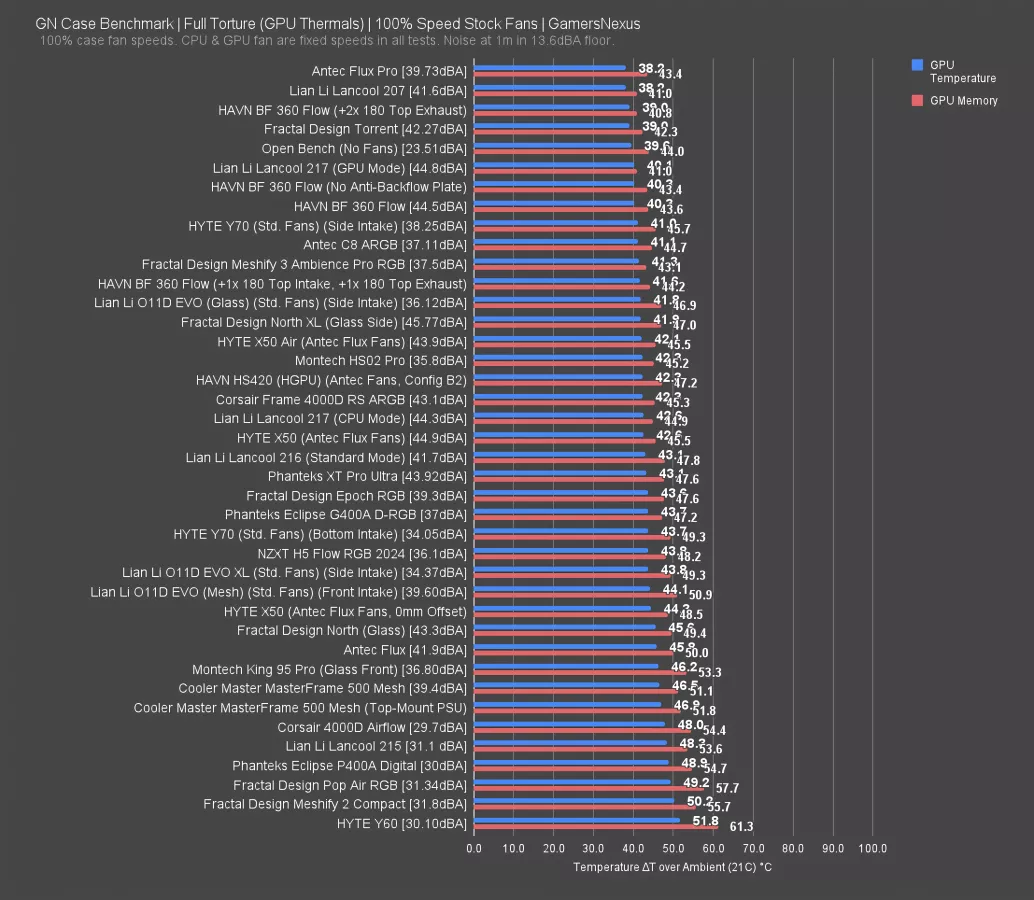
GPU thermals aren’t considerably affected by the change in facet panel between X50 and X50 Air, with each averaging between 42 and 43 levels above ambient for GPU temperature. This can be a reversal of the habits we noticed in noise-normalized testing, so there’s worth to contemplating each. With a 0mm offset on the entrance bracket, that common rises to 44 levels, so it is not an improve throughout the board.
The inventory BF 360 Stream averages 40 levels, which beats the perfect of the X50’s outcomes. General, the BF 360 has both tied or crushed the X50 on this check. This clearly depends upon what followers are put in within the X50 and the place, however we had been pretty beneficiant to the X50 by putting in 5 whole followers from the Flux (non-Professional).
CPU Full Load Thermals – Standardized Followers
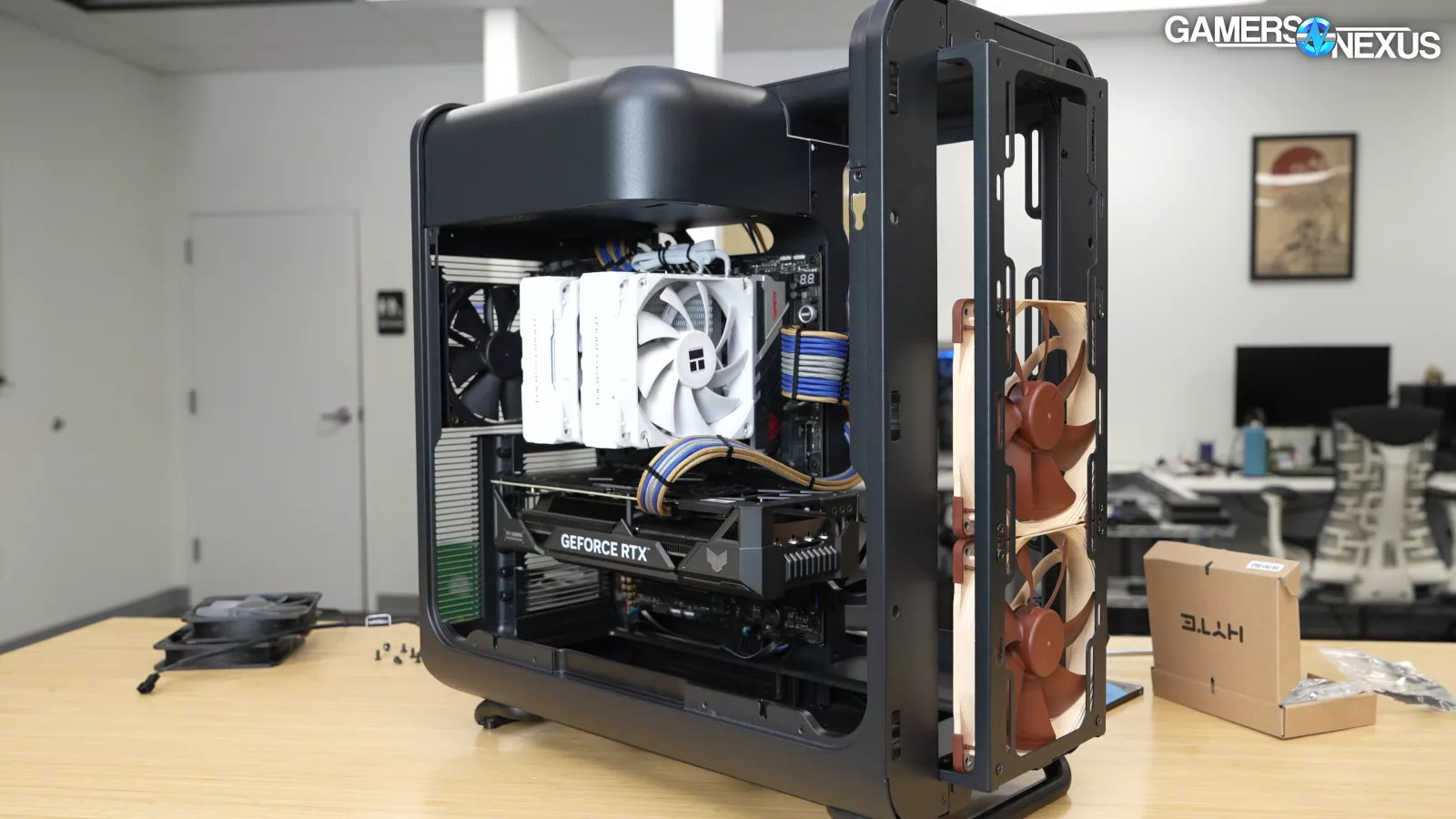
As regular with circumstances that do not ship with any followers, our standardized fan testing assumes higher significance. Of our commonplace set of three Noctua followers, we put in the 2x 140mm followers as entrance consumption and the 1x 120mm as rear exhaust, which comes near the 3x consumption/1x exhaust configuration that HYTE considers optimum.
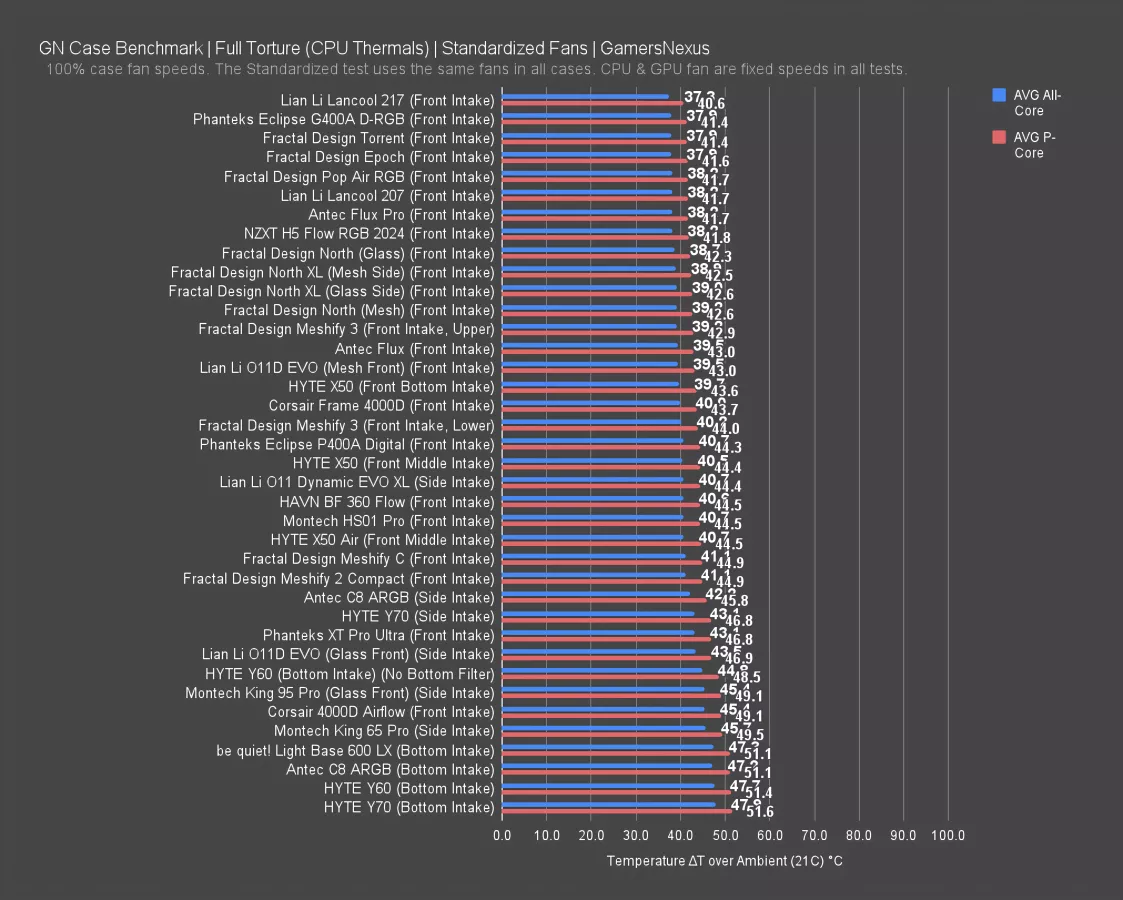
With the 2x 140mm followers positioned in the course of the entrance panel, the X50 and X50 Air carried out identically, at 41 levels all-core and about 44 on the P-cores. Shifting the followers right down to the bottom entrance slots within the X50 barely lowered CPU temperatures.
The BF 360 non-Stream comes with out followers, so this check is ideal for evaluating that variant in opposition to the X50. Utilizing the identical set of followers, the BF 360 averaged 41 levels all-core and 45 on the P-cores, which ties it with the X50 when the standardized followers are positioned within the center, however the X50 pulls forward a bit with the decrease fan placement.
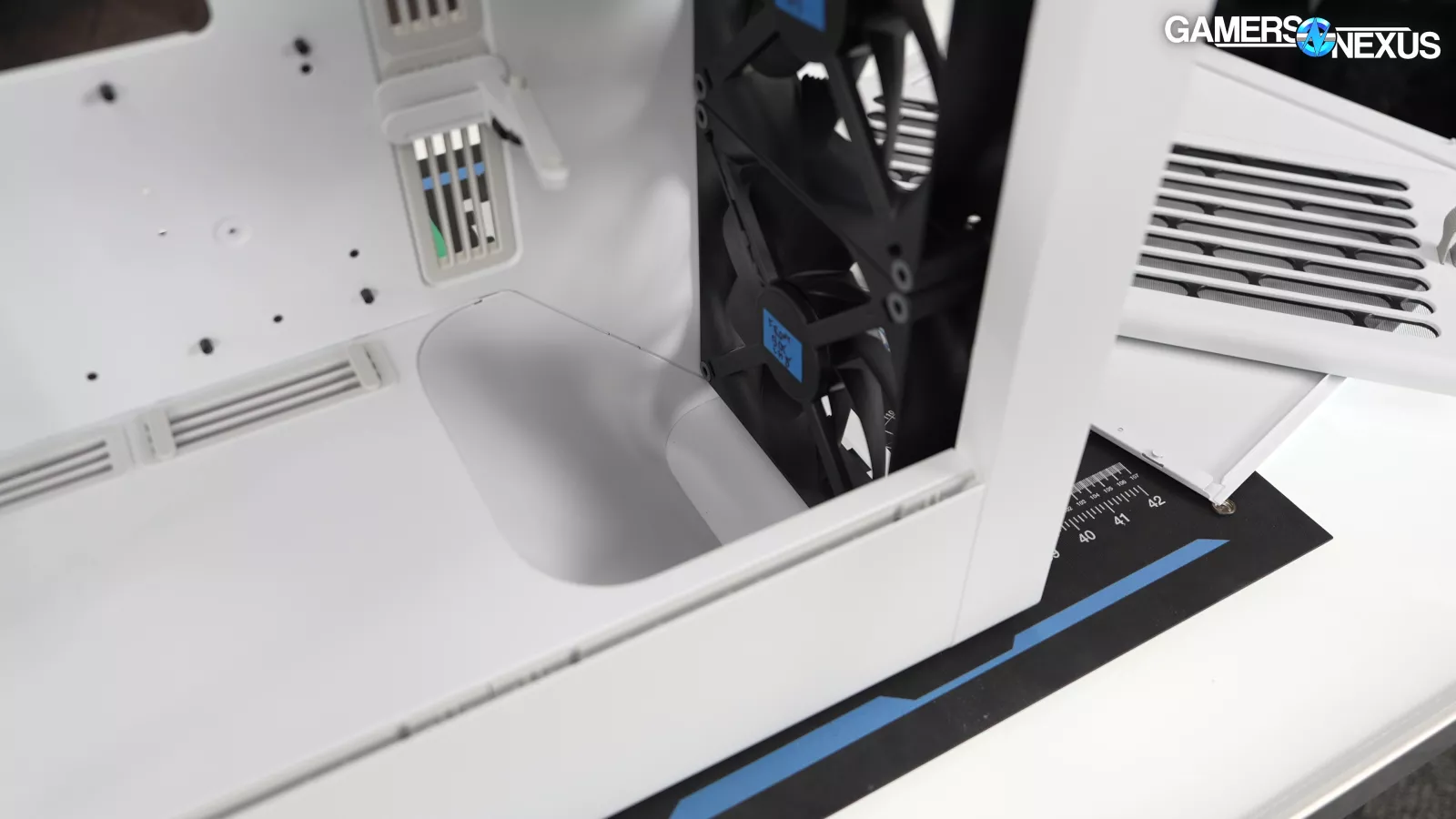
For context, after we carried out this check within the BF 360, the consumption followers had been positioned as little as doable on the entrance panel to level instantly into the airflow scoop.
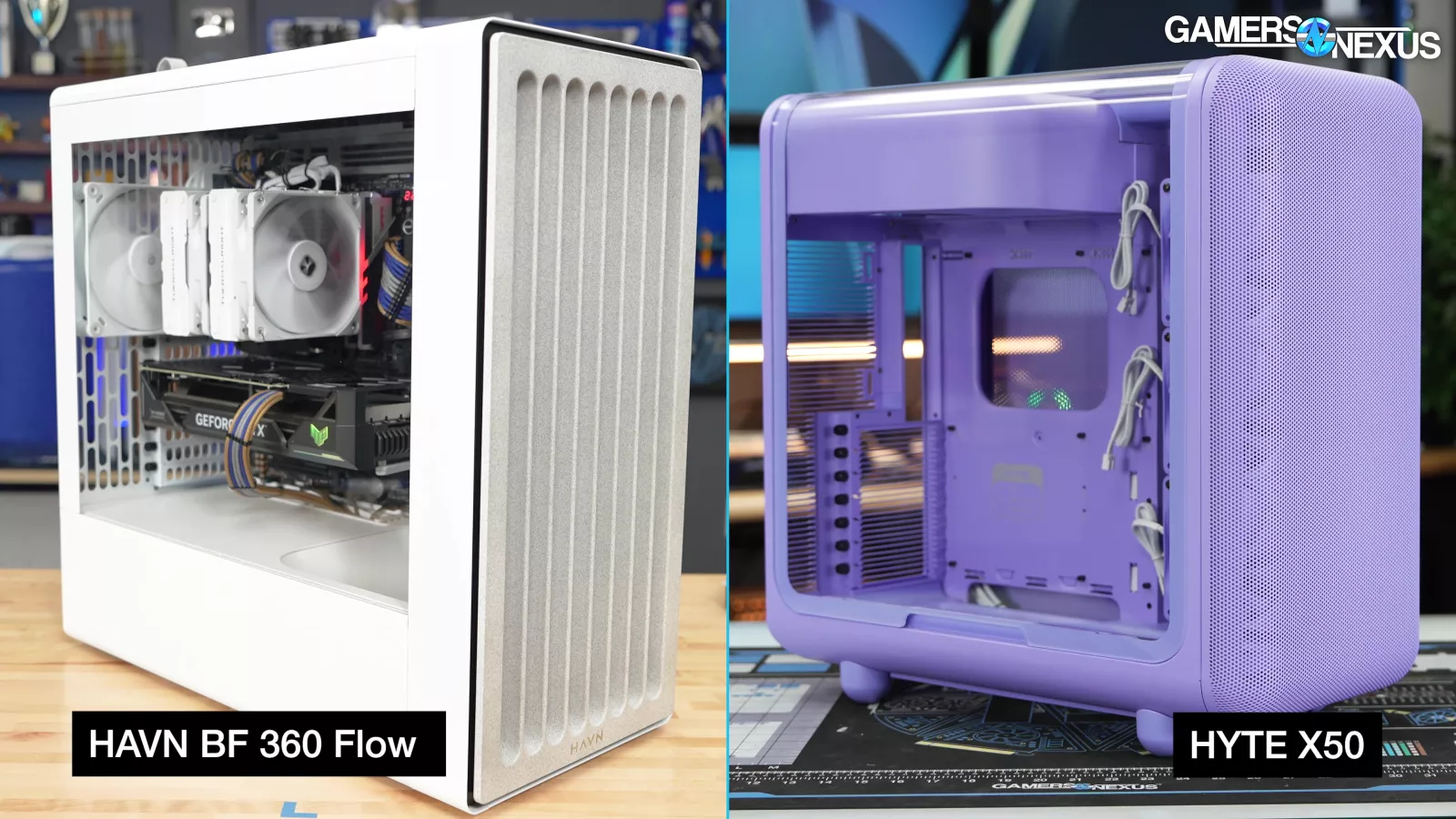
Usually, this check signifies that the CPU cooling efficiency is equal between the BF 360 and X50 with our setup.
GPU Full Load Thermals – Standardized Followers
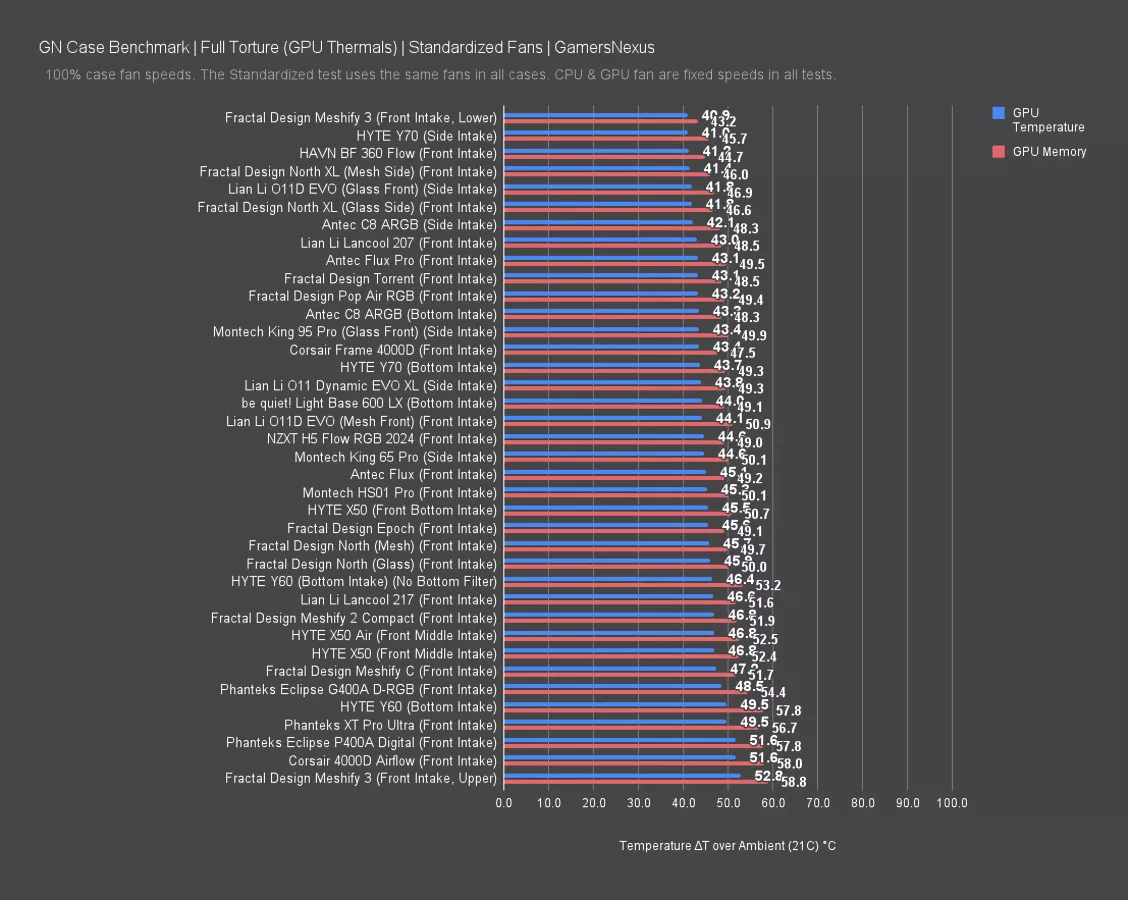
Shifting to GPU thermals with the standardized followers, the X50 and X50 Air with the entrance followers within the center place once more carried out identically at 47 levels above ambient, and the decrease place was once more higher at 46 levels.
The BF 360 had significantly good efficiency right here, seemingly because of the airflow scoop, averaging 41 levels above ambient. Mixed with the CPU cooling outcomes, this places the BF 360 forward of the X50 when utilizing the identical set of followers.
Schlieren Imaging Air Density Check
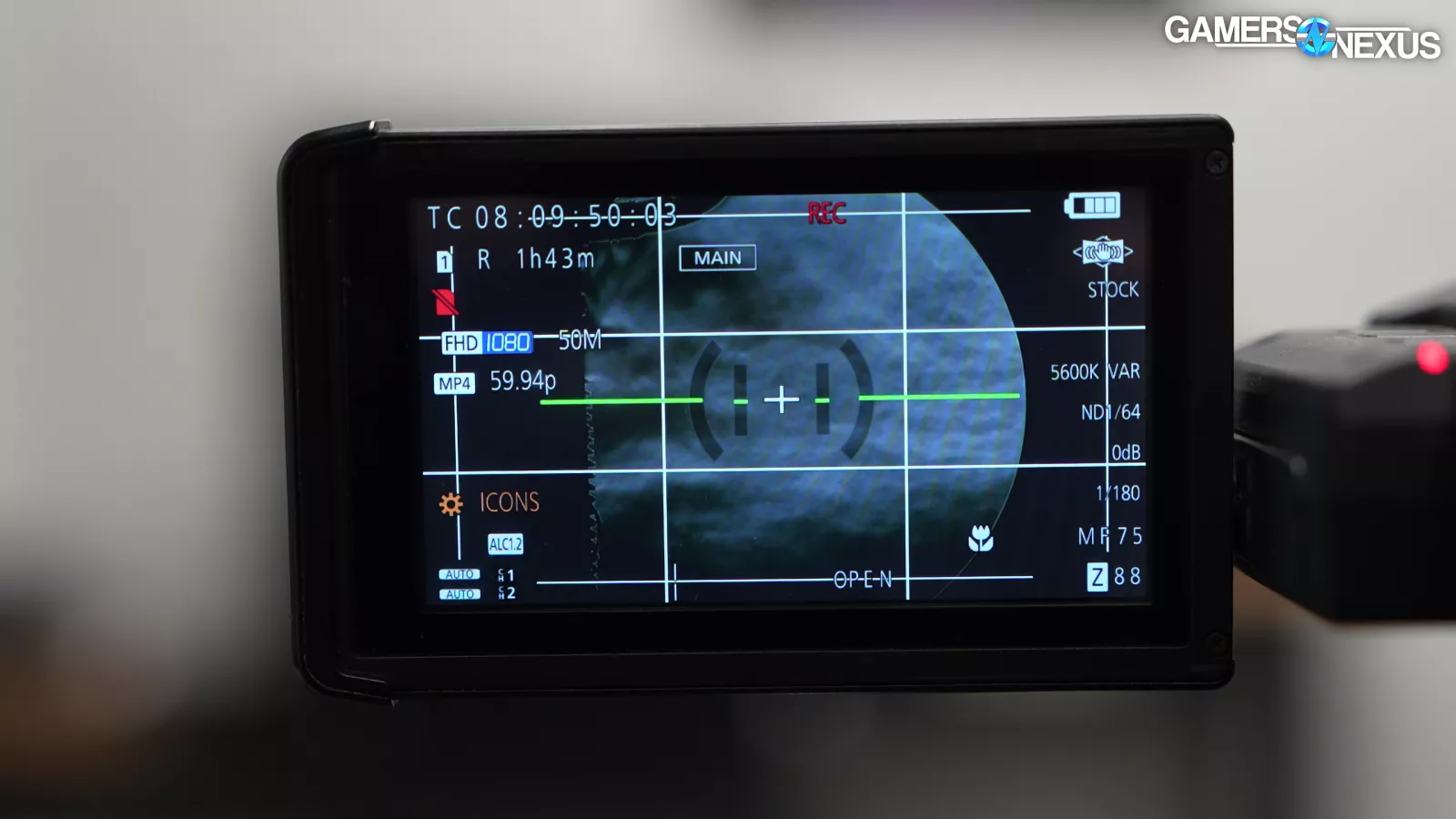
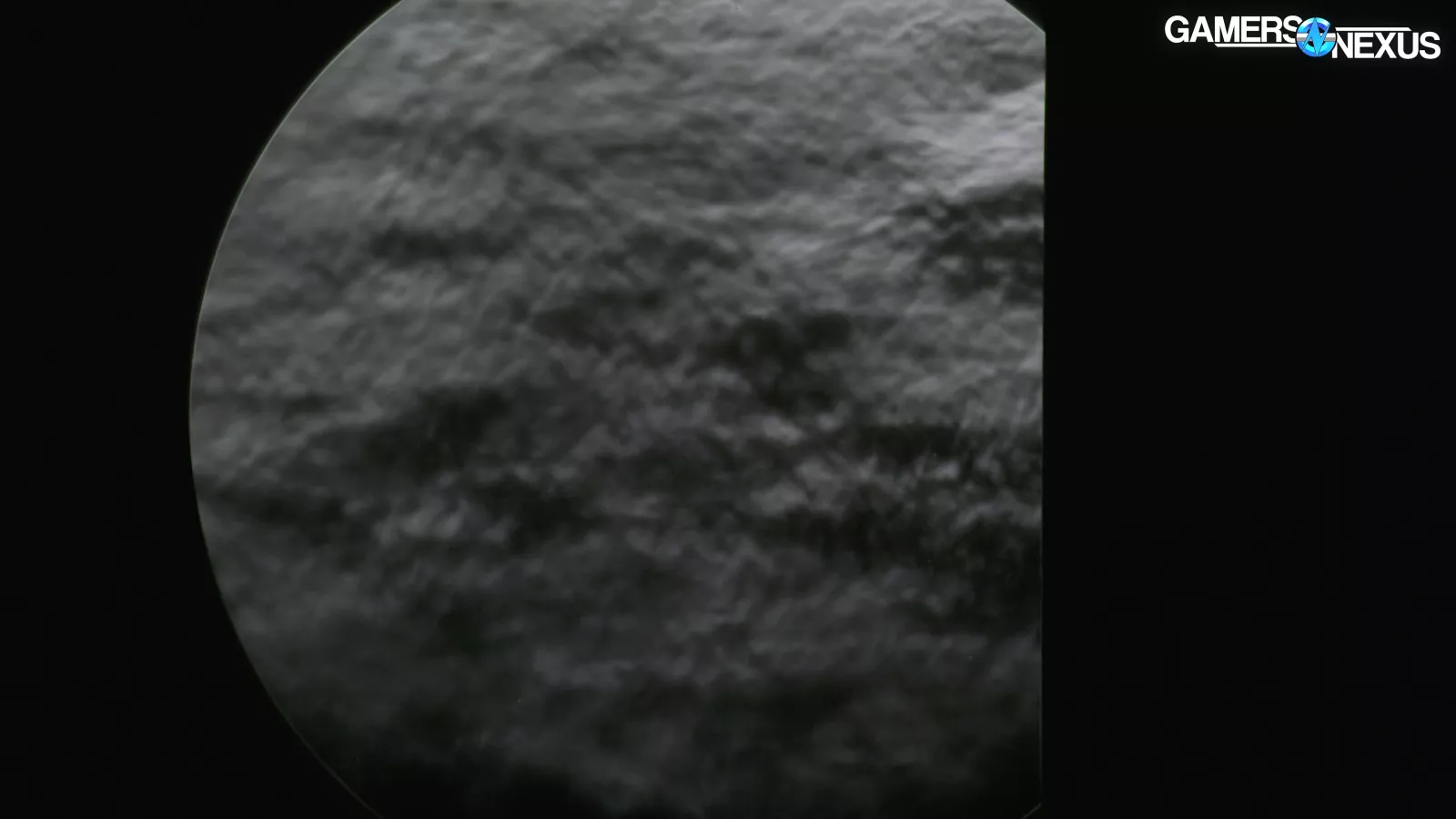
This Schlieren imaging air density check instance exhibits the case with none facet panel put in in any respect. You are simply seeing the true chaos of air coming into and exiting by way of a large open facet panel the place there isn’t any specific course of stream.
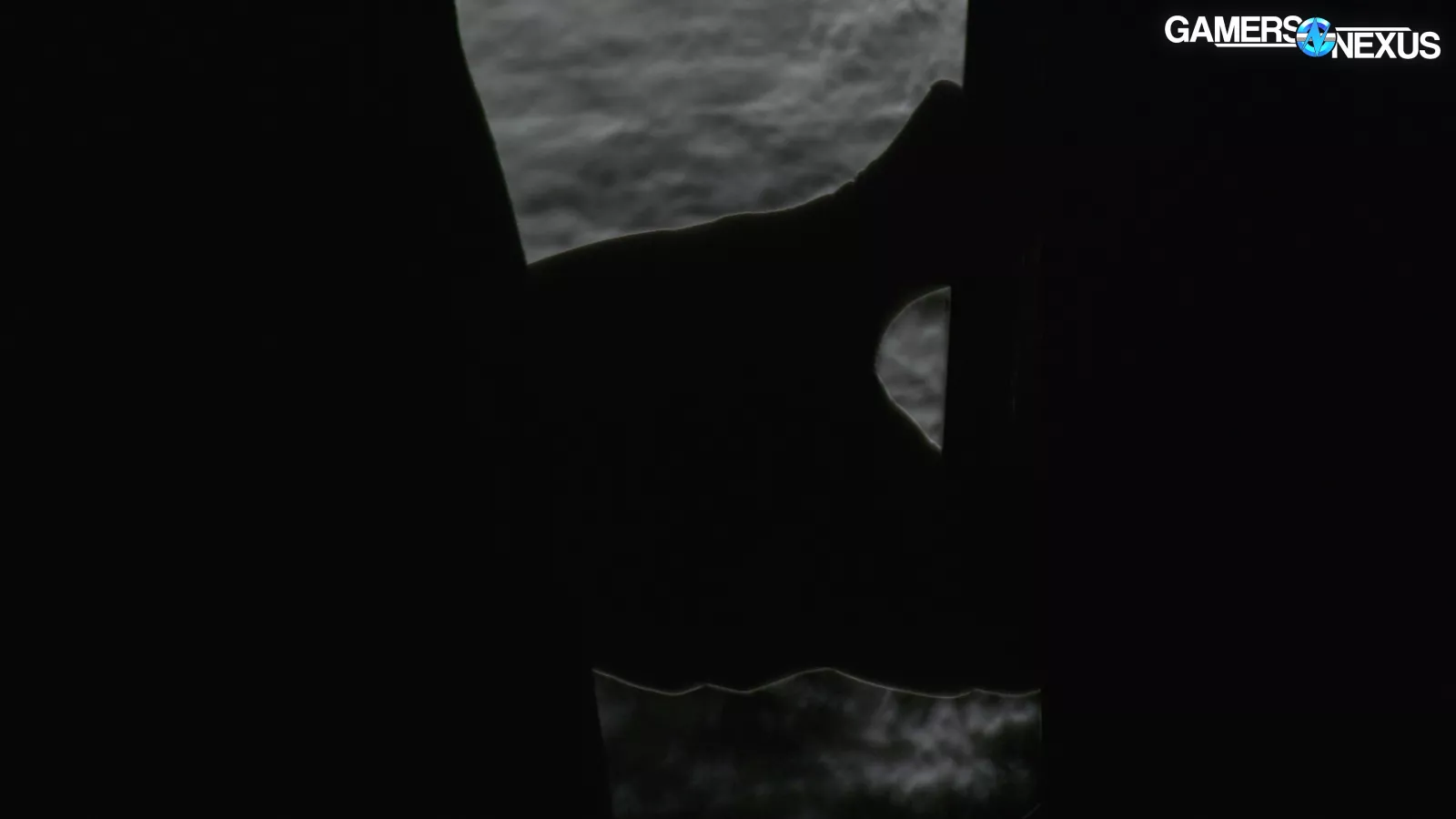
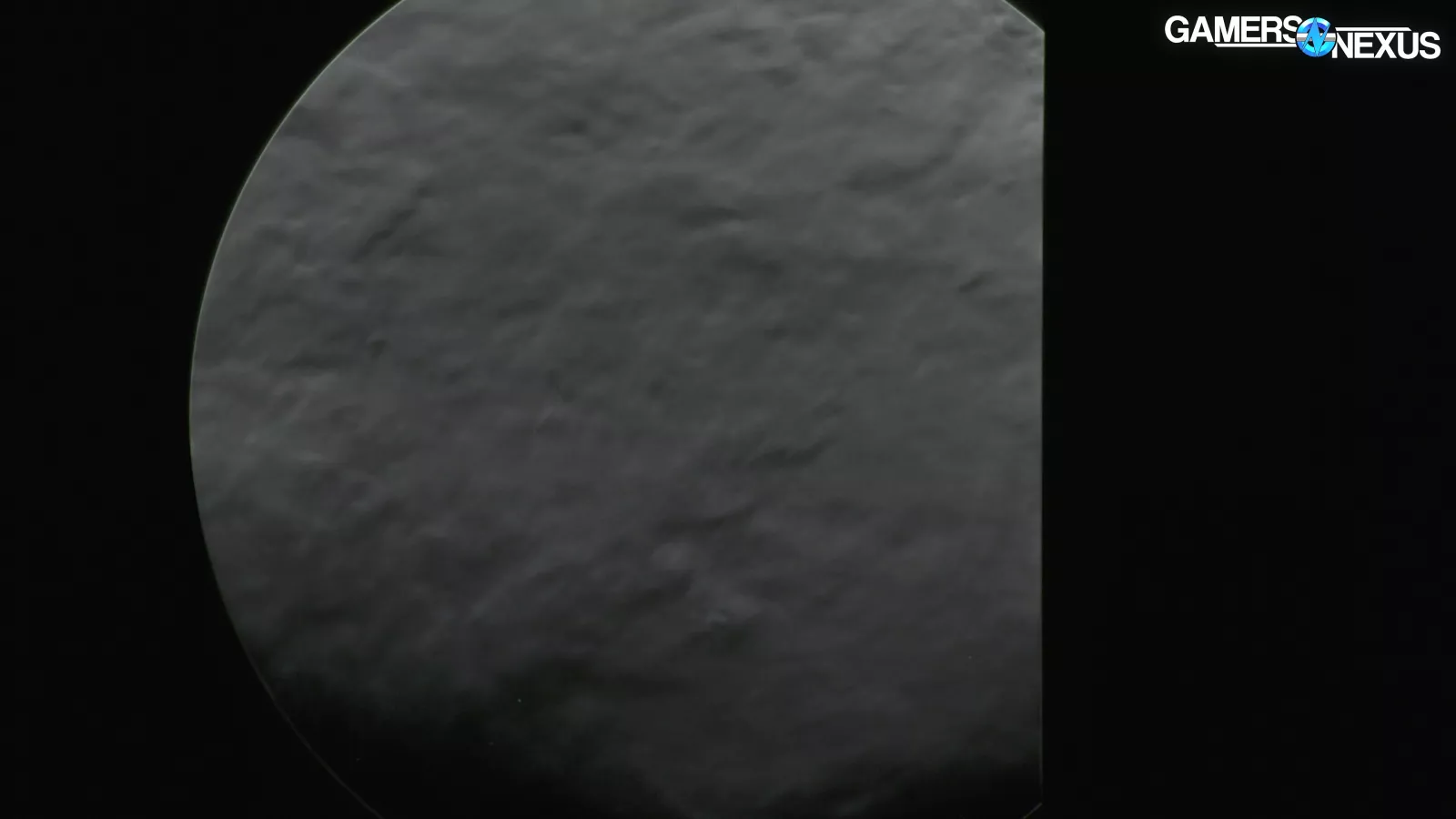
Including the glass panel has the anticipated impact. The one air density gradient we see now could be from air exiting the again of the case and floating round close to the mirror. There’s not a lot motion right here, as anticipated, as a result of air cannot penetrate glass.
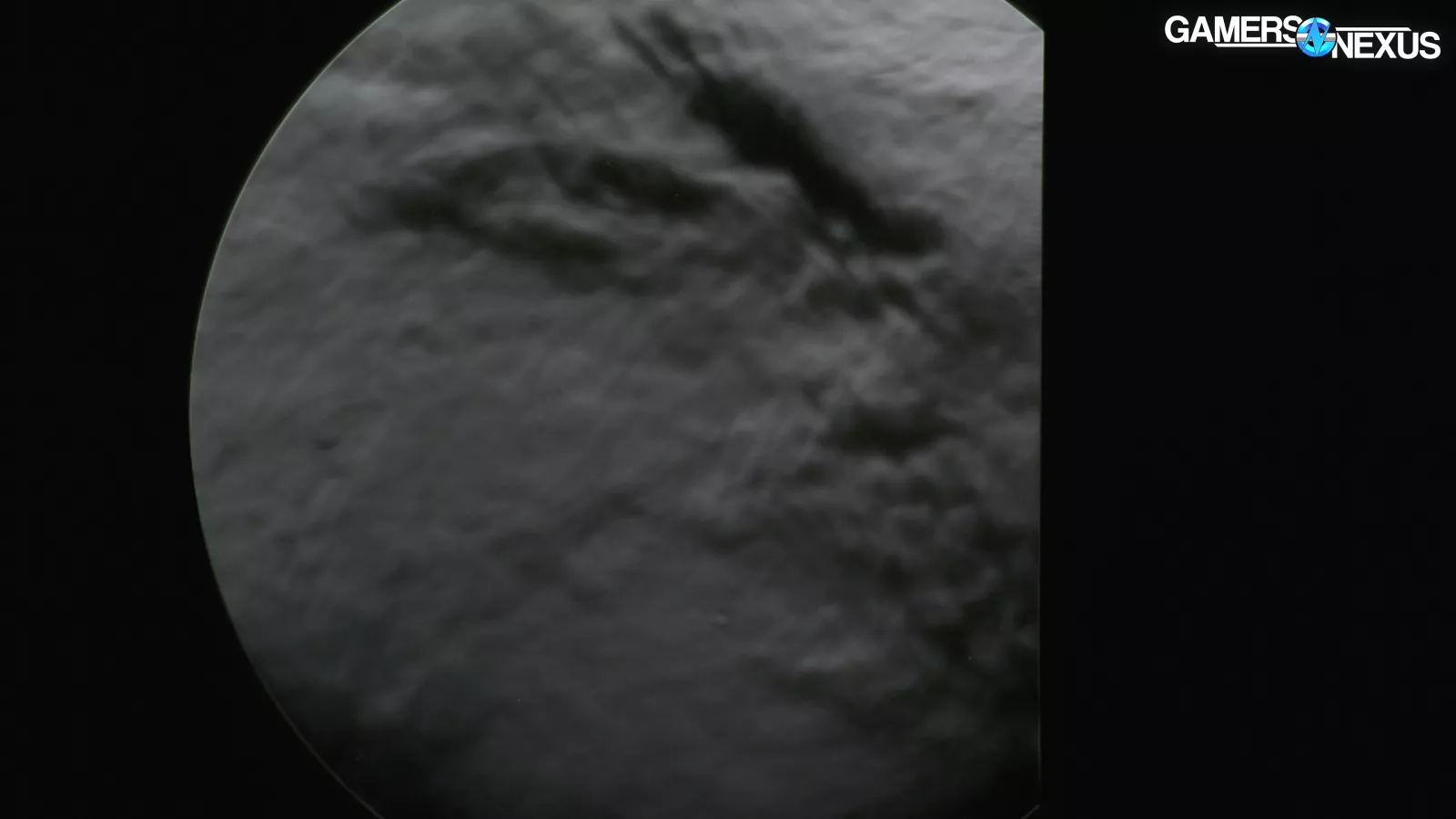
Swapping the panel to mesh as an alternative, we see one thing fairly cool. The gradient change is most seen precisely the place the GPU’s exhaust is. It is spewing air out of the mesh from the GPU, permitting it to exit the case extra simply. And you can too see it going fairly far-off from the case, which is an effective factor. This has some advantages, however as a result of the glass had supplied a type of railroaded path for consumption to hit the CPU tower, it additionally has some downsides. We will additionally see, for instance, in direction of the underside that some air is exiting earlier than ever hitting the GPU or the CPU tower, which means that air is taken in from the entrance backside place and successfully misplaced with out doing something really helpful on this configuration.
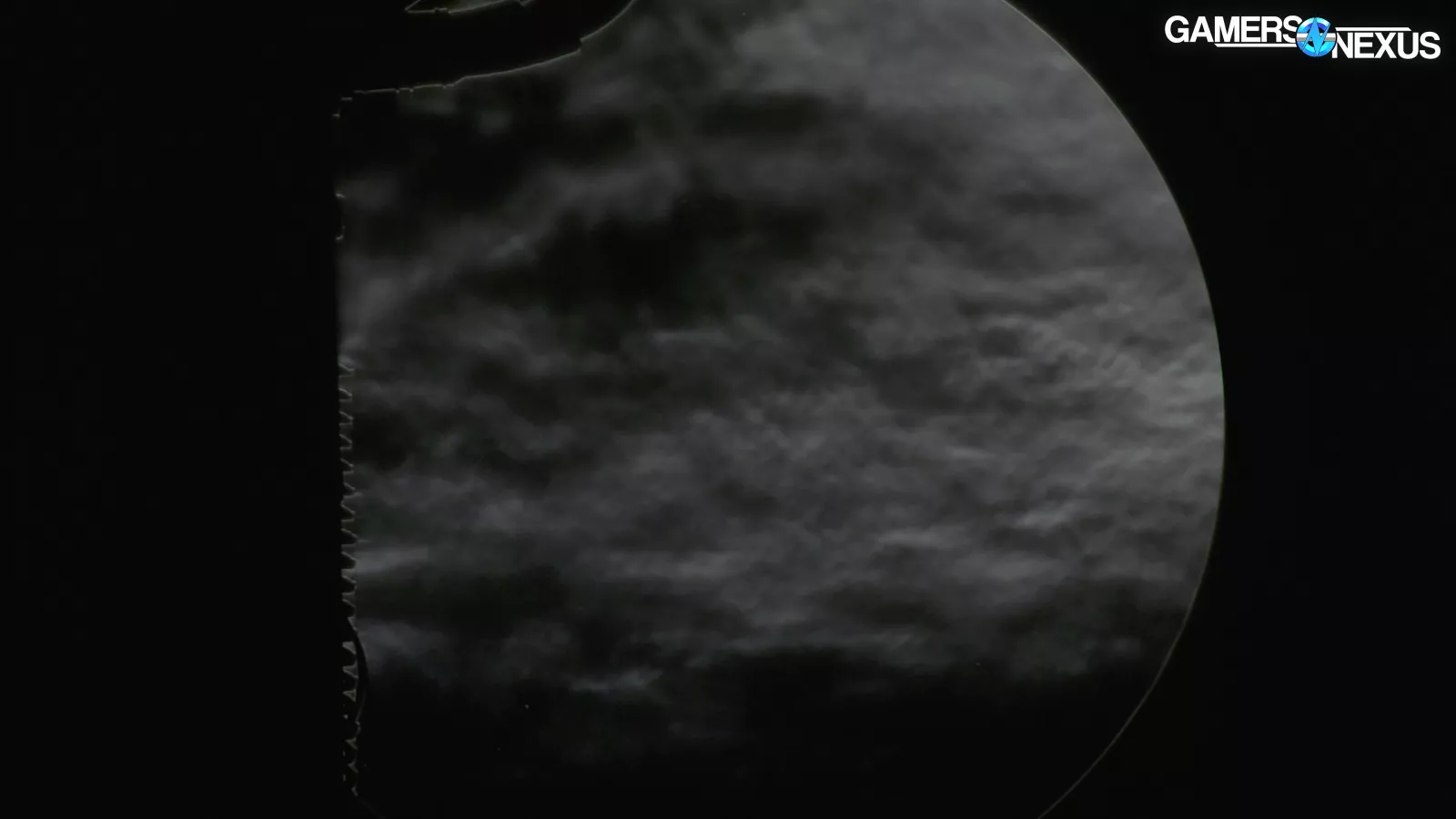
On this shot, you may see how the air, or particularly the air density gradient, though nonetheless chaotic on exit, takes a comparatively straight path out of the louvered vents.
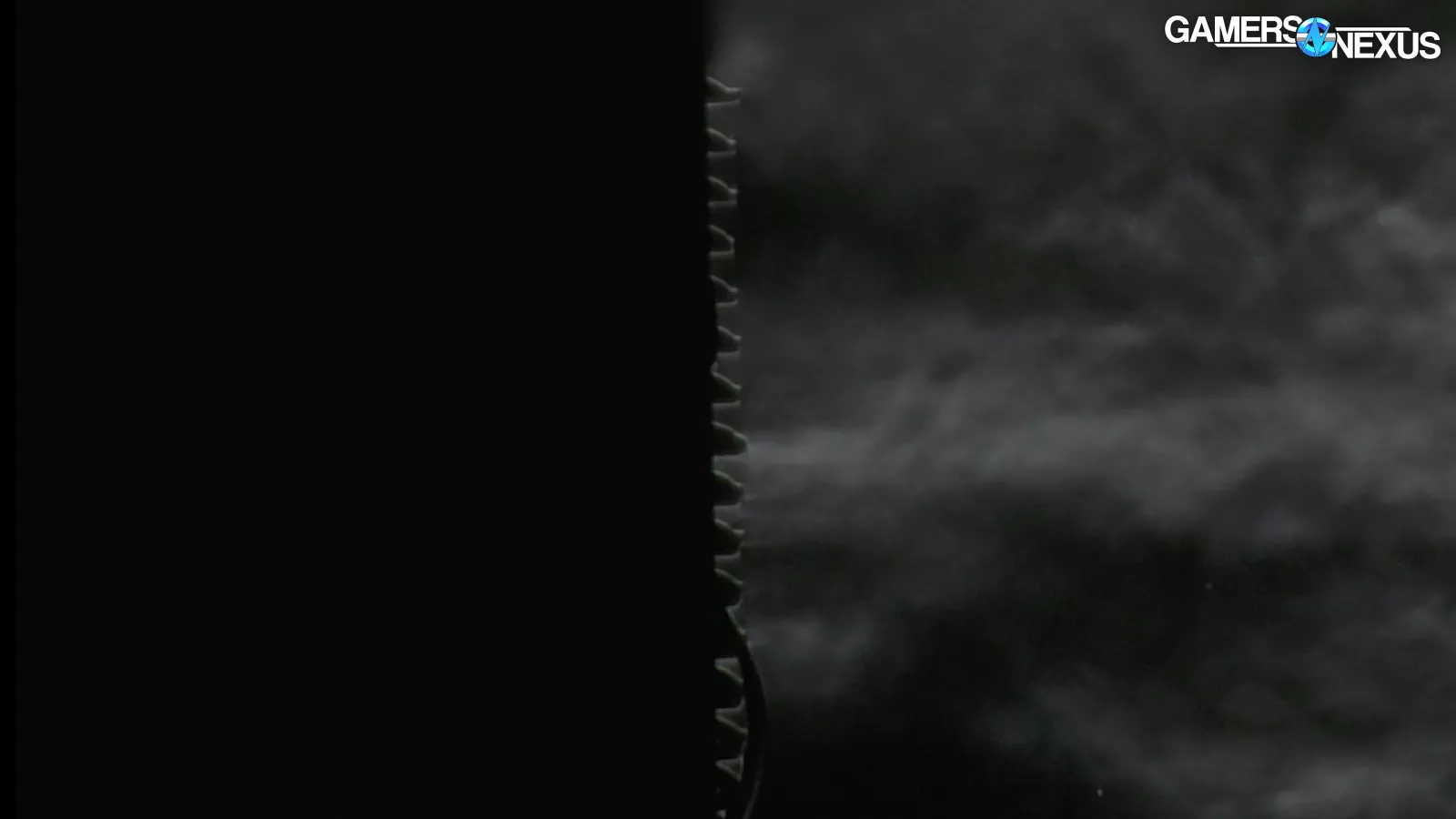
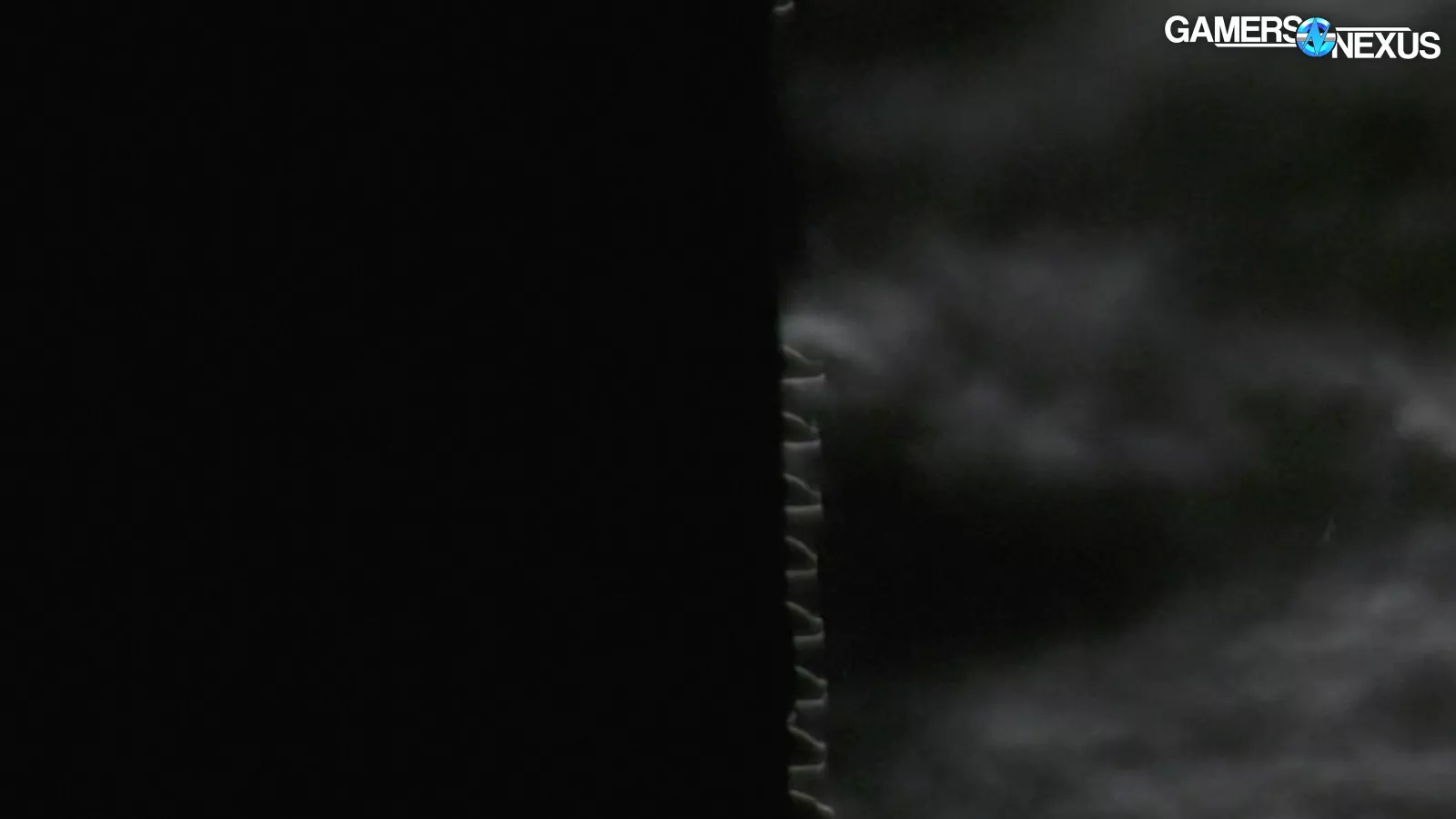
The vents nearest the blade tip of the fan present this probably the most the place we will really see how the air deflects across the vent punch out. That is the white type of tip across the fringe of that.
This shot exhibits us the vents as nicely the place we get straight clear paths and gradient density modifications prominently seen proper on the vent tip. As soon as once more, the air density variations present the air naturally discovering itself going up as we would count on. It’s fairly cool to visualise these things, particularly that mesh facet panel and what it is doing.
Conclusion

The HYTE X50 total has sturdy construct high quality and inventive design components, however it additionally has inventive advertising.
Generally, like with the louvered vents, the marketed function really does one thing.
Different occasions, like with the so-called “acoustic glass,” it’s not one thing we’re in a position to quantify in our testing.
The problem with testing got here right down to followers, for the reason that X50 doesn’t embody any. By utilizing the Antec Flux followers, we had been in a position to see that it’s usually at the least higher than the Antec Flux. The standardized fan check can be total favorable for the X50. To be very clear, there’s an Antec Flux Pro mannequin as nicely, and that one kinds out in another way because it has six followers together with 140mm ones.
As we talked about in our BF 360 review, HAVN is HYTE’s greatest competitors for this launch: the fanless BF 360 prices $160, similar to the X50 (within the US). HYTE is nicely positioned, although, as a result of in order for you a case that appears just like the X50, there’s no competitors from anybody. Till GameMAX and Gamdias rip it off like they do with every little thing else. The BF 360 Flow wins when it comes to thermals, it optionally comes with inventory followers, and it has all the opposite advantages of construct high quality and ease of use that we talked about in our review, however it’s a extra conservative design and solely out there in black and white.
We just like the X50 and we’re snug including it to our checklist of suggestions alongside the BF 360. As regular, we have now but to see different producers beat Lian Li’s price-to-performance with the Lancool 217 at $120 and 207 at $90. However that is not the market HYTE is aiming for. If the colourful design of the X50 is extra interesting than its thermal efficiency, the perfect alternate options we can provide are Thermaltake’s Tower 600, Ceres 350, and View 600, though we have not reviewed these fashions.
As for the remainder of the market on the crowded $200 worth level (factoring in the price of followers), even with the upper US costs, the X50 compares favorably to established circumstances just like the C8 Curve, Torrent, and North XL. It does so by combining excessive airflow with competent cable administration and a high quality of design that goes deeper than the skin of the case. It is not that the X50 is inherently higher than the North XL, for instance, however it might probably match efficiency in a method that makes it a sound various with out sacrificing performance. That applies to the circumstances we introduced up for comparability to the BF 360, as nicely. Instances just like the Meshify 3 Ambience Pro RGB (learn our review), Frame 5000D, and Flux Professional.
The important thing issue is the way in which the X50 seems to be. The painful back-and-forth with HYTE’s factories to get a working course of for creating the curved entrance panels and louvred vents paid off, and it has put HYTE forward of its rivals.
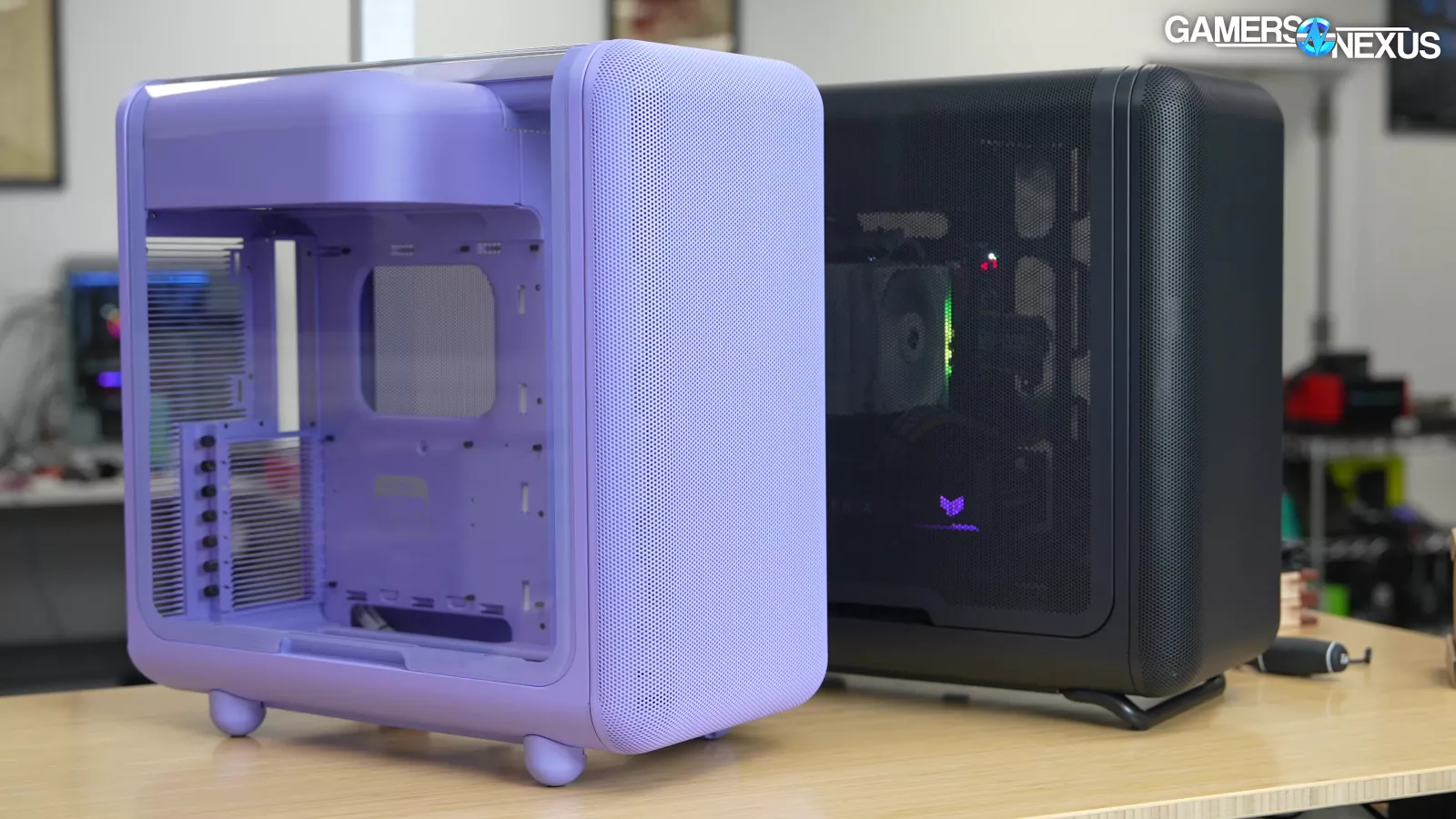
The glass lamination would not actually matter until you smash your case, however the large curved panel is spectacular even ignoring that, and we really choose the glass X50 to the X50 Air. The X50 Air is not outfitted to reap the benefits of its mesh facet panel, so with most setups there isn’t any cause to count on a distinction in thermal efficiency between the fashions. In our opinion, the curved glass and number of colours out there with the conventional X50 make it definitely worth the $30 upcharge.
We will not consider many case corporations which have been providing this type of selection apart from Thermaltake, and possibly Montech or Geometric Future. We stay up for HYTE increasing the X-series lineup in the identical method because the Y-series, hopefully with extra sizes and design collaborations.