
EnGenius Cloud Lite ECW516L Test and Review – MBReviews Leave a comment
The EnGenius ECW516L arrives a yr after the flagship ECW536 hit the market and it does have a special function than to solely showcase technological growth. It’s attempting to make WiFi 7 reasonably priced for anybody prepared to undertake this nonetheless pretty younger normal. A aim that’s additionally the main target of Zyxel with its NWA110BE. However the EnGenius Cloud Lite ECW516L does issues a bit in another way.
We do get a 2.5GbE port, assist for 320MHz channel width on the 6GHz radio and, in fact, we do get a tri-band configuration. However what’s completely different from the NWA110BE is that you should use each the 5GHz and the 6GHz radios on the identical time, no want to decide on between them. Oh, and there’s assist for MLO which was and nonetheless is to a sure lengthen a wanted function that’s specific to the WiFi 7 entry factors. Now let’s speak in regards to the worth.
The EnGenius Cloud Lite ECW516L has an MSRP of $199 which is pretty low contemplating the specs, but it surely does have the TP-Hyperlink EAP773 respiration down its neck, so I’m curious to see the efficiency of this new WiFi entry level. Let’s put it to the check.
The Design and Construct High quality
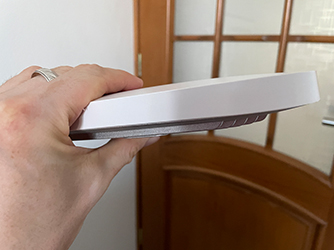
Design-wise, whereas retaining the core components of the ECW536, the ECW516L is nearer to the ECW230 and ECW230S. The case is smaller, with a plastic prime and a metallic backside. It’s additionally a lot slimmer than the ECW536, so will probably be a bit extra unobtrusive on the ceiling.
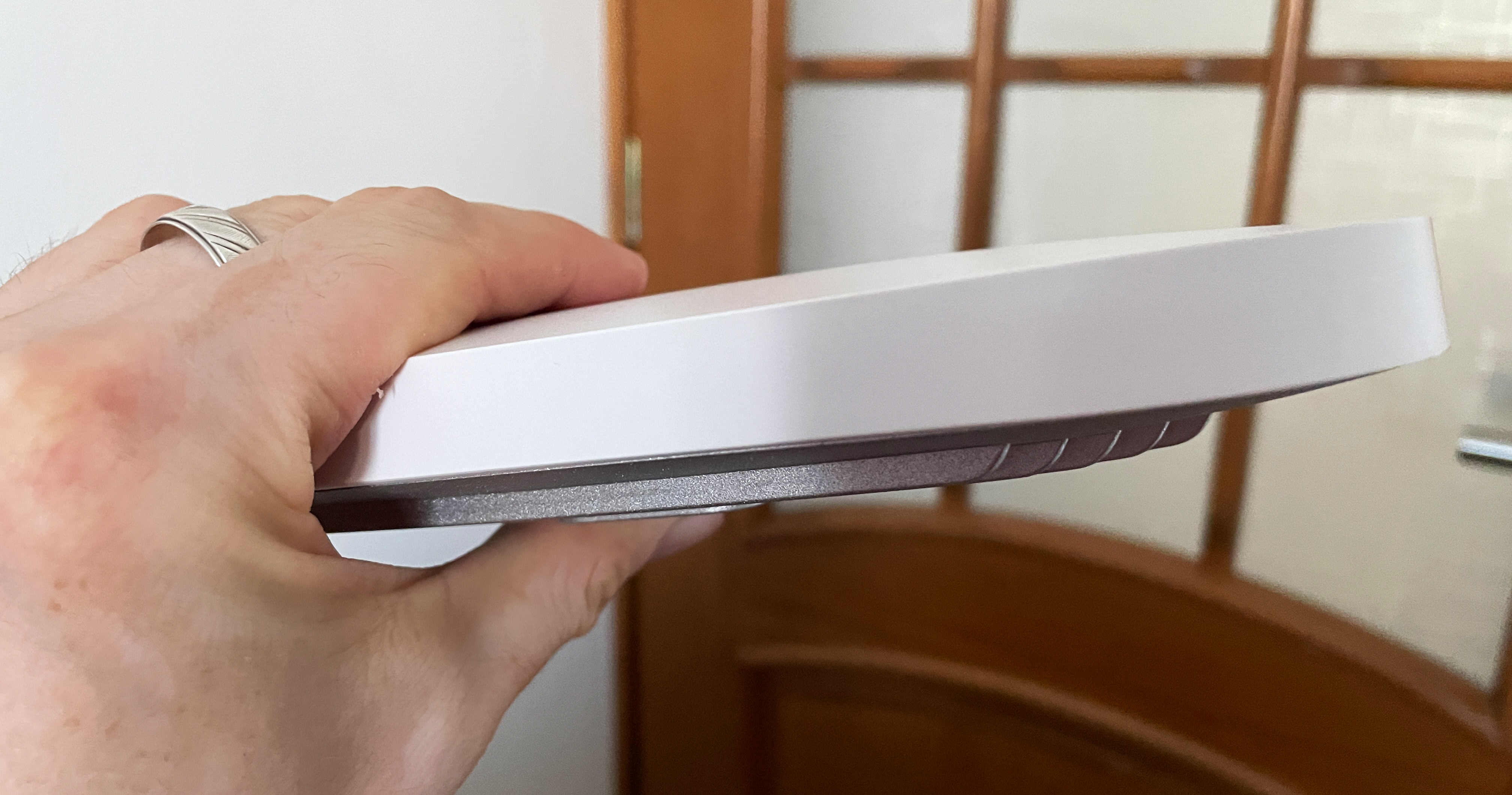
And sure, it is a ceiling-mount-only WiFi 7 entry level, it received’t sit correctly on the desk. You do get the bracket within the bundle, however not a lot else. A separate PoE adapter or PoE swap is important, though the latter isn’t necessary contemplating that the machine does have a 12V DC port obtainable. It’s positioned subsequent to the only 2.5GbE Ethernet port that does assist PoE, clearly. And there’s additionally a Reset button as properly.
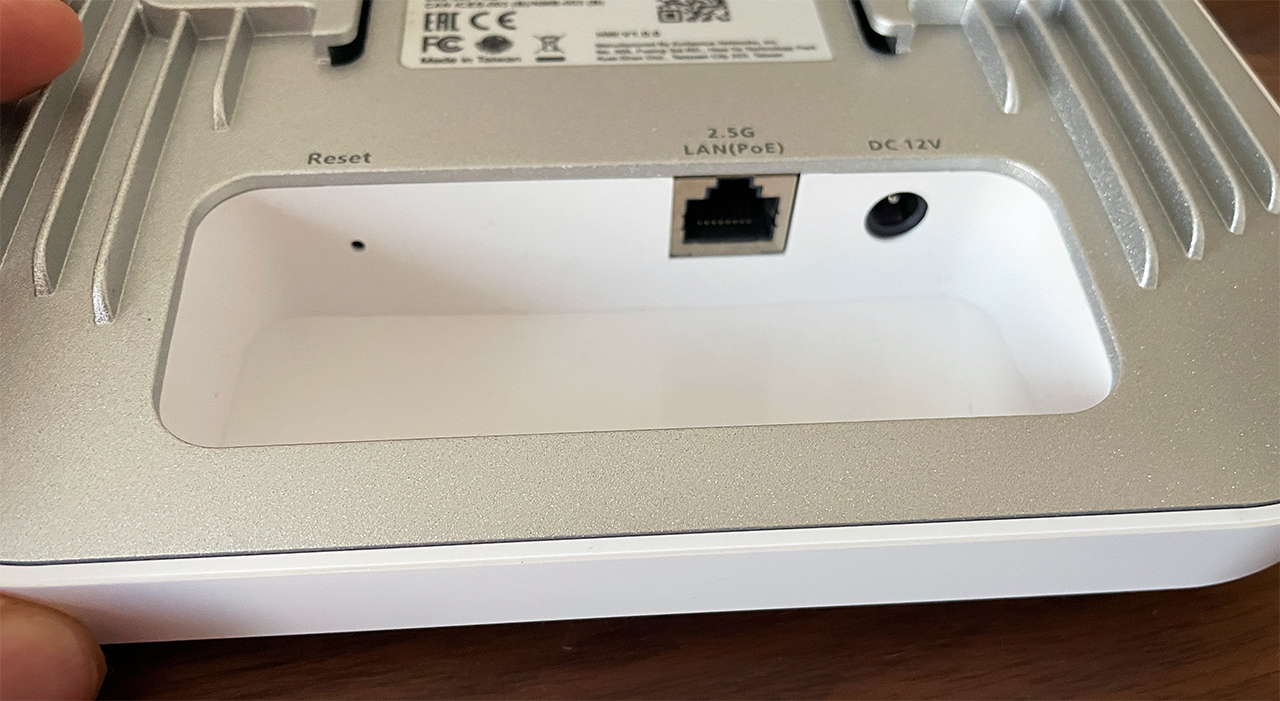
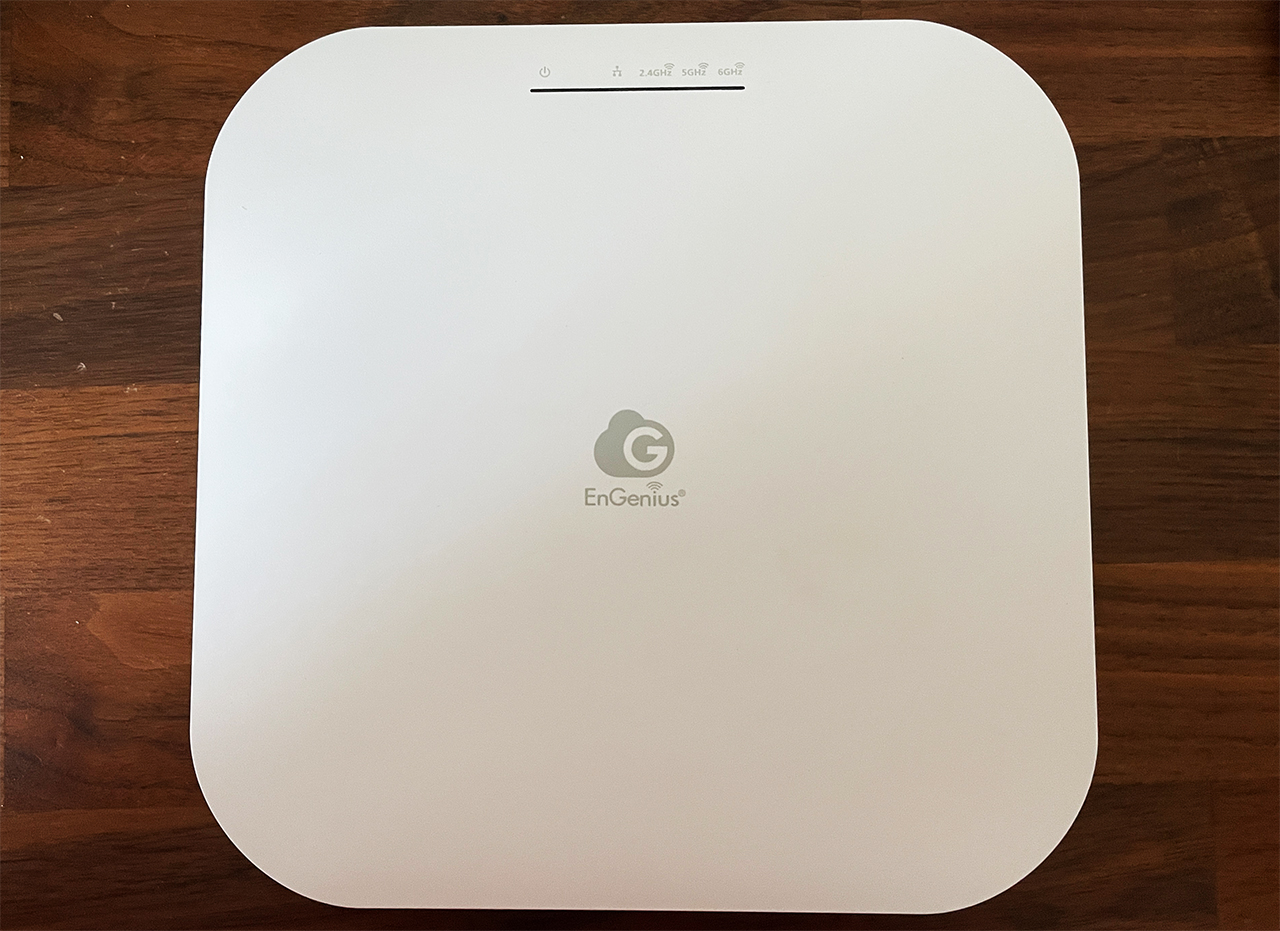
All these could be discovered throughout the bottom-placed devoted space. Flip the machine again to the highest and we will see a return to the a number of LED ports which is a welcomed change from the single-LED system of the ECW536.
The Thermal Administration
The metallic backside half paired with the plastic prime have been a reasonably dependable system utilized by EnGenius over the previous years and I used to be curious whether or not it labored properly for the Cloud Lite ECW516L as properly. I didn’t have the AGM cellphone obtainable this time, so I switched to a small Xinfrared module for an Android cellphone. And you may see what I used to be capable of seize right here.
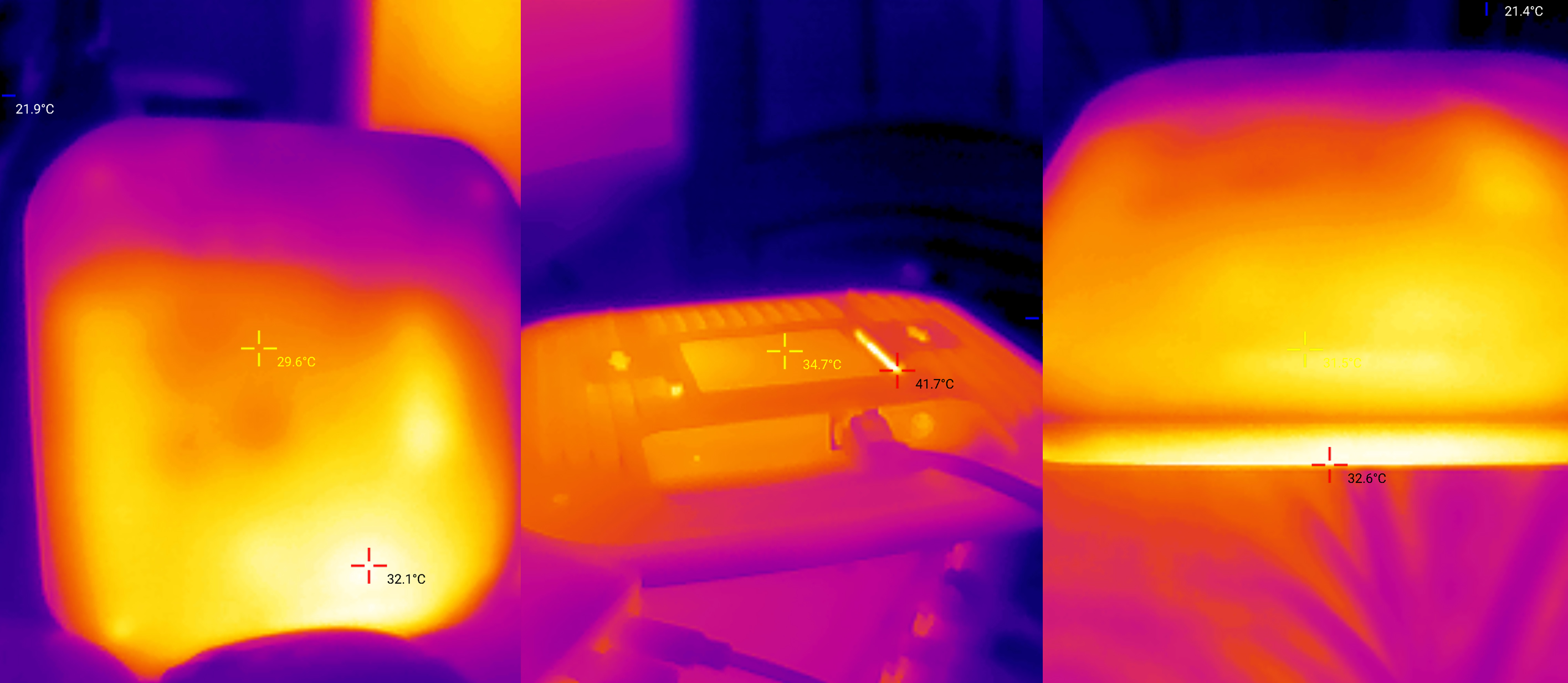
The outcomes are good, because the entry level has an excellent warmth distribution and there doesn’t appear to be any indicators that it could overheat or throttle resulting from excessive temperature.
EnGenius Cloud Lite ECW516L Teardown
EnGenius has just about at all times made the teardown course of as straightforward as attainable and that’s true for the ECW512L the place I solely wanted to take away 4 screws to ensure that the plastic half to come out. After which we’re greeted by the rear facet of the PCB and EnGenius determined to place right here the antenna connectors.
Earlier than anything, I made a decision to detach them after which I checked beneath the three aluminum covers. No main part right here, so let’s examine the opposite facet. I may instantly see the 2 flash storage chipsets, one was a 256MB NAND flash MXIC X241952 MX35LF2GE4AD-Z43 chip and the opposite a 128MB serial NOR flash Winbond 25Q128JVSQ 2251 chip. Now we have to take away the remainder of the aluminum covers to reveal the primary elements. And you may see within the following desk what I used to be capable of determine.
{Hardware} Comparability
| TP-Hyperlink EAP773 | EnGenius ECW516L | Zyxel NWA130BE | Zyxel NWA110BE | |
| CPU | quad-core 1.5GHz Qualcomm IPQ9554 (A73) | tri-core 1.8GHz Mediatek MT988DV (A73) | quad-core 1.5GHz Qualcomm IPQ5322 (Cortex-A53) | quad-core 1.5GHz Qualcomm IPQ5322 (Cortex-A53) |
| RAM | 2GB DDR4 (2x 3KR75 D8BPK) | 1GB DDR4 SDRAM Nanya NT5AD512M16C4-JR 222801NOEF | 1GB Micron 3UR77 D8BPK (DDR4) | 1GB Micron (41R77 D8BPK) DDR4 |
| Storage | 128MB NAND Winbond 24N01GWZEIG | 256MB NAND MXIC X241952 MX35LF2GE4AD-Z43/ 128MB serial NOR Winbond 25Q128JVSQ 2251 | 512MB (MXIC X233662 MX35UF46E4AD-241)/ 16MB NOR flash (MXIC MX25U12832F) | 256MB NAND Winbond 25N02KWZEIR |
| Swap | Marvell AQrate AQR113C Gen4 PHY | Mediatek MT7995AV | Qualcomm QCA8385 Ethernet PHY | Qualcomm QCA8385 Ethernet PHY |
| 6GHz Radio | Qualcomm QCN6274 802.11be 4×4:4 | Mediatek MT7976QN2415-BWELBPTA4836 3×3 | Qualcomm QCN6274 802.11be 2×2:2 | Qualcomm QCN6274 802.11be /td> |
| 5GHz Radio | Qualcomm QCN6274 802.11a/b/g/n/ac/ax 3×3 | Mediatek MT7976QN2415-BWELBPTA4836 4×4:4 | Qualcomm QCN6274 802.11be 2×2:2 | Qualcomm QCN6274 802.11be |
| 2.4GHz Radio | Qualcomm QCN5024 802.11b/g/n/ax 2×2 | Mediatek MT7977IAN 802.11b/g/n/ax 2×2:2 | Qualcomm IPQ5322 802.11b/g/n/ax 2×2:2 | Qualcomm IPQ5322 802.11b/g/n/ax 2×2:2 |
Single Shopper Exams (6GHz & 5GHz)
I admit I used to be getting accustomed to see values nearer to 2Gbps, so seeing that the EnGenius ECW516L solely bought above 1Gbps very close to the shopper machine was a little bit of a letdown. I’ve additionally included the values collected when the 6GHz radio was utilizing both the 160MHz and the 320MHz, and we will see that going near that 21m or 70 toes mark dropped the connection fully.
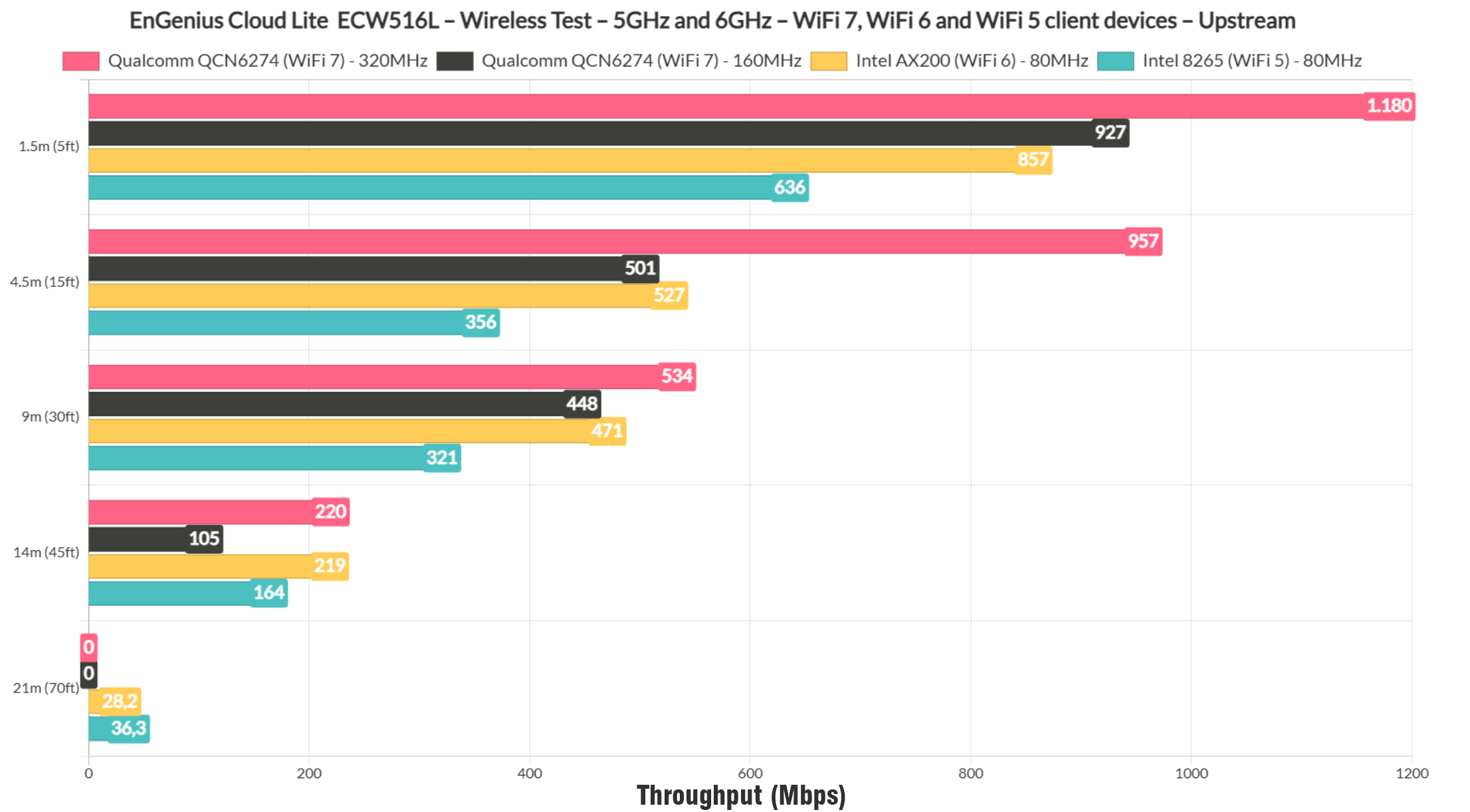
And that true each upstream and downstream. Utilizing the 5GHz radio and counting on a WiFi 6 and one WiFi 5 shopper machine did present that the sign can attain farther.
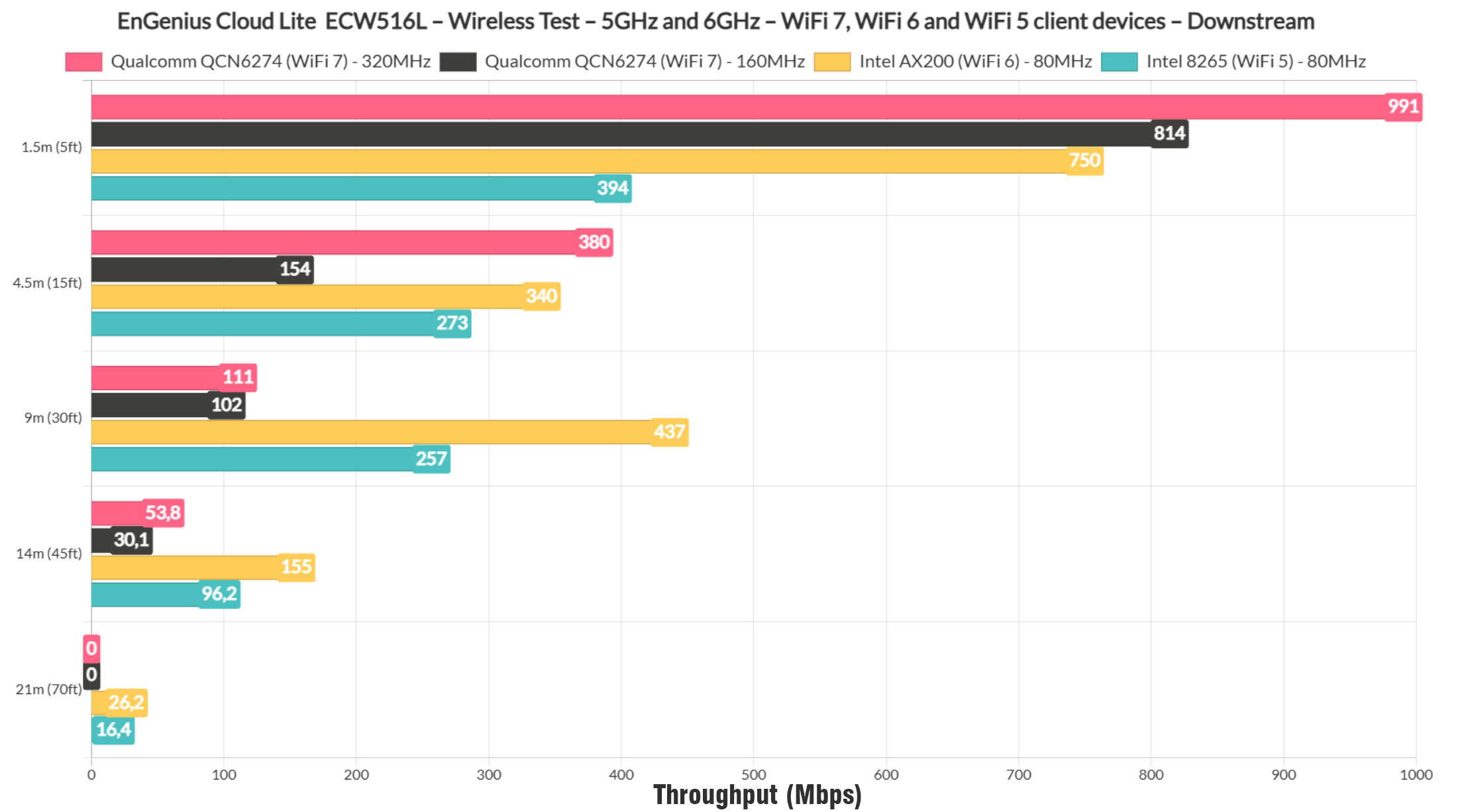
That is confirmed by the sign attenuation graphics as properly.
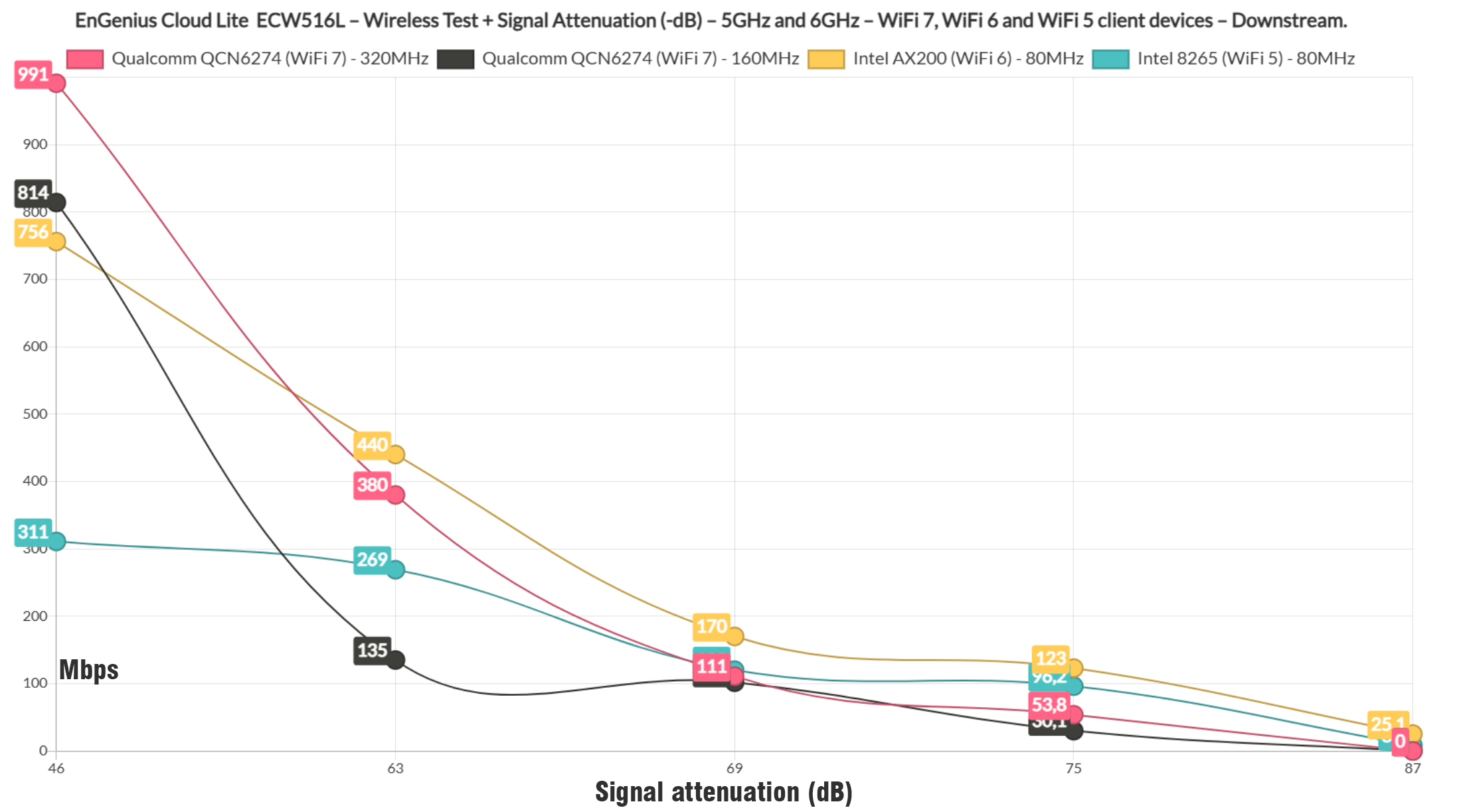
And sure, I’m speaking about it being each upstream and downstream.
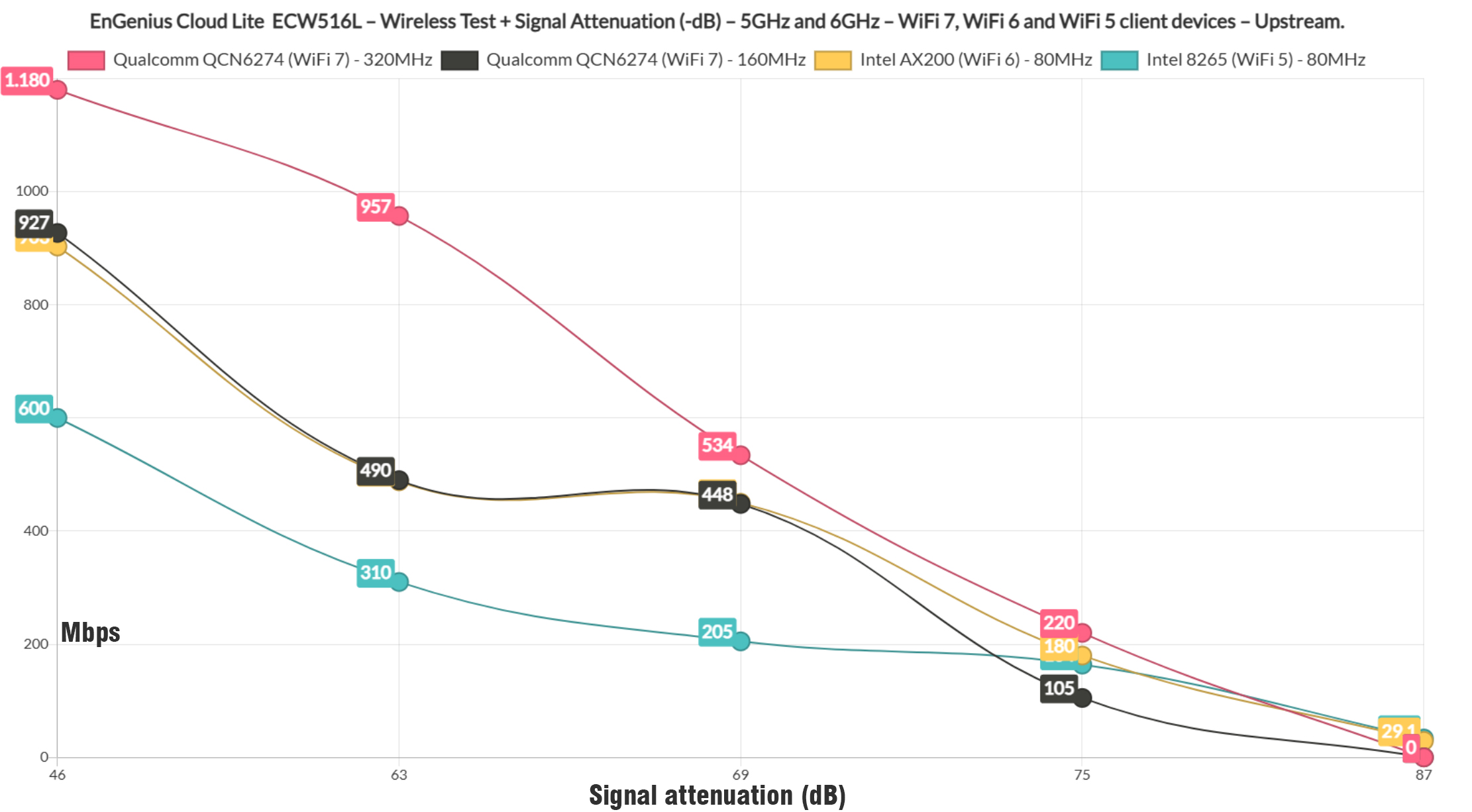
The one point out that I have to make is that the 5GHz radio doesn’t assist the 160MHz channel bandwidth, but it surely’s restricted to solely the 80MHz width. I imply, in a crowded surroundings, you’re not going to have the ability to use the 160MHz channel width, however when you’ve got fewer neighbors and fewer interference, then it is a function that you just’re going to note that it’s lacking.
OK, now let’s see how the entry level fares when put subsequent to different units.
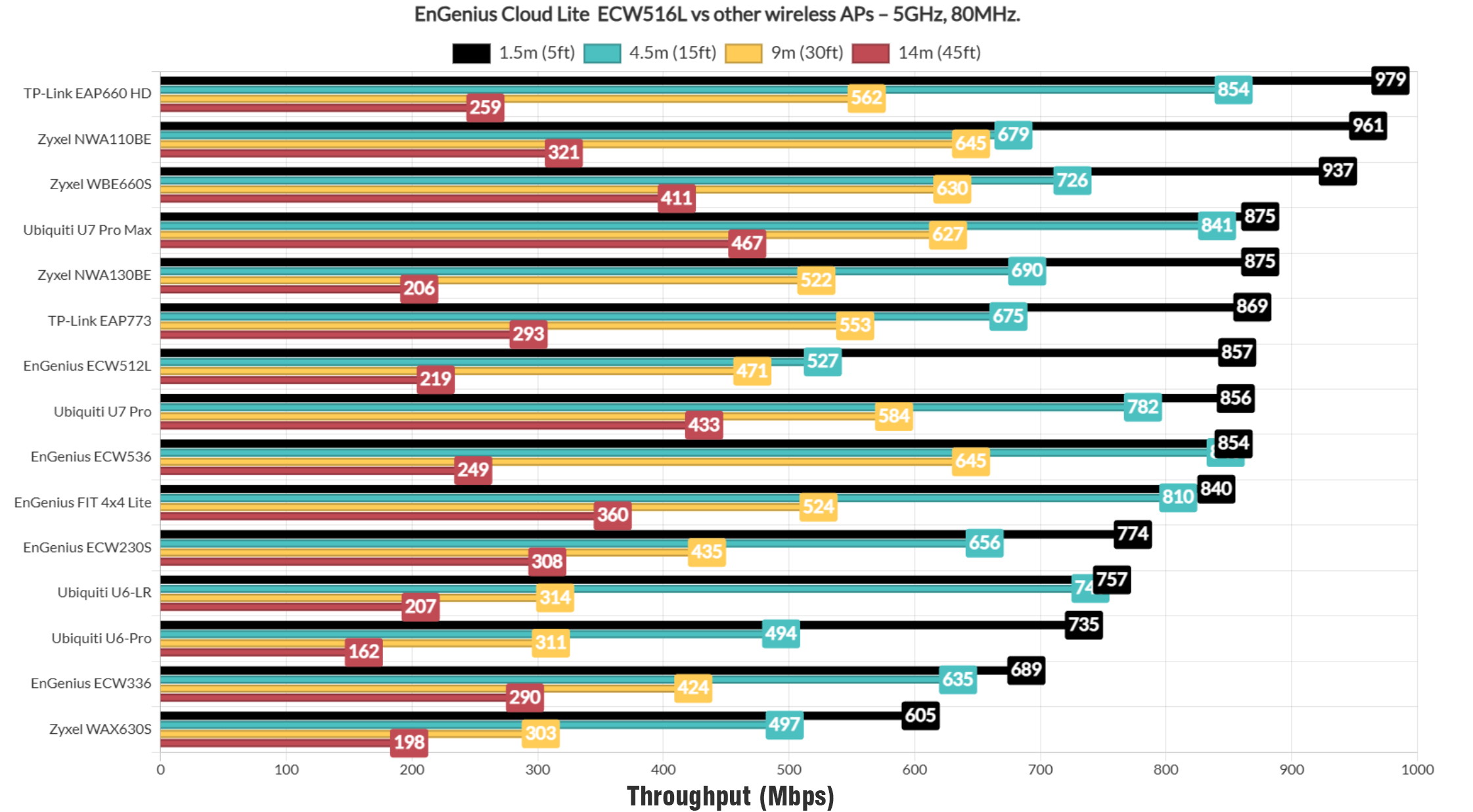
When utilizing the 5GHz radio, we will see that the ECW512L sits above the U7 Professional and instantly beneath the TP-Hyperlink EAP773. Truthful efficiency.
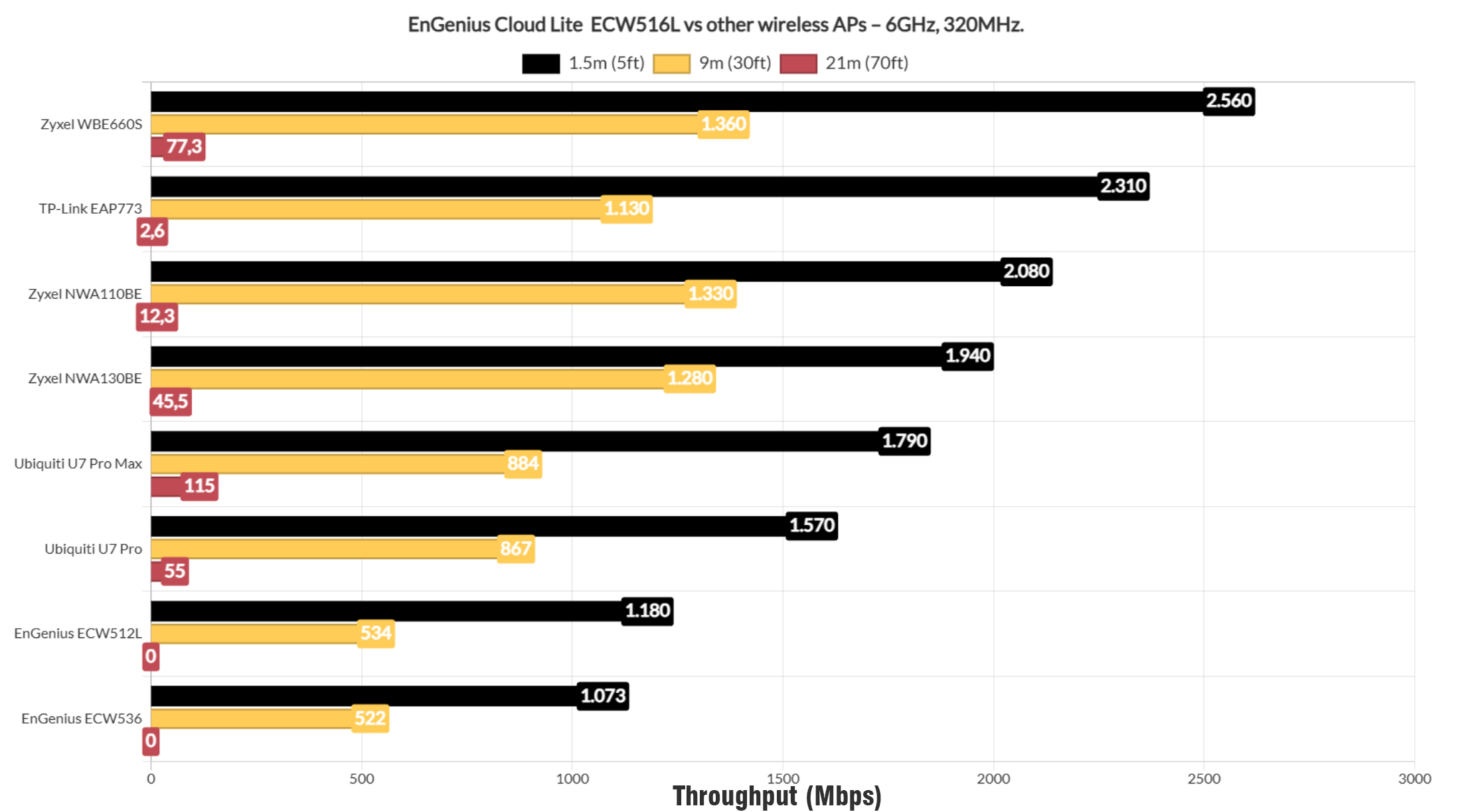
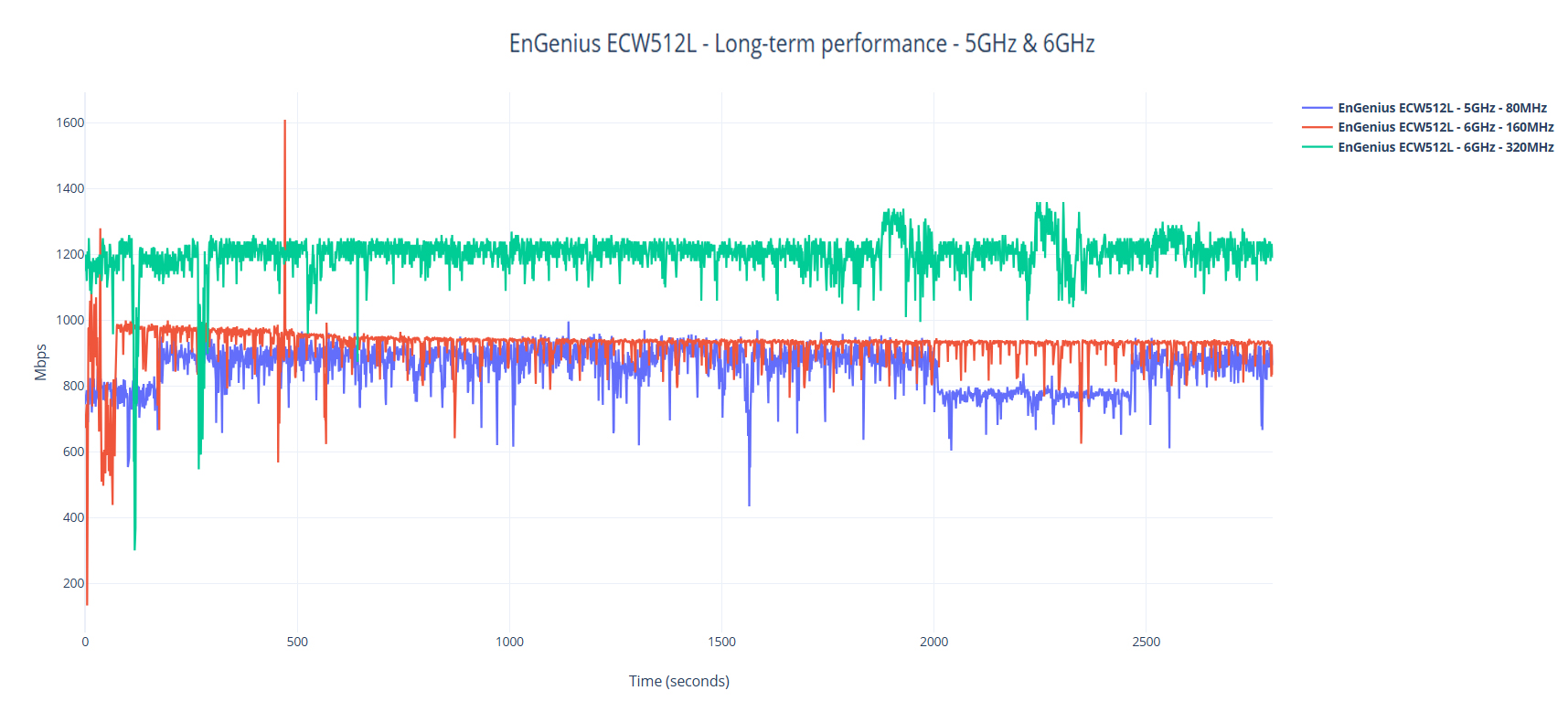
Subsequent, utilizing the 6GHz radio, 320MHz, the ECW516L does take a decrease place, solely above the ECW536. I’ve additionally included a longer-term efficiency graphic only for funsies.
Single Shopper Exams (2.4GHz)
We’re not going to maneuver previous the two.4GHz radio efficiency, however I’ll solely be utilizing a few shoppers and simply the upstream graphic.
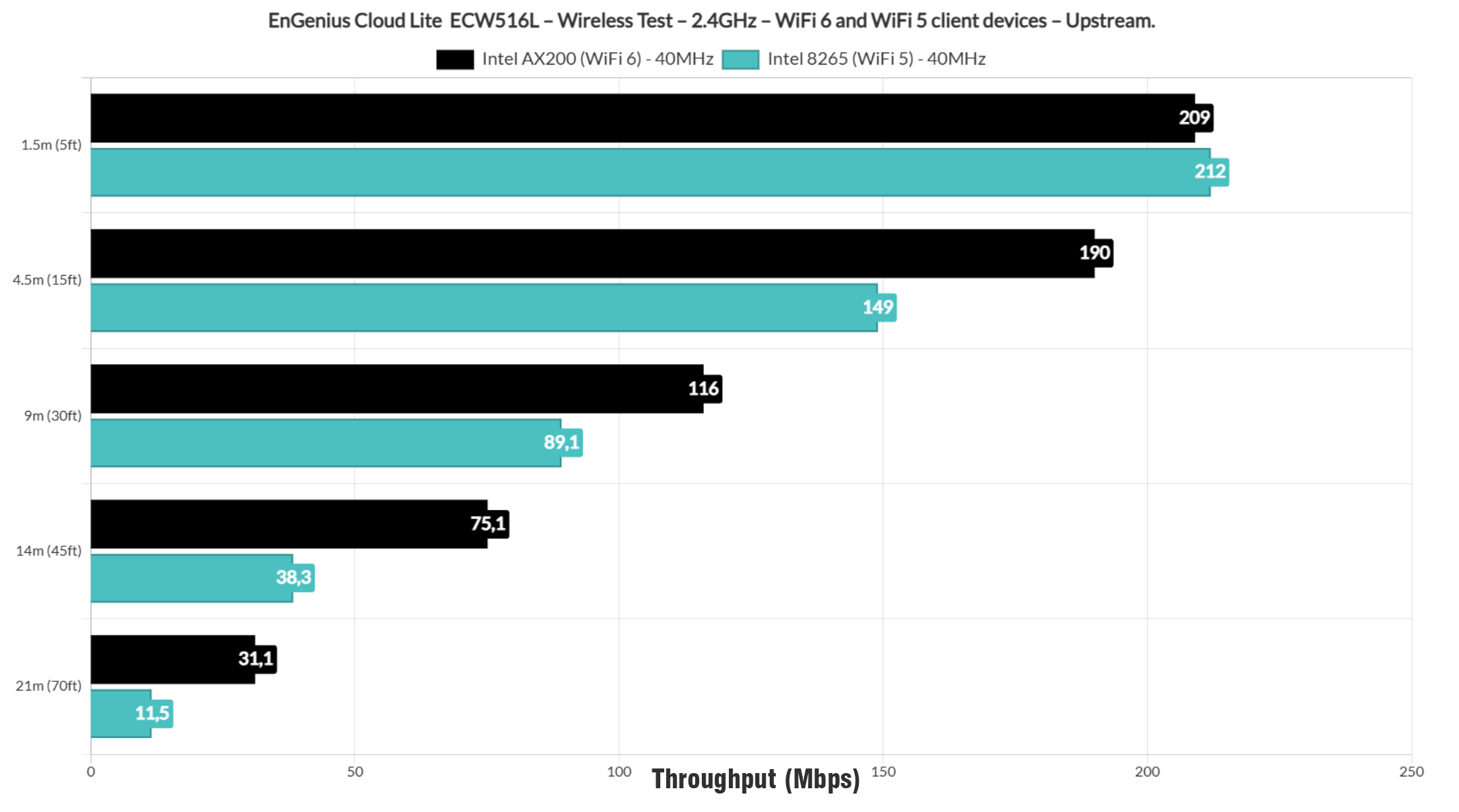
If you would like the downstream values as properly, remark beneath, in any other case I’ll assume it’s sufficient. I’ve additionally included the sign attenuation graphic because it’s extra necessary that the distance-based values.
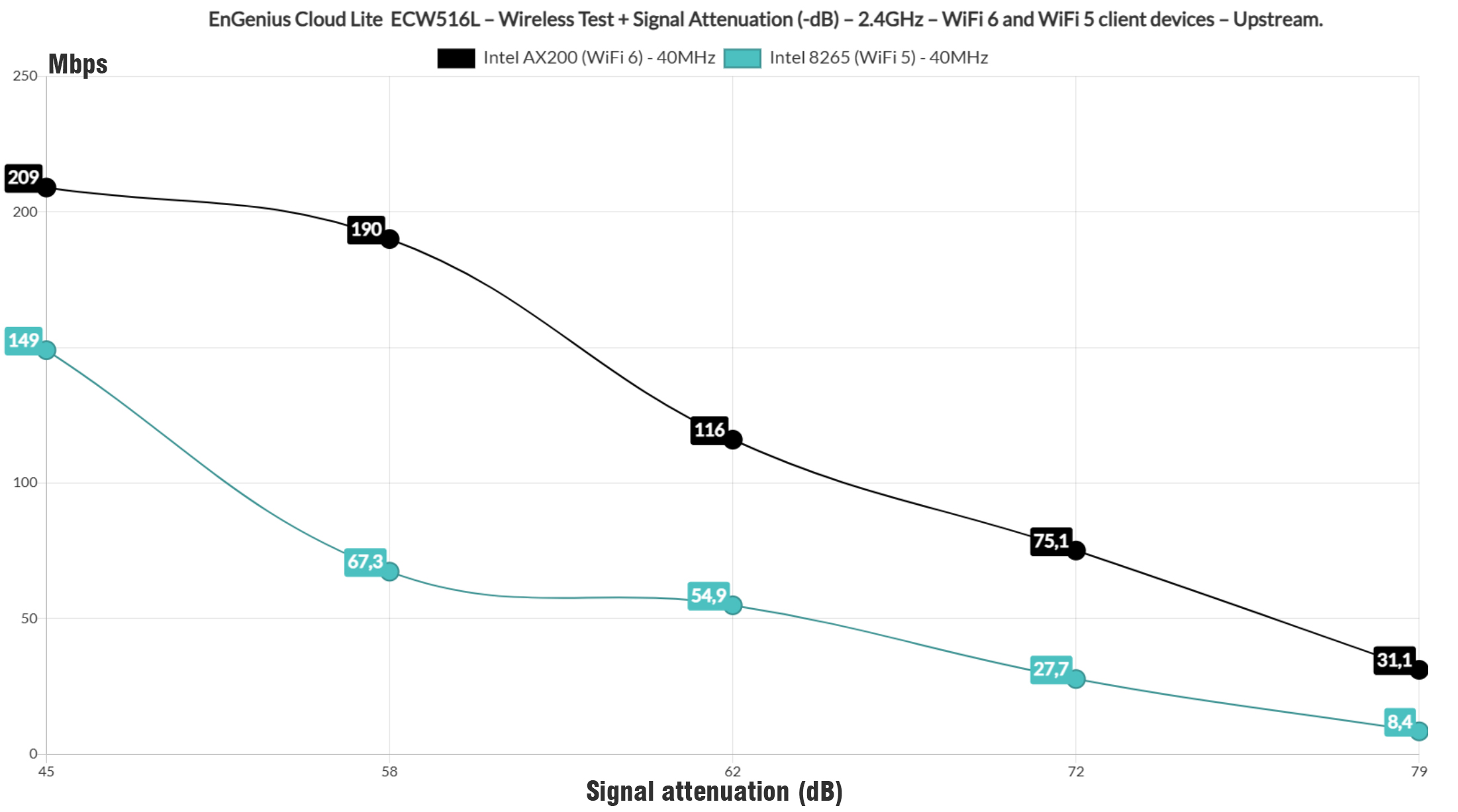
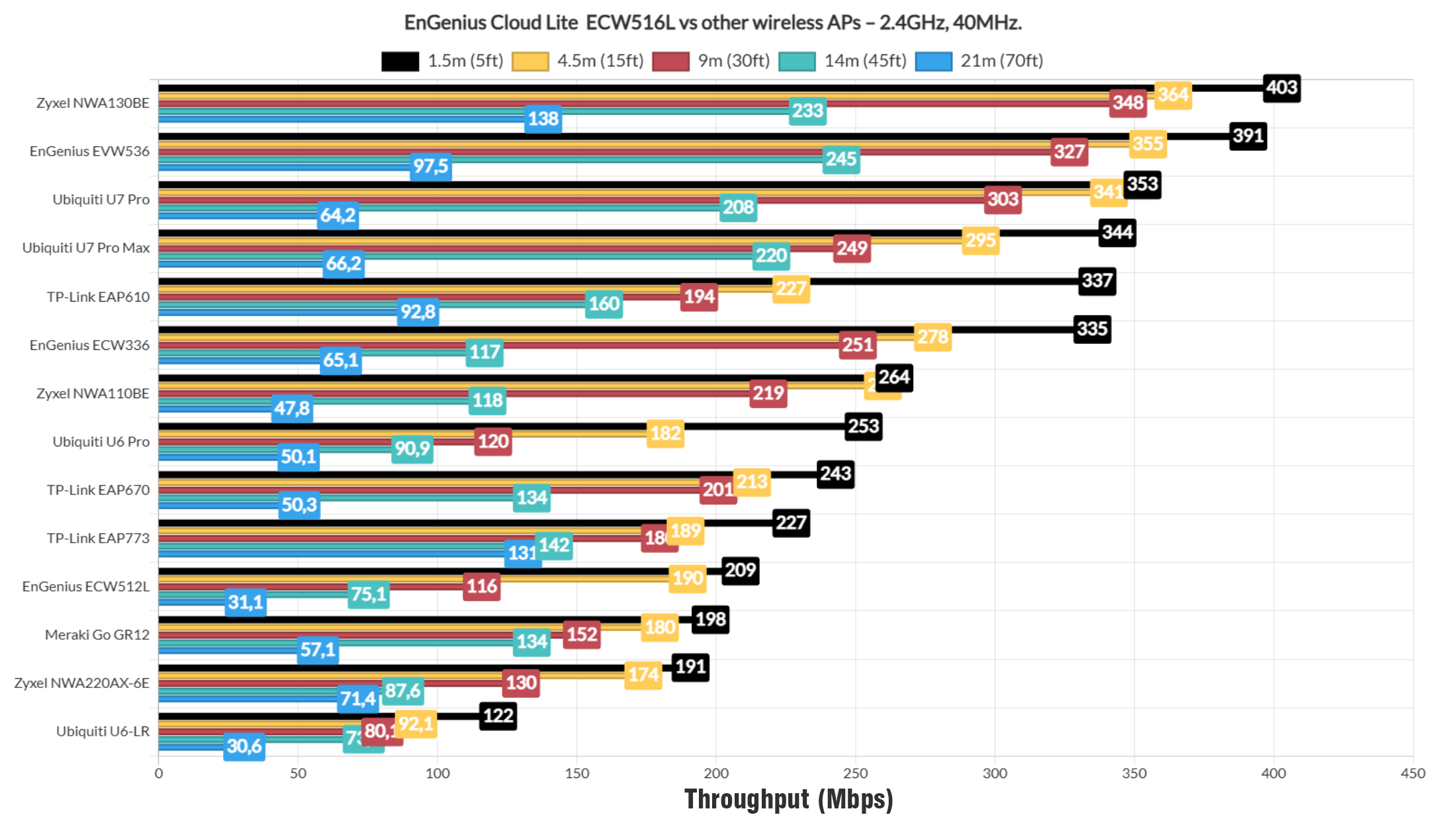
That is how one can truly reproduce my efficiency. And lastly, I put the EnGenius ECW516L towards different entry factors as soon as extra and it sits beneath the EAP773 which is truthful, however not likely spectacular.
The Multi-Shopper Exams
Let’s now transfer on to the multi-client check outcomes and, as earlier than I used net-hydra developed by Mr Jim Salter. I used the identical shopper units as with different entry factors to assist the comparability between fashions simpler. It will have been higher to have an identical shopper units, however prices can be too excessive to make it price it.
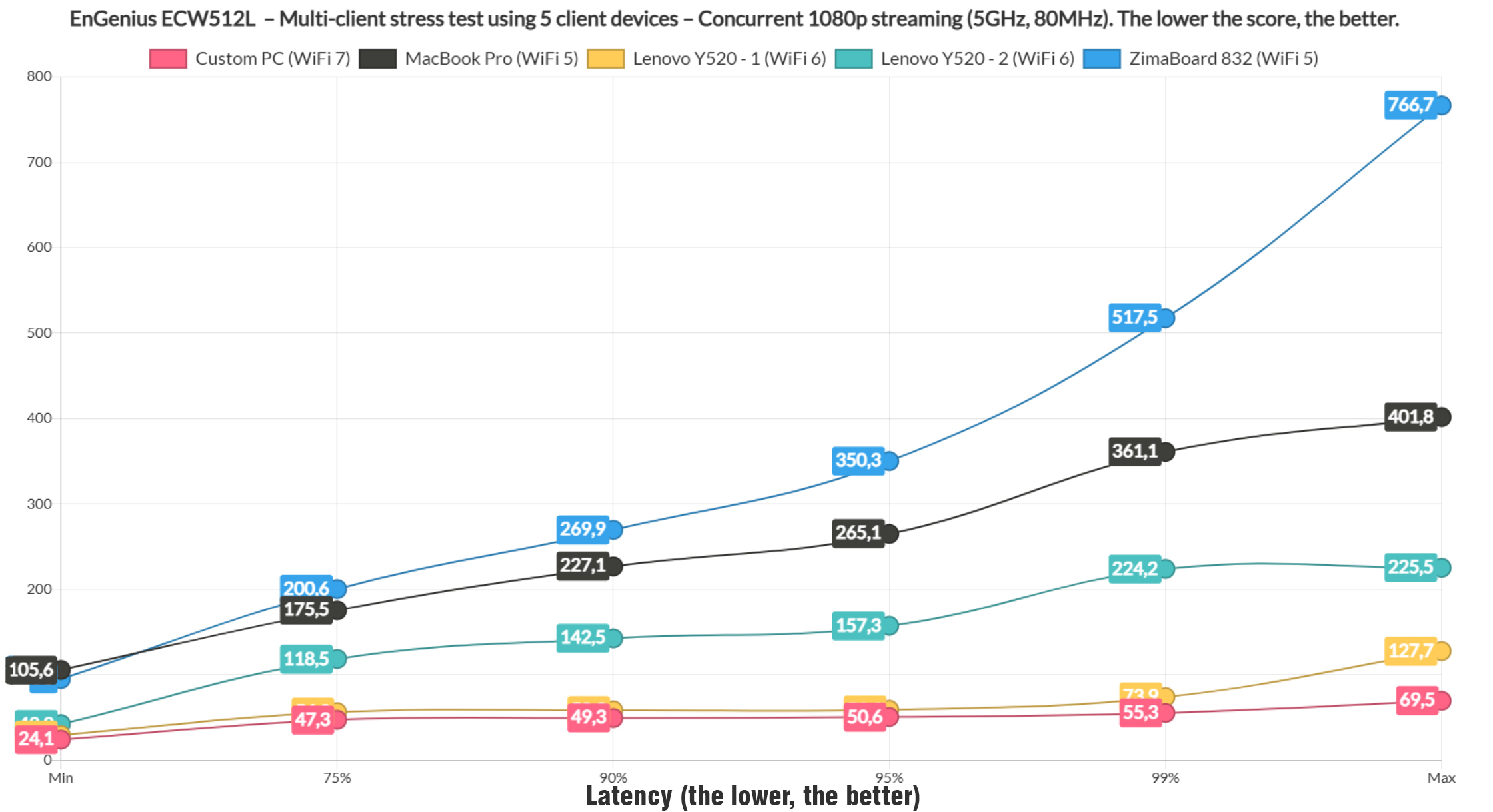
I began with the concurrent 1080p streaming visitors and two shoppers did properly, the WiFi 7 one and one of many two WiFi 6 laptops. The remainder rose too excessive and didn’t present a usable latency.
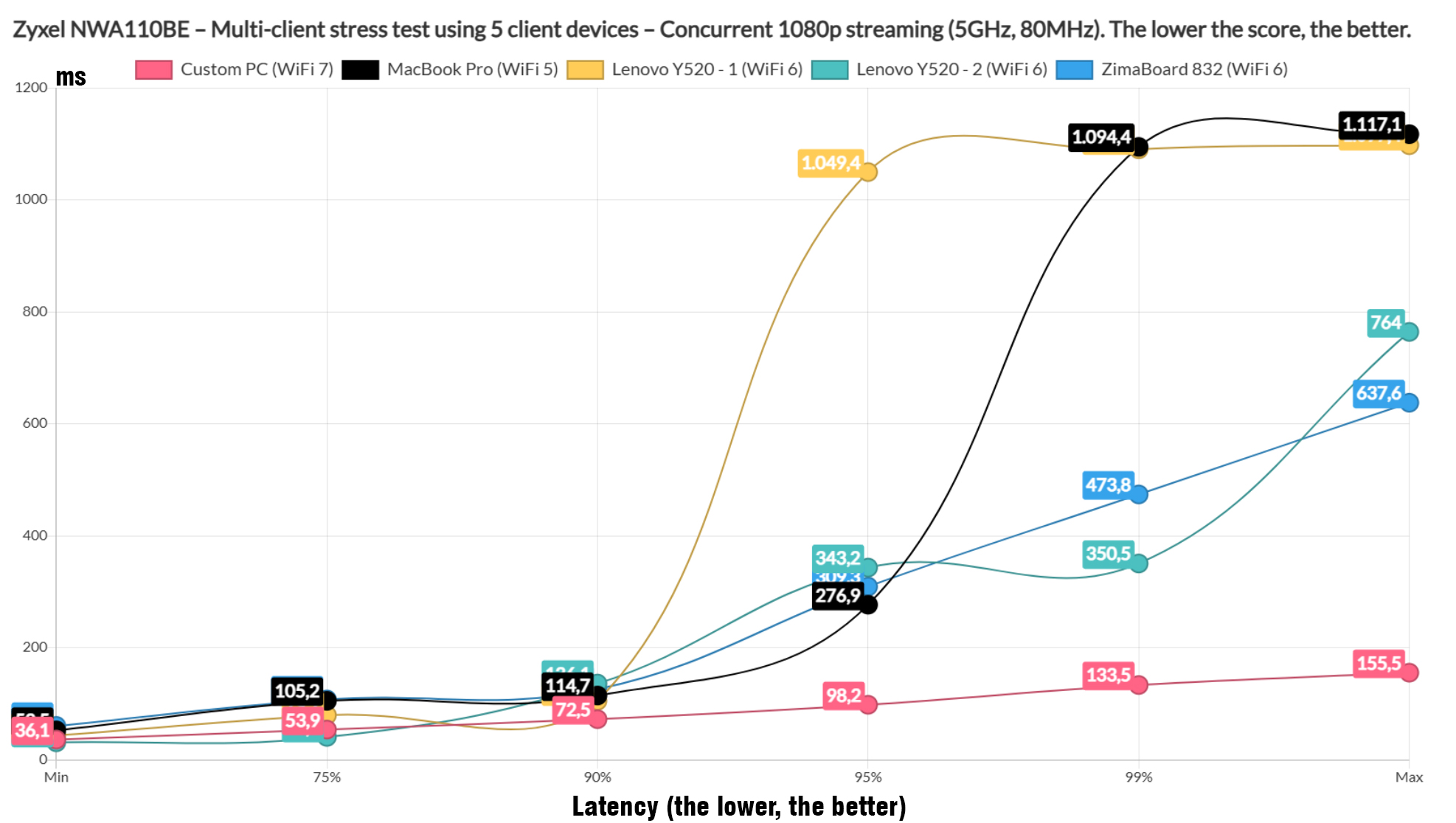
Then once more, it did higher than the NWA110BE. Subsequent, I ran 4K streaming visitors on the 5 shopper units and the latency was greater than 100ms on a regular basis whatever the machine, so not a good suggestion to run any such visitors on 5 shopper units.
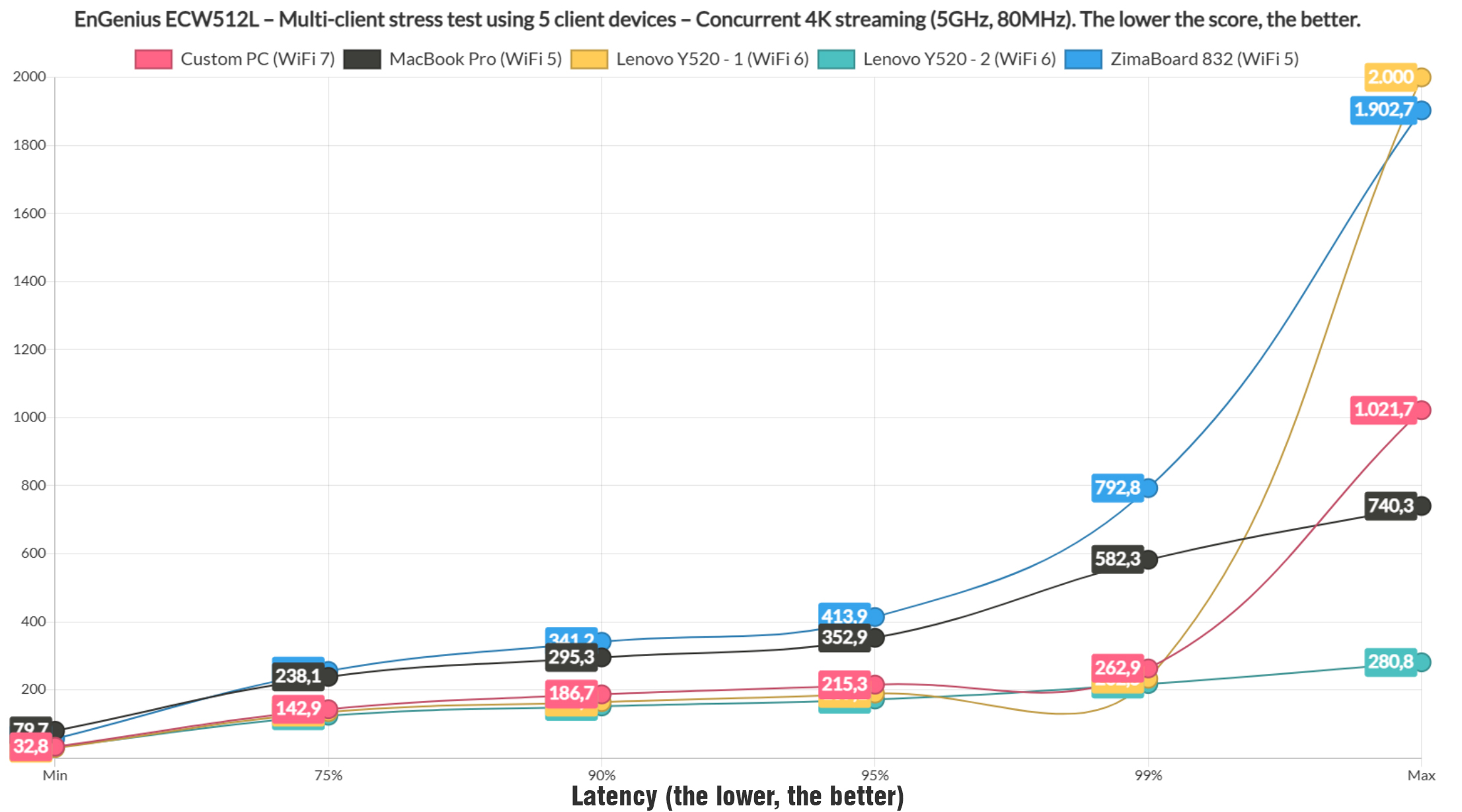
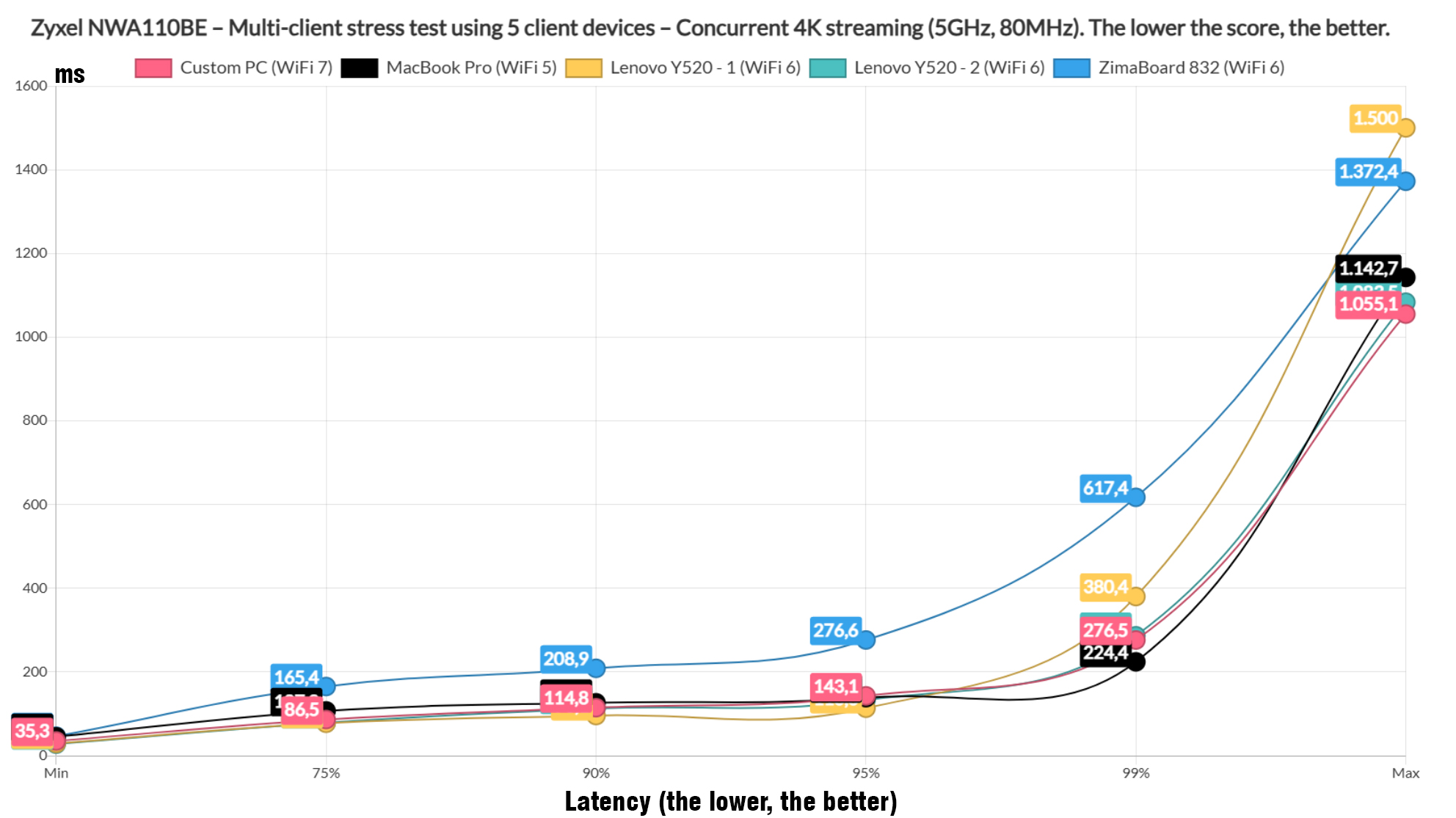
As a comparability, the NWA110BE did a bit higher right here.
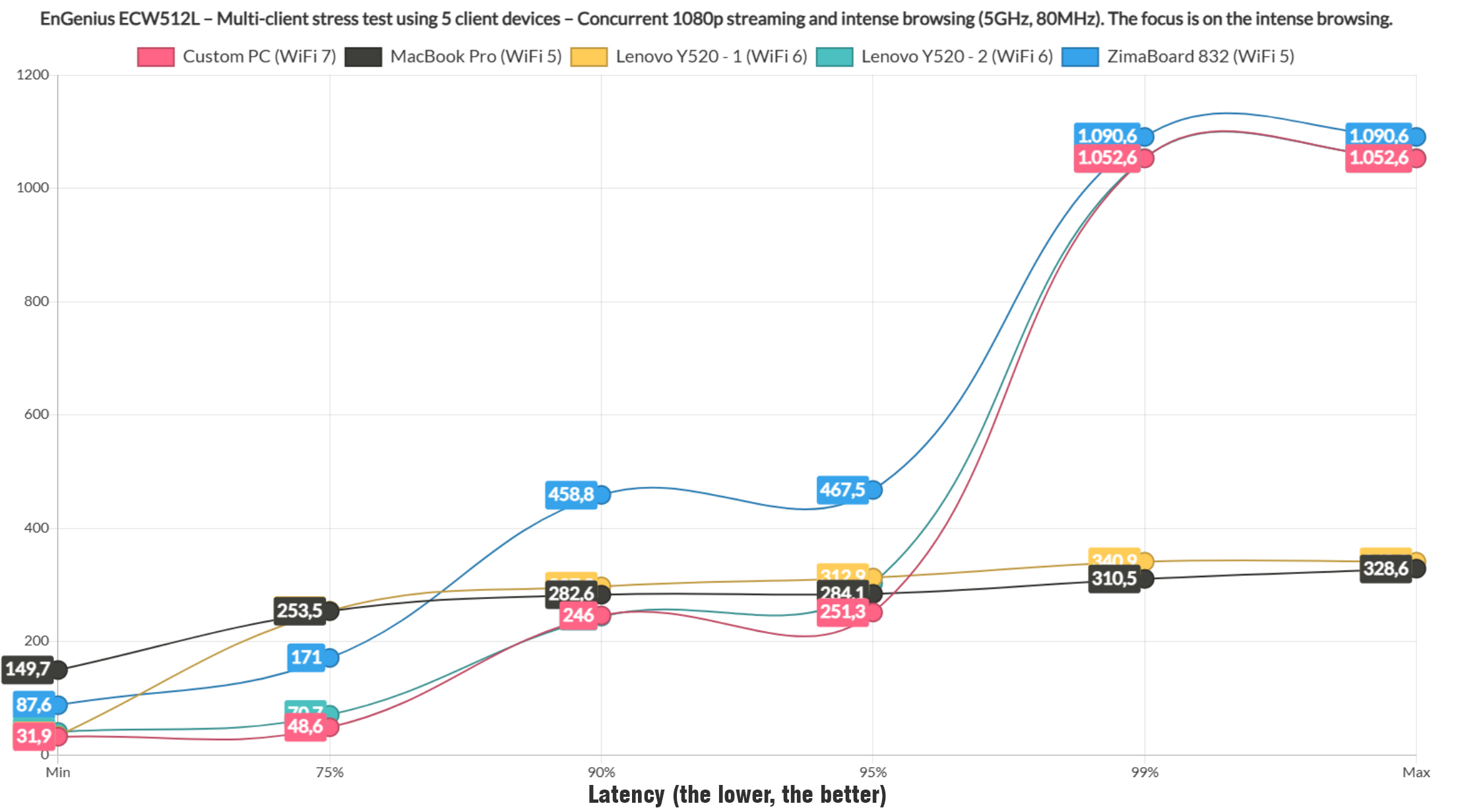
Shifting ahead, I stored the 1080p streaming visitors and ran intense shopping alongside it. And once more, we get to see two shopper units doing higher than the remainder.
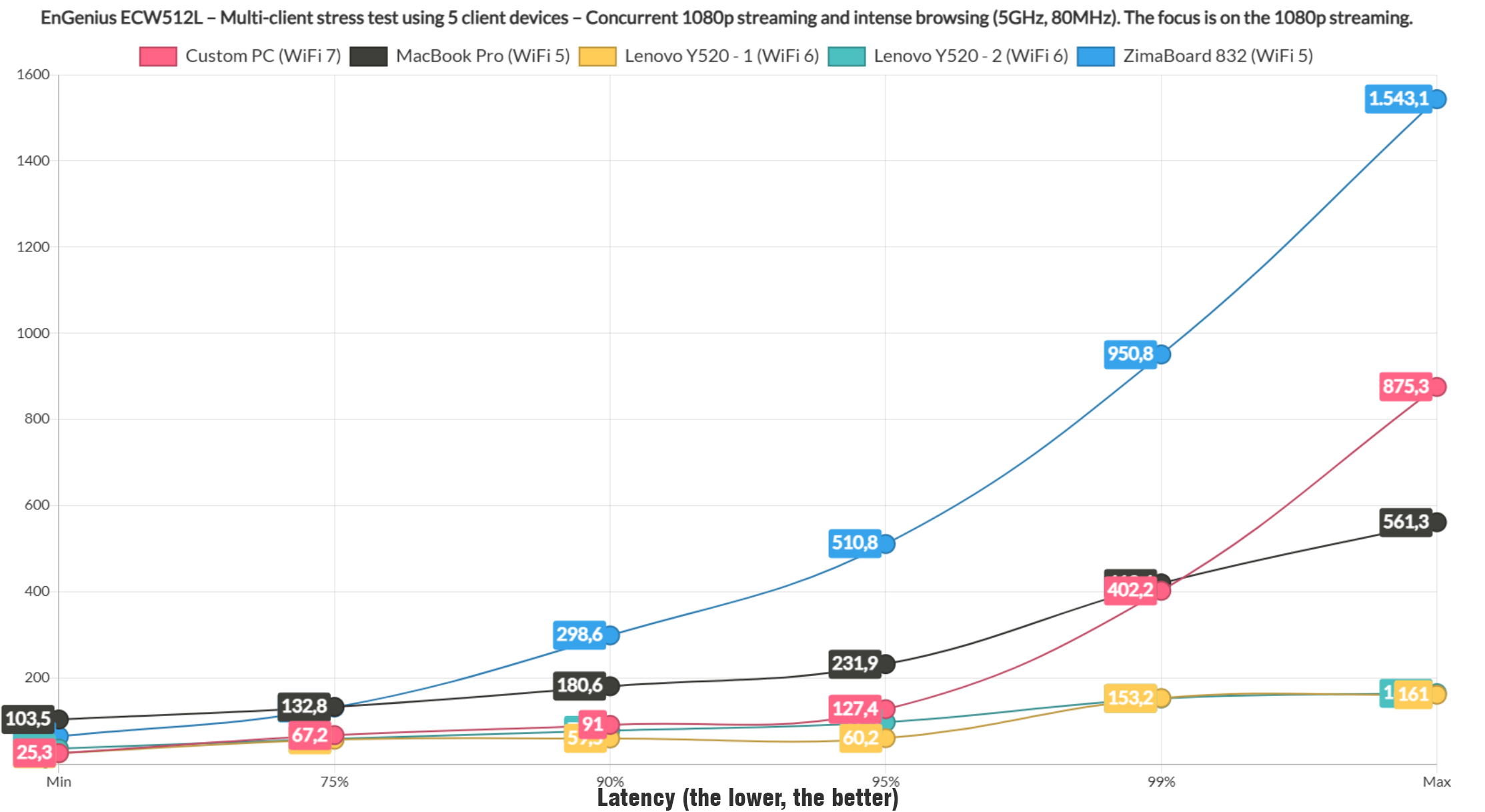
I additionally checked the extraordinary shopping graph and all shoppers stood beneath 500ms for 95% of the time, however three did rise near 1s for about 5% of the time. Nonetheless very a lot usable.
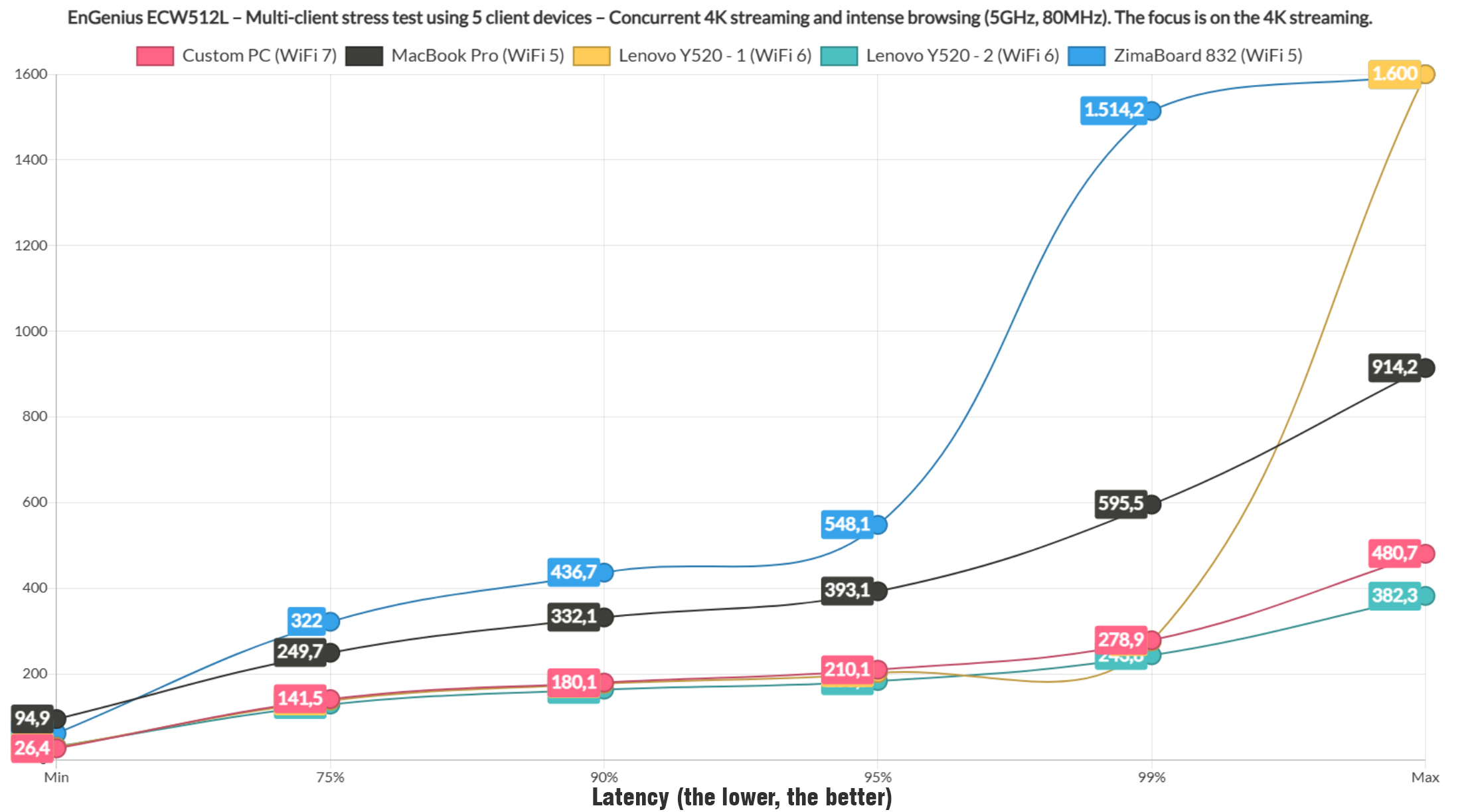
I additionally needed to run intense shopping subsequent to 4K streaming and the previous didn’t have that a lot of an influence on the latter. Then once more, the latency will nonetheless make issues unusable.
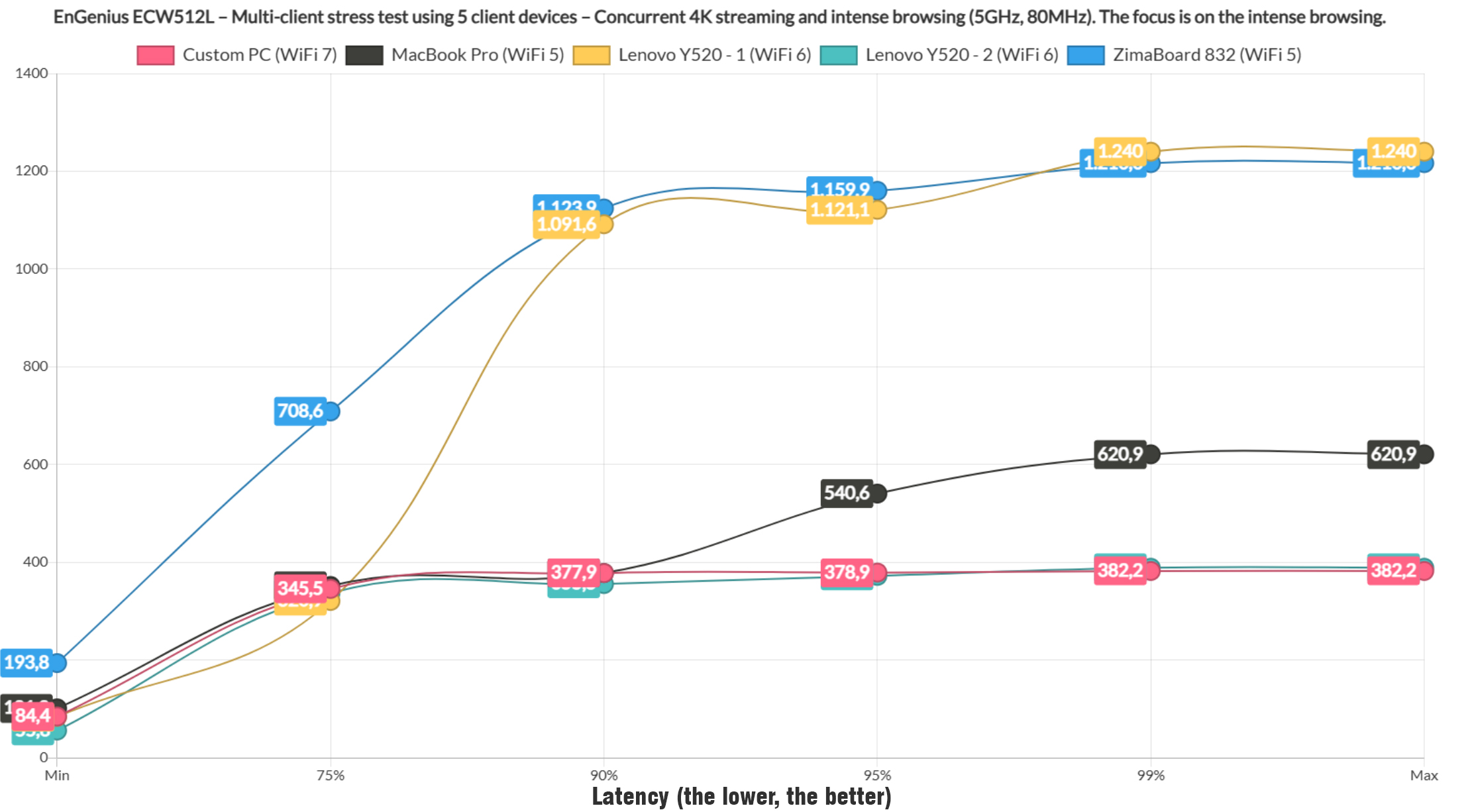
The extraordinary shopping graph reveals an inclination in the direction of 1.3 seconds on two shoppers which was regarding, however the remainder did alright.
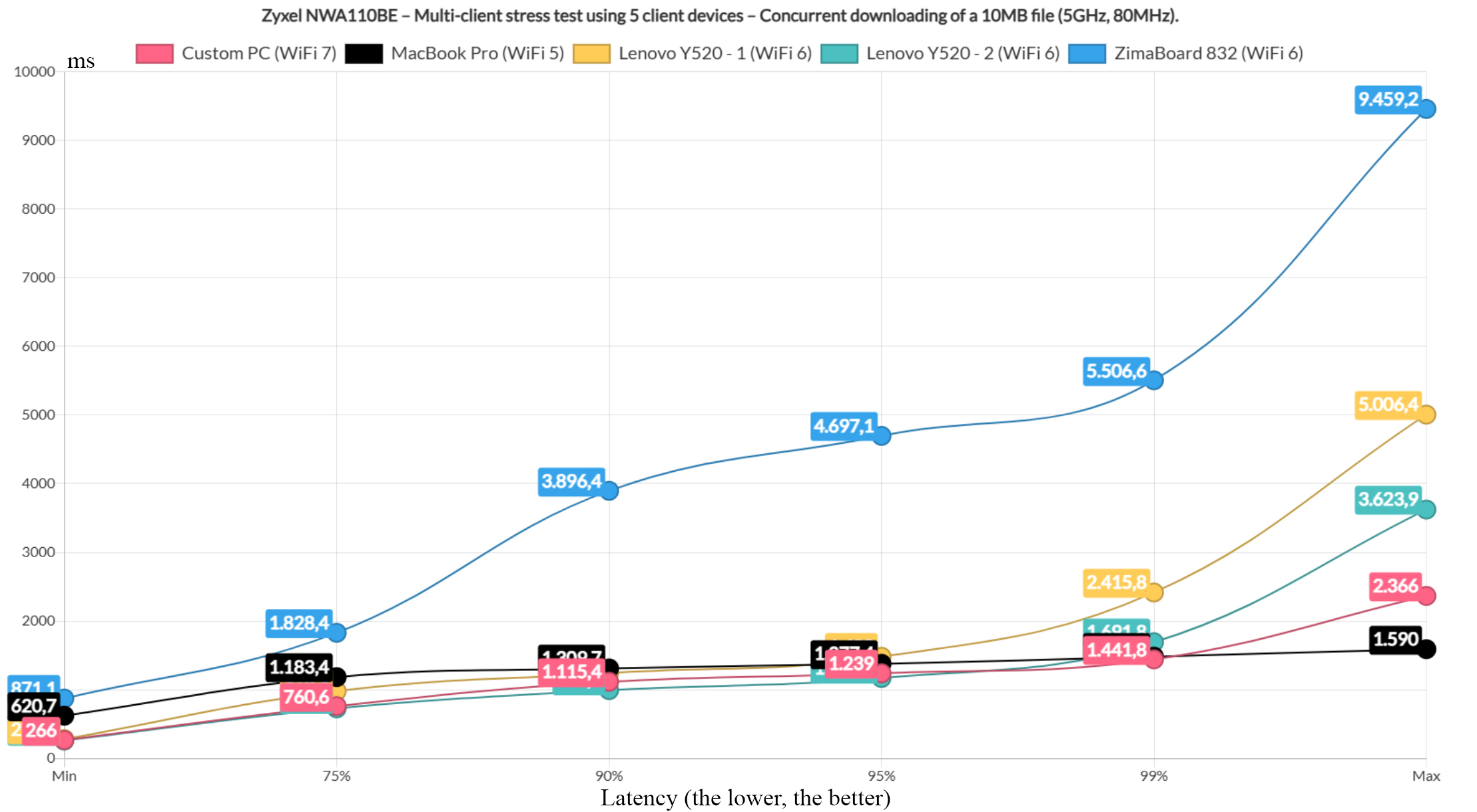
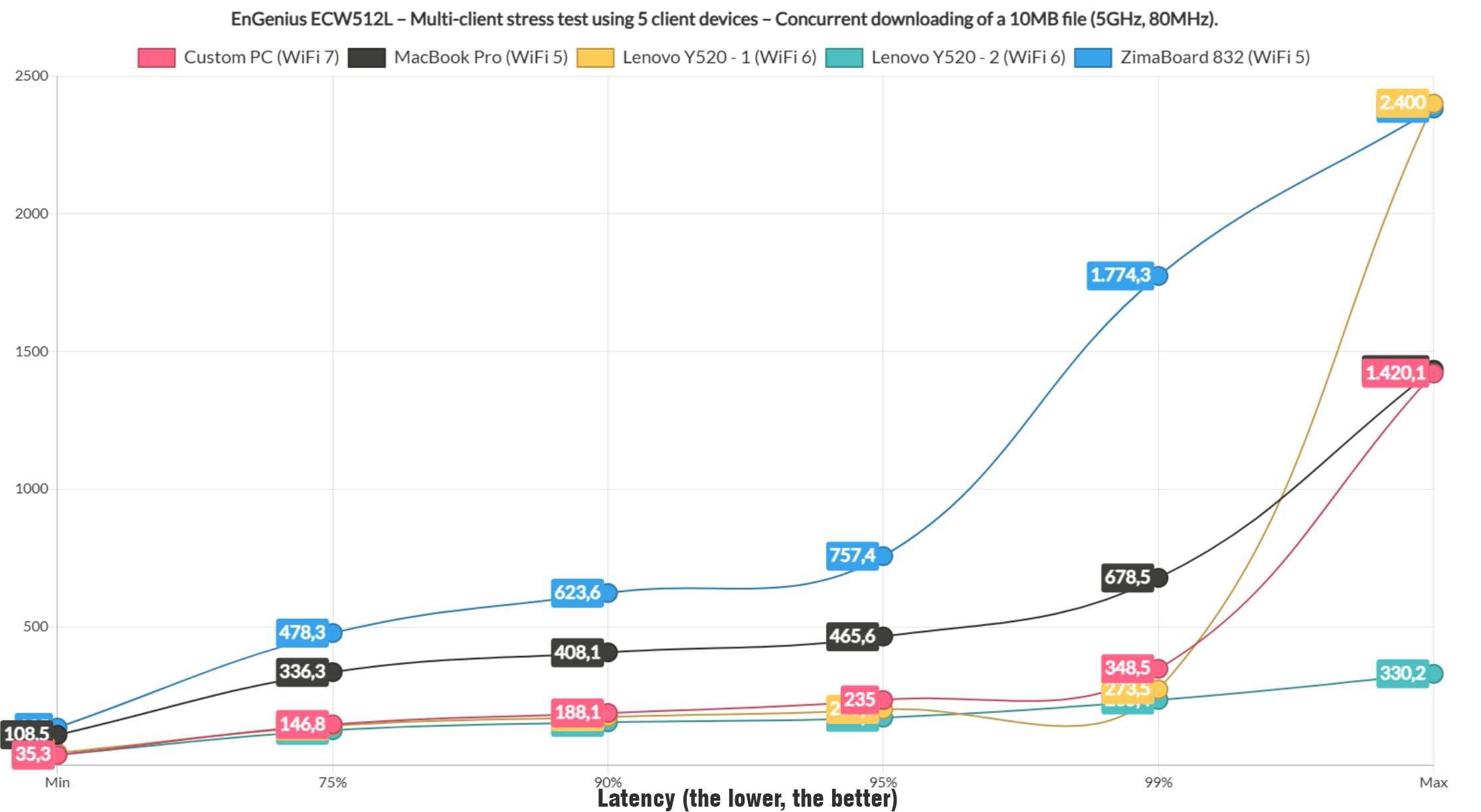
After that, I made a decision to go away out the ZimaBoard and run varied forms of visitors on the remainder of the shoppers, and that does embody downloading as properly. The thought is to obtain a 10MB file constantly on a few shoppers. And the result’s, properly, as anticipated.
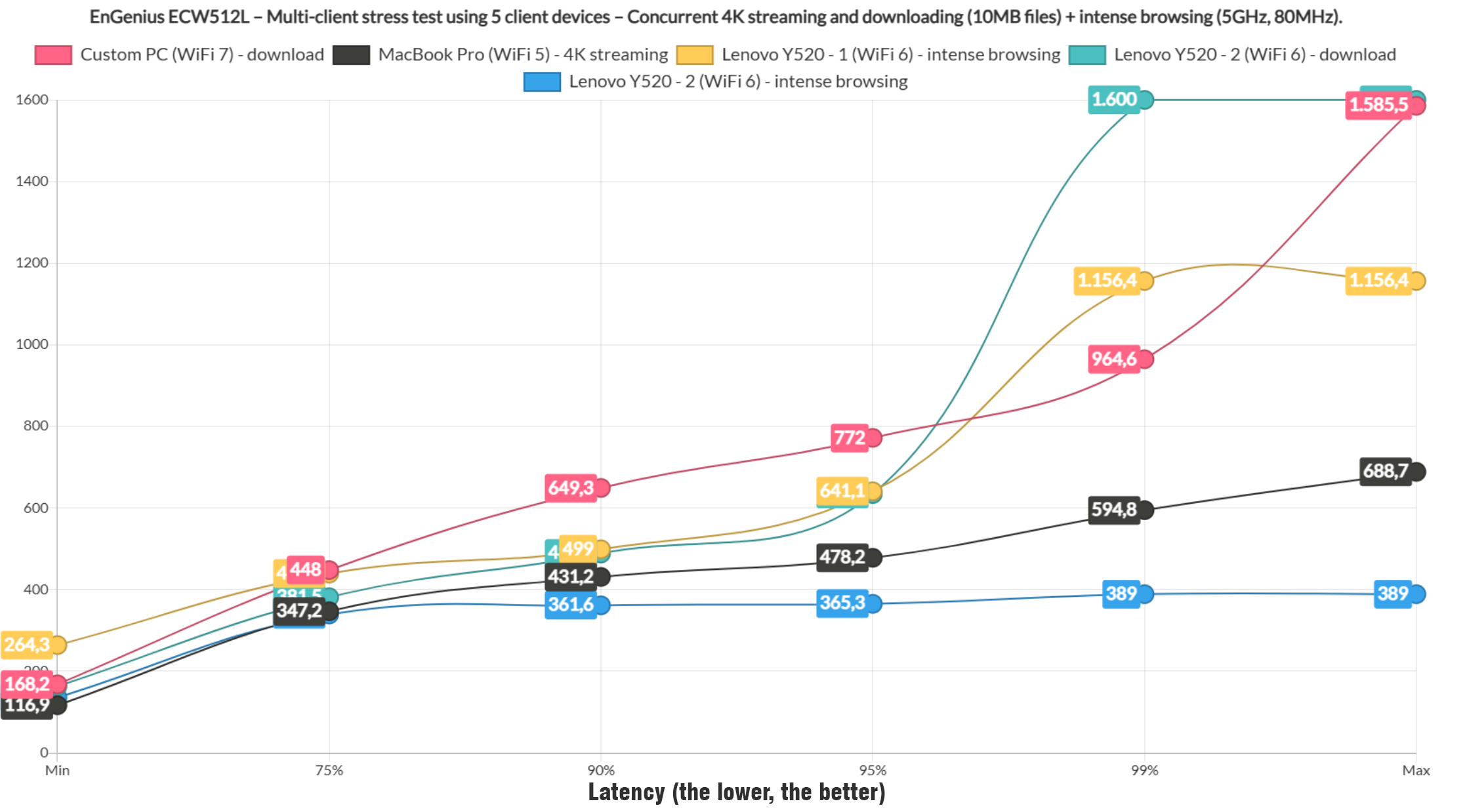
The 2 downloading shoppers rapidly rose above 400ms and so did the 4K streaming shopper. The 2 intense shopping shoppers did OK. After checking the NWA110BE efficiency, it does appear to be it did a bit higher, though the latency continues to be too excessive for consolation.
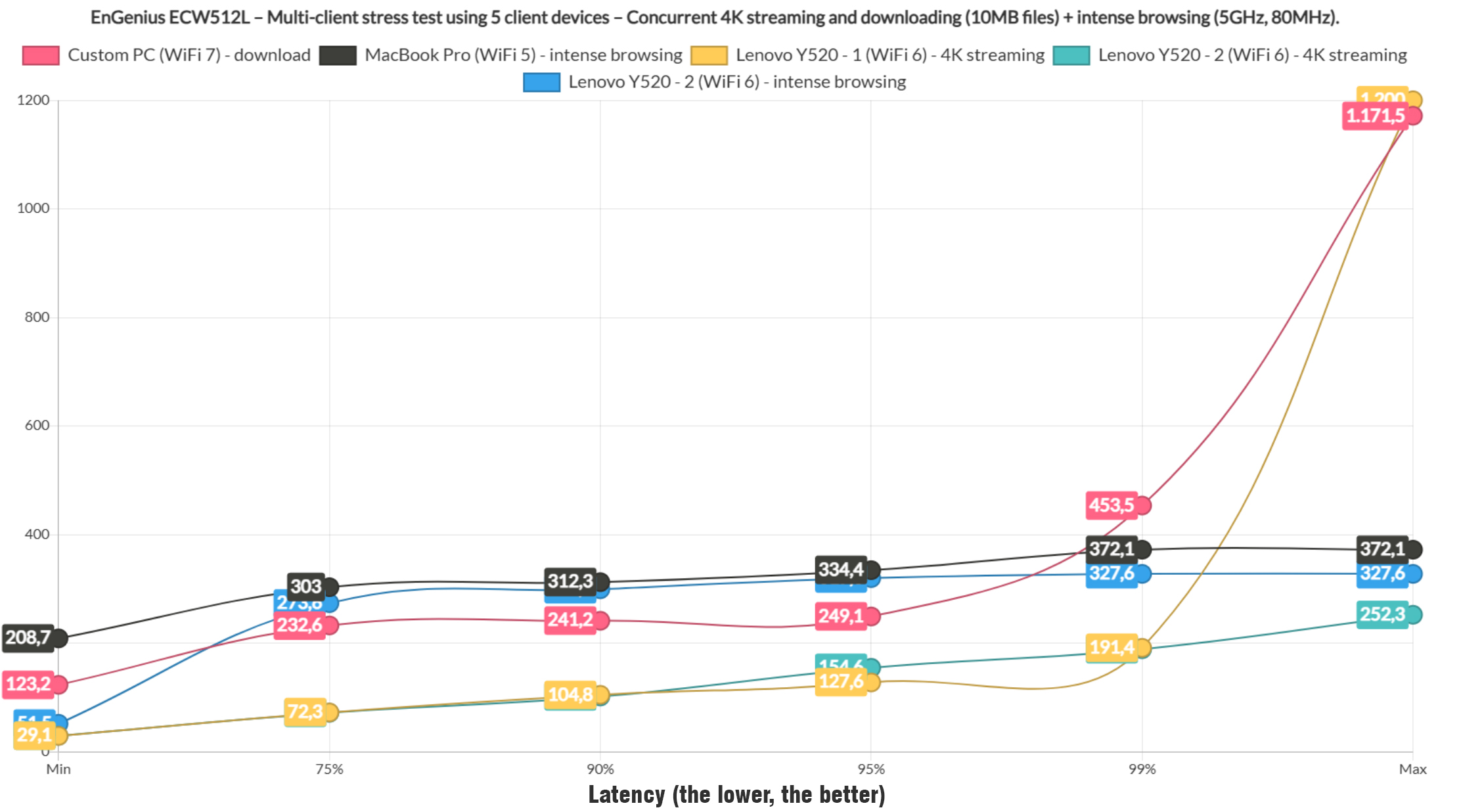
Subsequent, I restricted the downloading visitors to at least one shopper and the latency did get higher, staying beneath 250ms for about 95% of the time and one 4K streaming shopper additionally stayed close to 100ms which is best than earlier than. However nonetheless just about unusable.
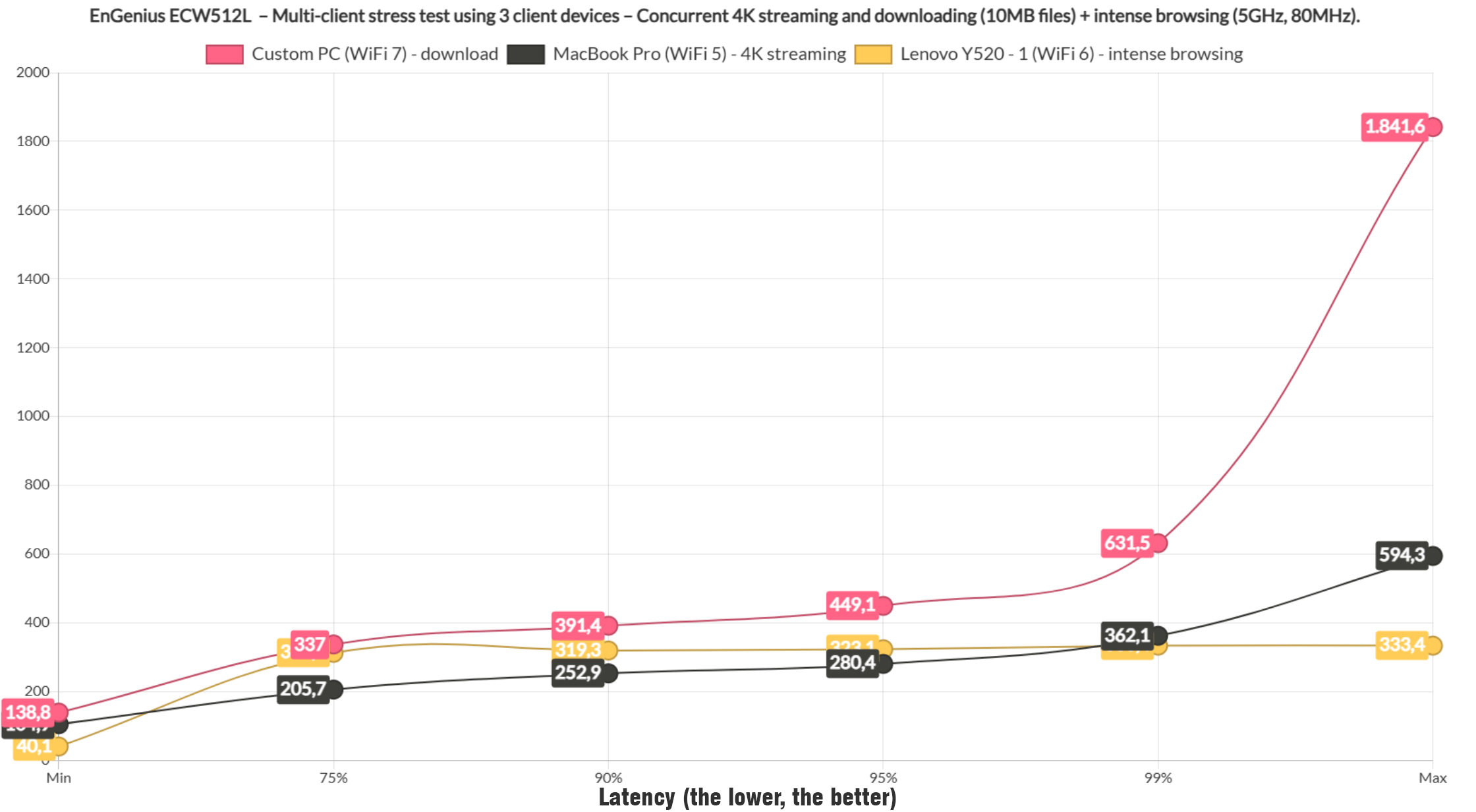
So we have to restrict the shopper units to 3 and see if that makes a distinction. Surprisingly, it didn’t.
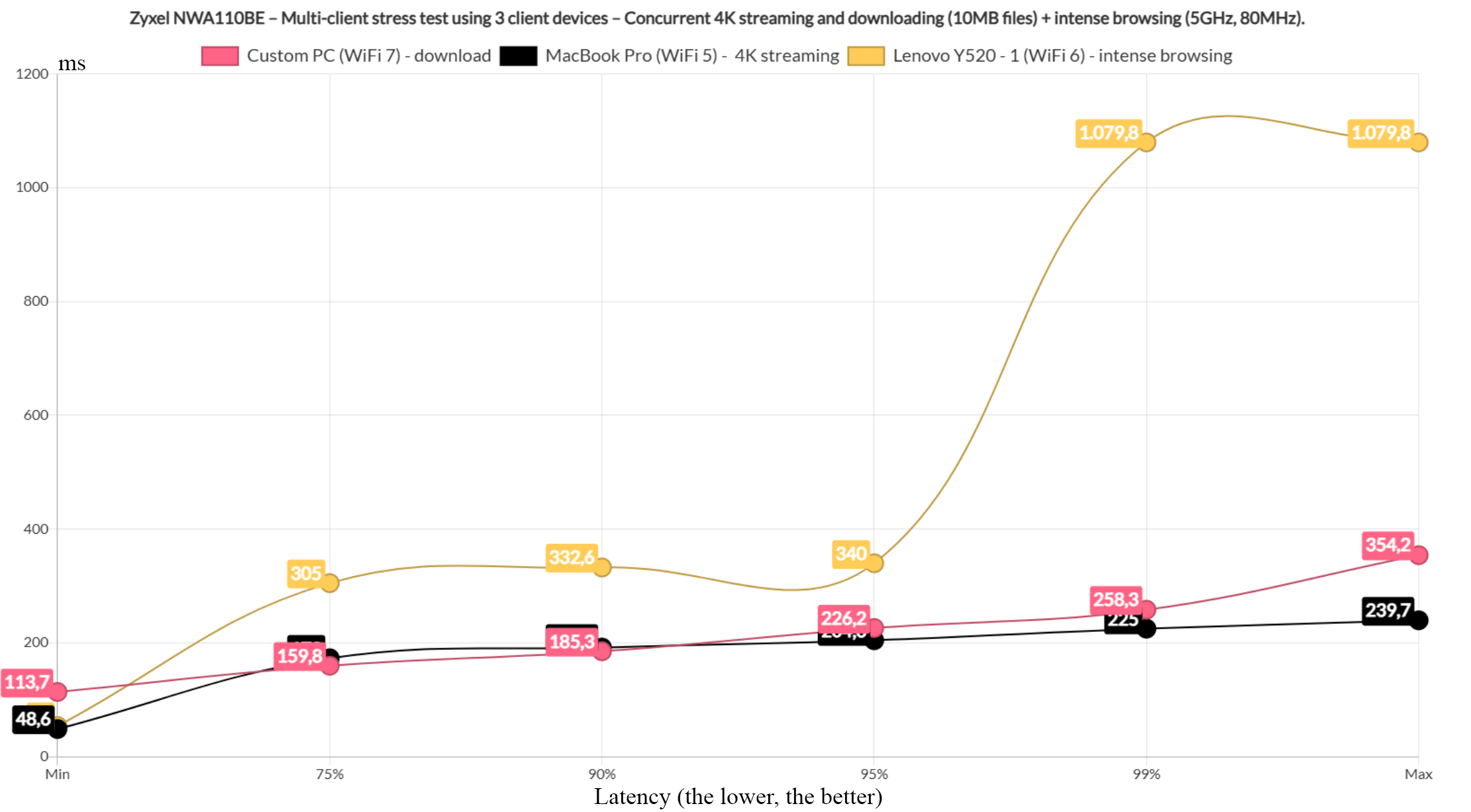
And I’ve seen one thing comparable once I examined the Zyxel NWA110BE.
So, I made a decision to vary the downloading file to 1MB. This did the trick and we will see a latency close to 50ms throughout the board.
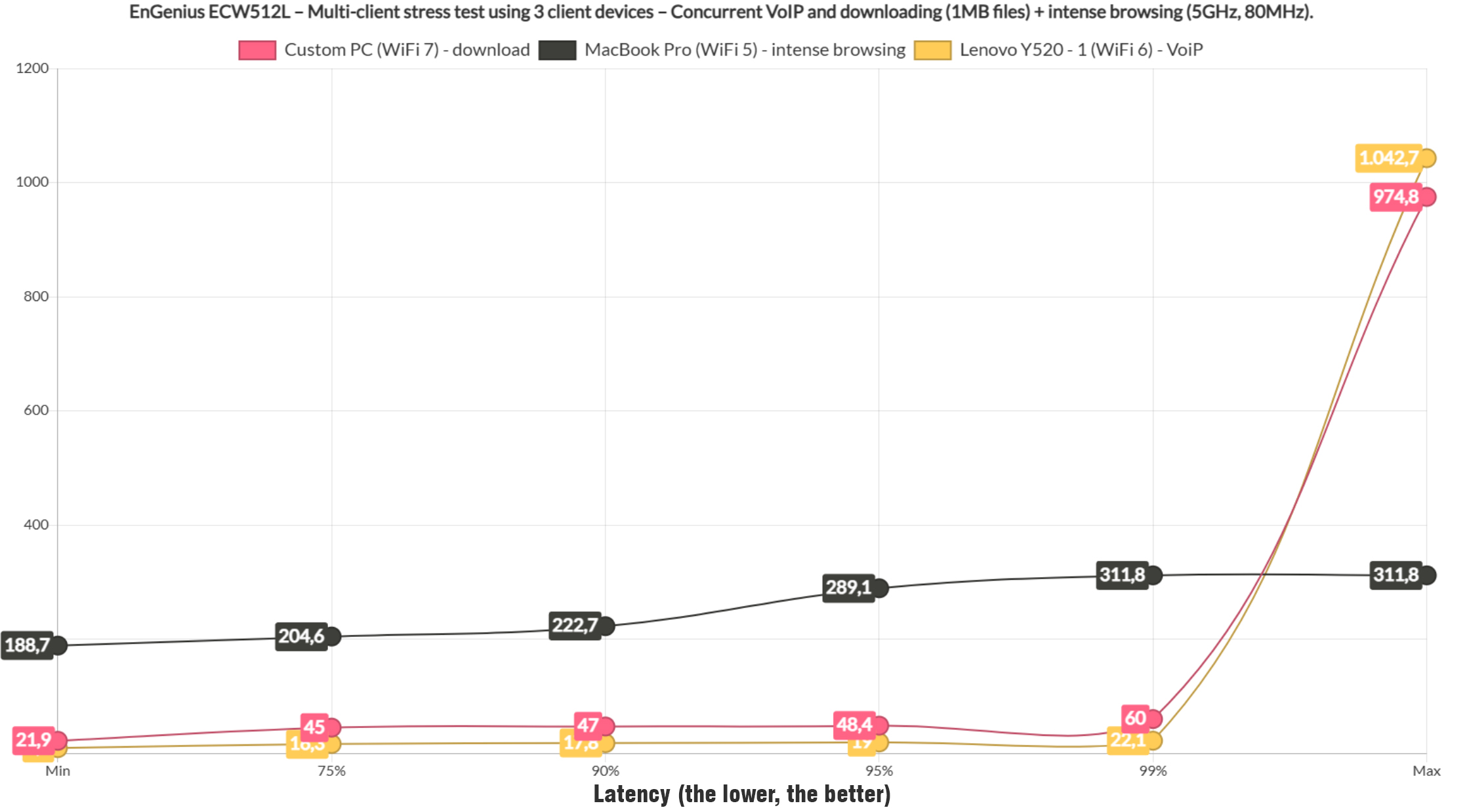
And I’ve additionally included VoIP visitors this time which was dealt with pretty properly. Lastly, I needed to obtain the 10MB file on all 5 shopper units and you’ll see the outcome for your self.
The MLO Efficiency
It’s very good to see that MLO is part of the entry-level entry factors contemplating how lengthy it took to be made usable from each the shopper and the machine degree. Some WiFi 7 router producers are nonetheless enjoying round, which is why a devoted entry level is nearly at all times the higher choice. And it’s not that costly both, you simply want a swap and a gateway, each could be cheaper. Anyway, let’s take a look at the MLO efficiency of the EnGenius ECW516L.
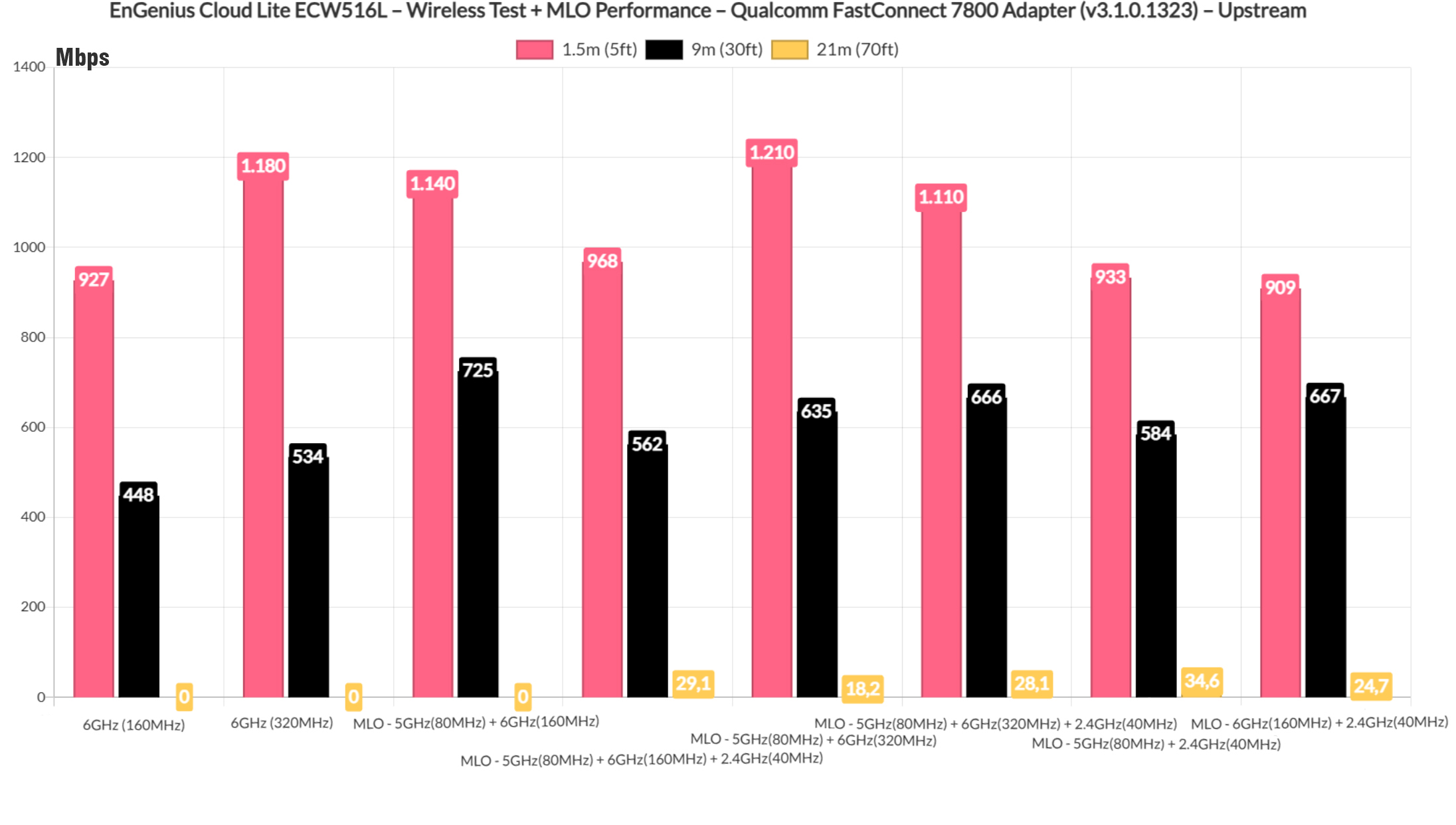
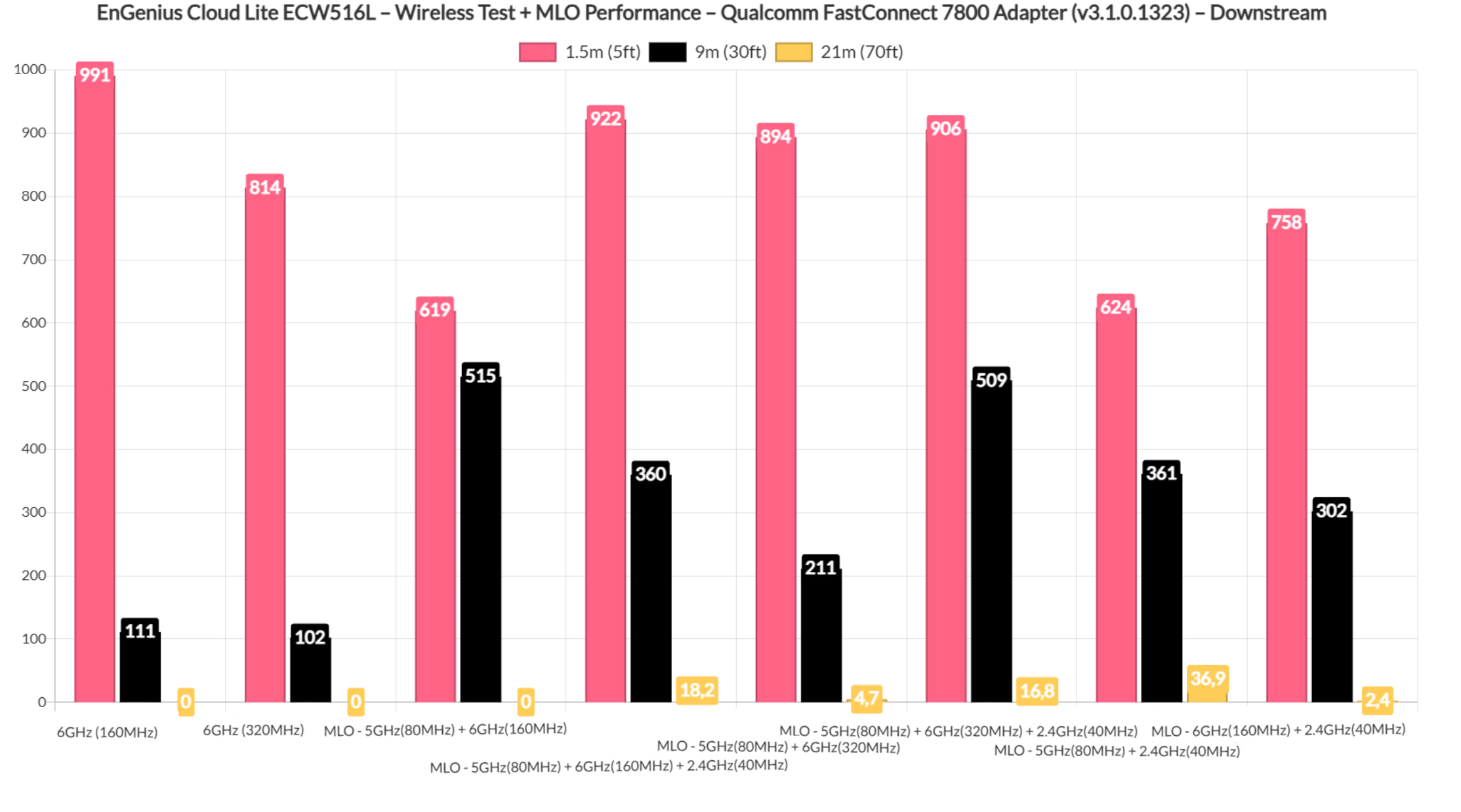
I suppose it’s not a serious acquire close to the entry level, however, contemplating that we initially bought 0Mbps on the farthest level, we do now get to go farther away with the shopper. And that’s true each upstream and downstream.
I’ve additionally ran some FLENT exams, nothing particular, the default ones and I’ve included right here the outcomes.
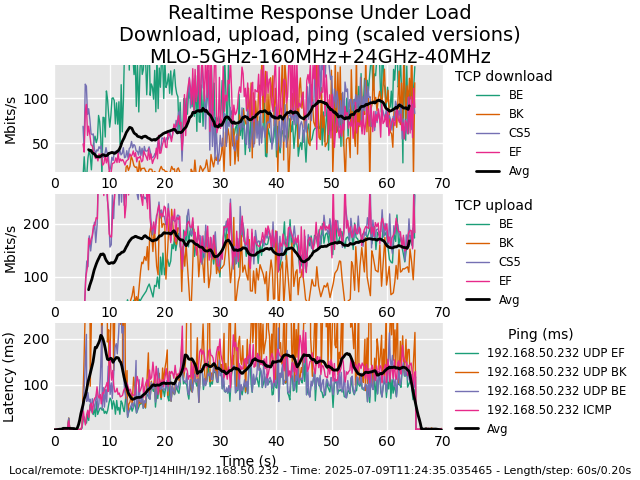
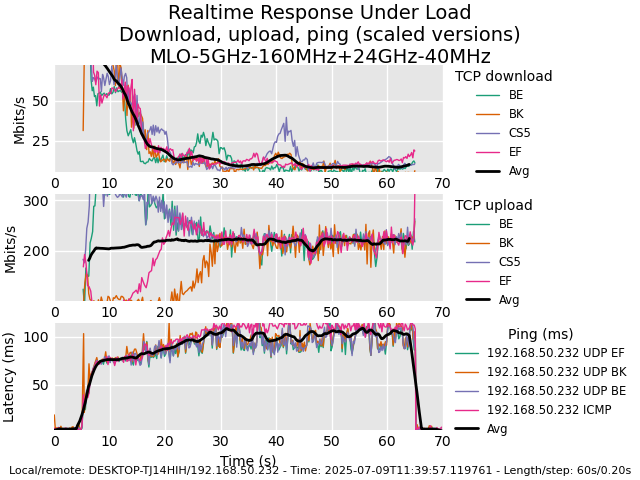
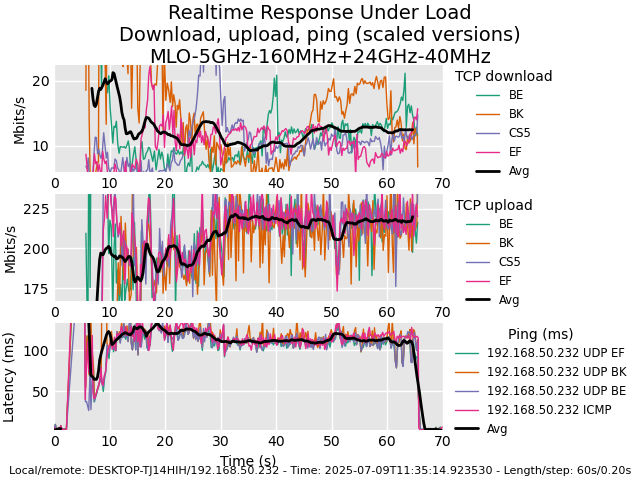
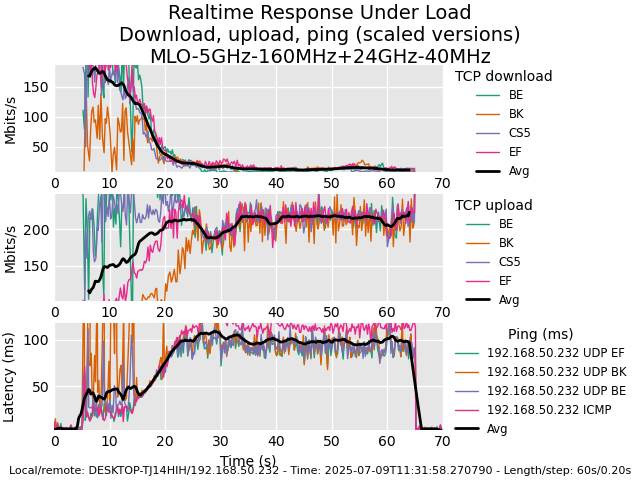
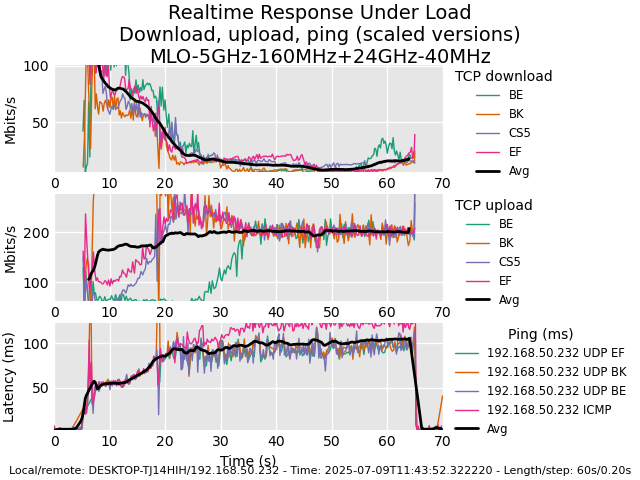
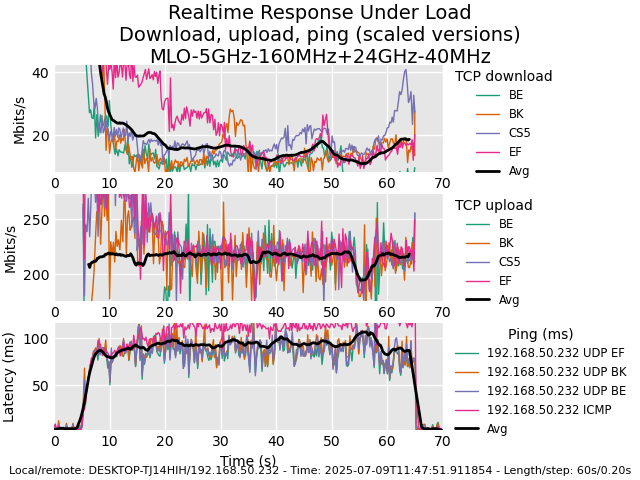
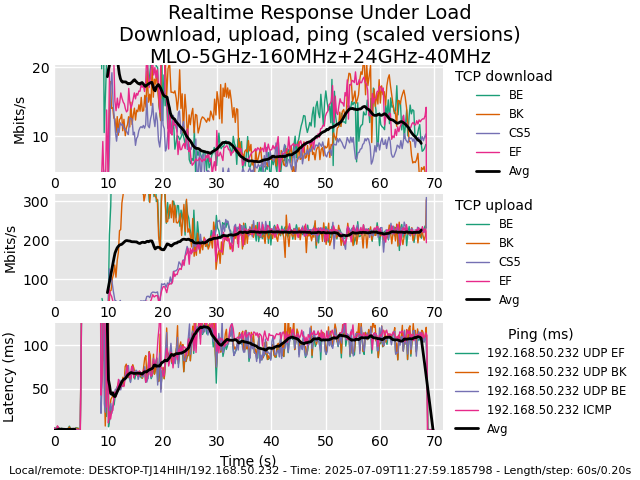
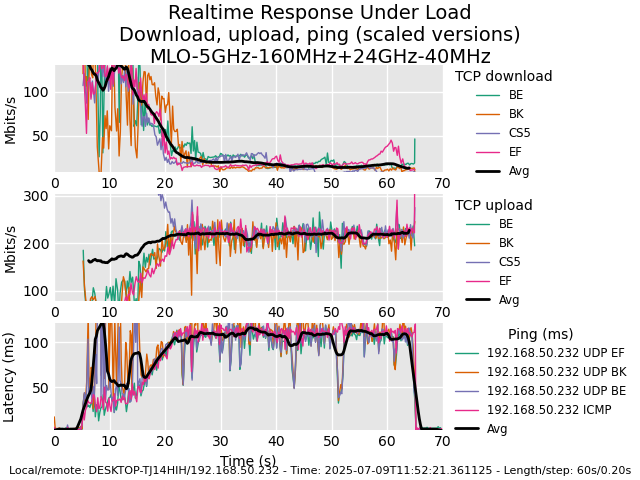
Positive, the NWA110BE had fewer configurations obtainable, however I nonetheless assume the ECW512L carried out erratically in a few of these graphics.
The Standalone Mode
There isn’t a lot o discover in the case of the stand-alone mode of the EnGenius ECW516L. Positive, it’s there, however it is rather restricted when it comes to each monitoring attain and particularly the obtainable configuration.
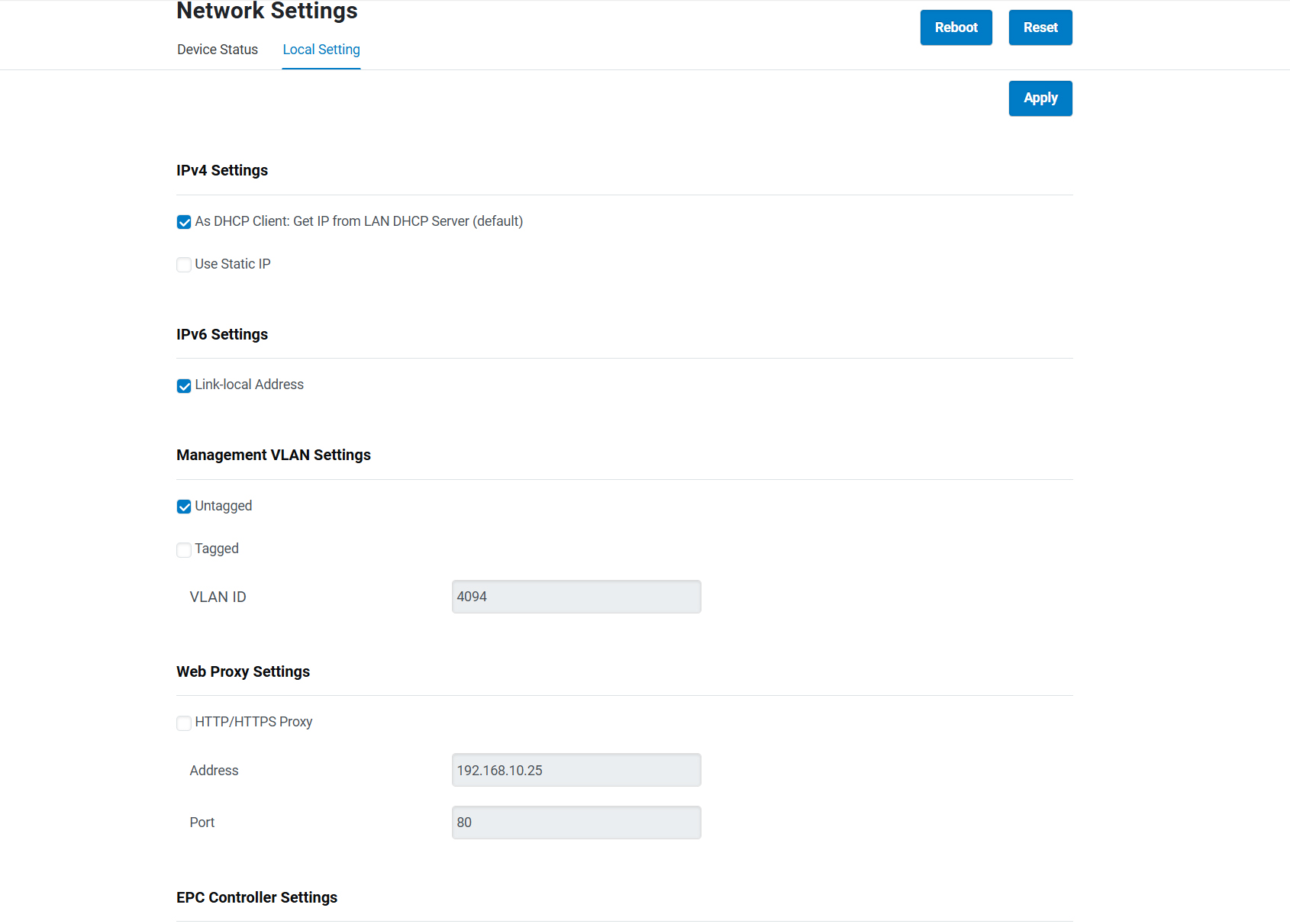
I don’t know for the way lengthy EnGenius intends to assist this mannequin, but when it’s out of the Cloud platform, then you definitely received’t be capable of configure it that a lot in depth.
The Cloud Platform
And that takes us to the EnGenius Cloud platform. The method of including the entry level to the community is just about the usual throughout SMB and above networking units. After which we get entry to the Dashboard the place we will see varied standing details about the ECW516L and every other EnGenius units that part of the community.
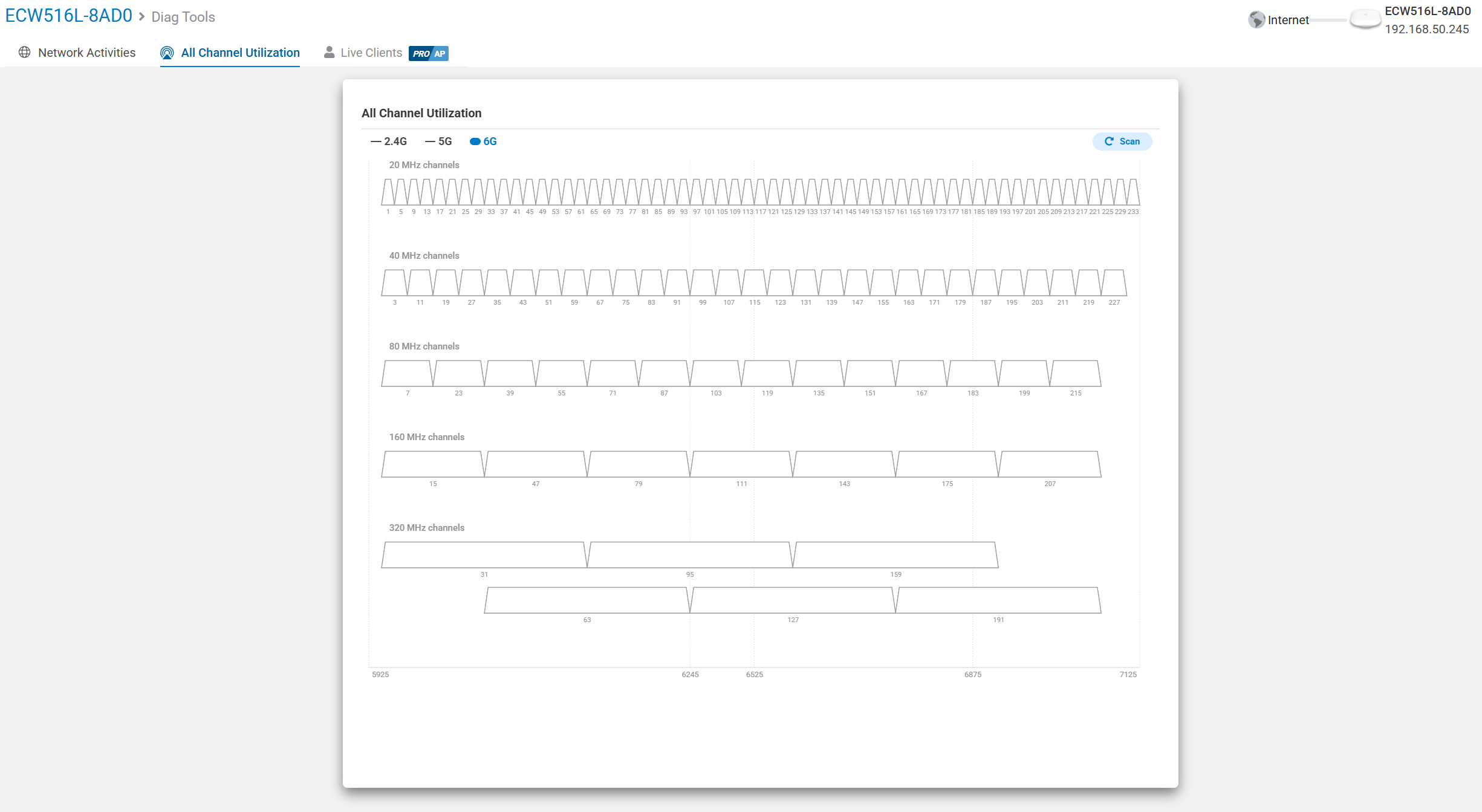
Going to Entry Factors and choosing the AP, we will see devoted standing data and we will do some configuration modifications that may override the adopted settings. It’s additionally attainable to take a look at the Diag Instruments which, by default embody Community Actions and the All Channel Utilization. The Dwell Purchasers turn out to be obtainable when utilizing the Professional subscription.
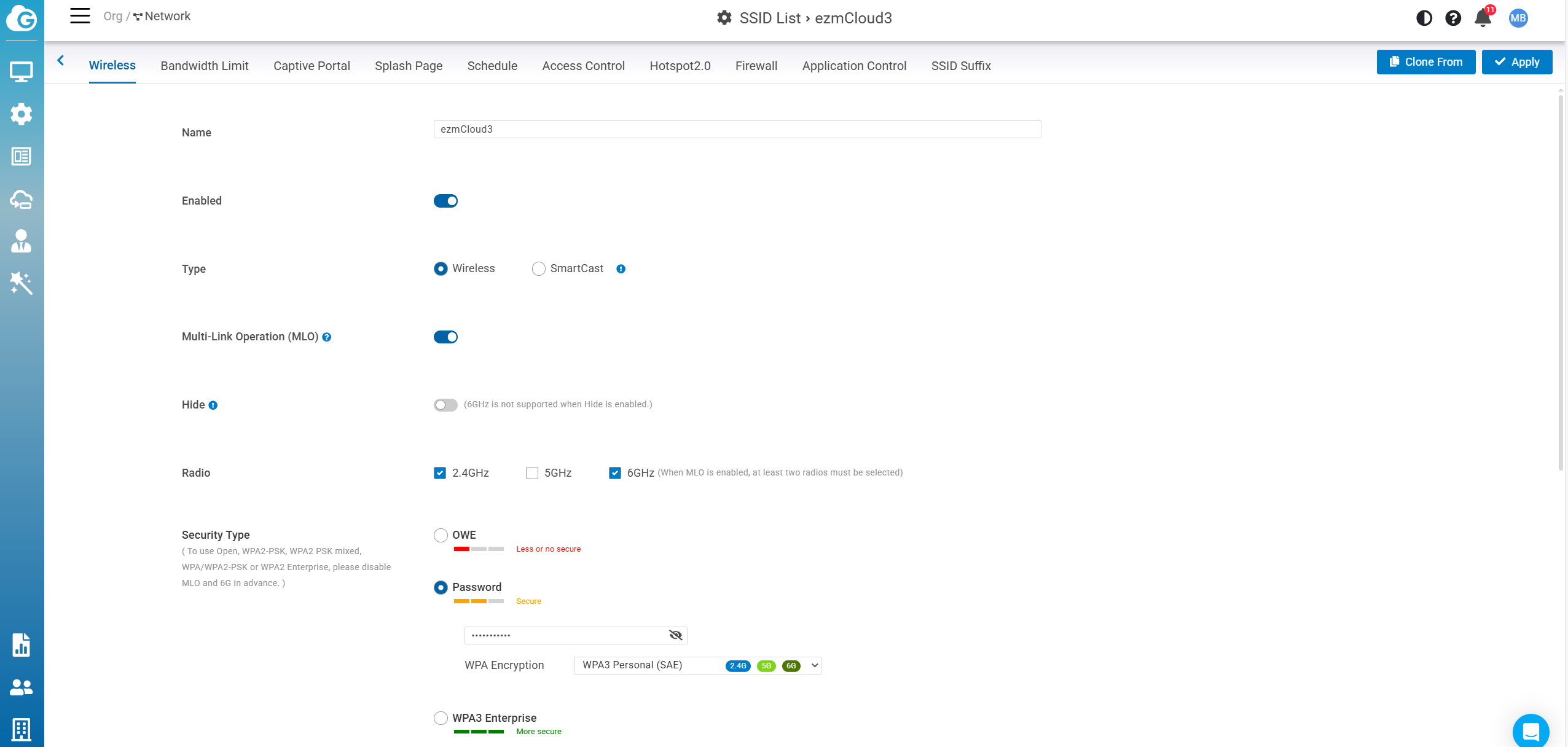
It’s additionally price mentioning the SSID Listing the place we will change how the Wi-fi performs, together with enabling MLO. There’s additionally a Captive Portal, Entry Management, SPlash Web page, Hotspot 2.0 and Firewall. We will additionally make modifications to the Radios, the place the settings are common for all entry factors adopted throughout the community.
The Conclusion
It’s good to see that EnGenius gives an reasonably priced WiFi 7 entry level that gives the 6GHz radio alongside 5GHz and a couple of.4GHz (not like the NWA110BE), in addition to MLO. The value tag does imply that the {hardware} is much less potent, so a number of software program options will probably be lacking from the Cloud platform. Plus the wi-fi efficiency was truthful for a smaller community, however once more, it’s not likely a champion at both velocity or protection. It’s a good machine providing fairly a number of superior options at an reasonably priced worth.

Mark is a graduate in Laptop Science, having gathered priceless expertise through the years working in IT as a programmer. Mark can also be the primary tech author for MBReviews.com, masking not solely his ardour, the networking units, but additionally different cool digital devices that you could be discover helpful in your daily life.