
![DistributedCOM DC Server Event ID 10016 DCDIAG Error [Fixed]](https://ynkthevalue.com/wp-content/uploads/2025/04/DistributedCOM-DC-Server-Event-ID-10016-DCDIAG-Error-Fixed.jpg)
DistributedCOM DC Server Event ID 10016 DCDIAG Error [Fixed] Leave a comment
Learn this information to learn to repair the dcdiag error message, “The machine-default permission settings don’t grant Native Activation permission for the COM Server utility with CLSID” Occasion ID 10016 error.
Step 0: Evaluation the Drawback Background and Overview
I lately promoted a Home windows Server 2019 Server as an extra DC in a website. After selling the server, I accomplished the next duties:
- Confirmed that the server was added to its AD web site
- Ran “repadmin /kcc” and verified {that a} replication connection was robotically generated.
- Verified that the server’s subnet is related to its native AD web site.
Lastly, to make sure that there have been no replication errors, I ran dcdiag (hyperlink opens in a brand new browser tab) and piped the consequence to a textual content file. After I reviewed the file, I discovered that the server failed the SystemLog check.
Additional evaluation of the dcsdiag file signifies that an occasion log was logged with the next particulars: “The machine-default permission settings don’t grant Native Activation permission for the COM Server utility with CLSID.”
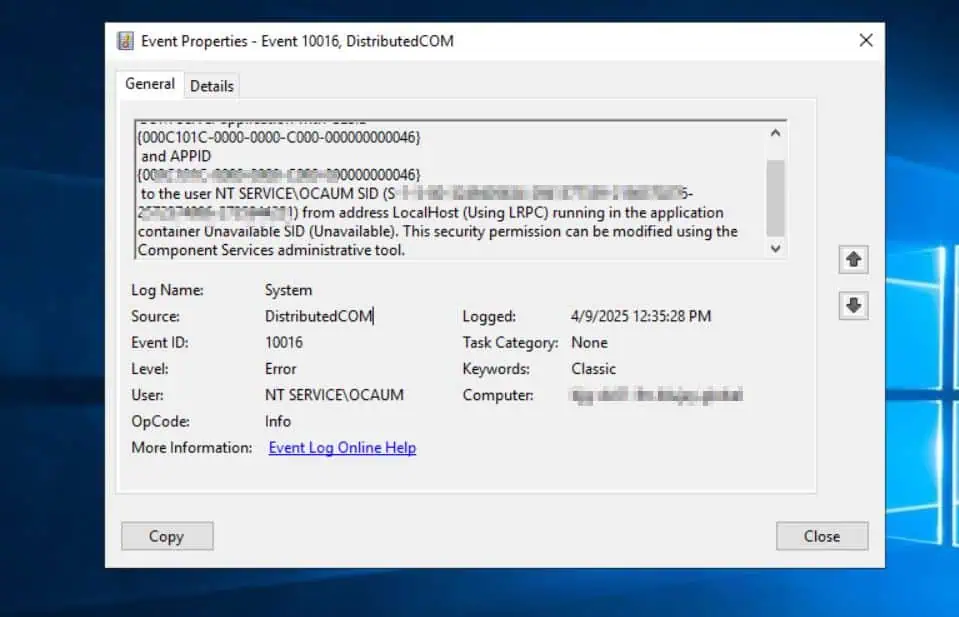
The supply of this occasion within the System occasion log is DistributedCOM, with an Occasion ID of 10016. The error particulars are within the screenshot beneath.
I’ve defined the steps I took to repair the error message within the remaining sections of this text.
The primary two steps beneath contain enhancing the Home windows registry. As this may increasingly break your server, it’s strongly advisable to take a snapshot of your server if it’s a VM or again the server up if it’s a bodily server.
Step 1: Change the Possession of the CLSID Registry Keys
- Get the offending utility’s CLSID from the occasion error log. That is the sting of values subsequent to the CLSID within the occasion error log. I’ve highlighted the appliance’s CLSID ID within the screenshot beneath:

- Seek for and open Regedit. Then, navigate to HKEY_Classes_RootCLSID<the CLSID string from 1 above>.
Since there are such a lot of registry keys within the “HKEY_Classes_RootCLSID” registry path, one of the simplest ways to find the important thing you want is to repeat the important thing from the occasion log, paste it after “” on the and press the enter key.

- Proper-click the registry key and select permissions.

- After that, click on the Superior button within the registry key’s permission properties web page, then click on the Change button subsequent to the Proprietor.

- Then, enter Directors within the Enter the item names to pick out field and click on Examine Names > OK.

- Lastly, verify the Change house owners on sub containers and objects checkbox and click on OK.

- Lastly, grant the Directors group Full Management and click on OK to shut the registry key’s permissions properties window. Don’t shut the registry editor but, as you will have to in Step 3 beneath.

Step 3: Change the Possession of the APPID Registry Keys
- Get the offending utility’s APPID from the occasion error log. See mine within the screenshot beneath.

- Again within the registry editor, navigate to KEY_LocalMachineSoftwareClassesAppID registry key, enter the title of the APPID out of your occasion log on the finish of the above path, and press enter.

- Proper-click the APPID’s registry key and select Permissions. Then, repeat steps 4, 5, 6, and seven of the final part to make the Area Directors group the registry key proprietor—keep in mind to grant the Directors group Full Management.

- Shut the registry editor.
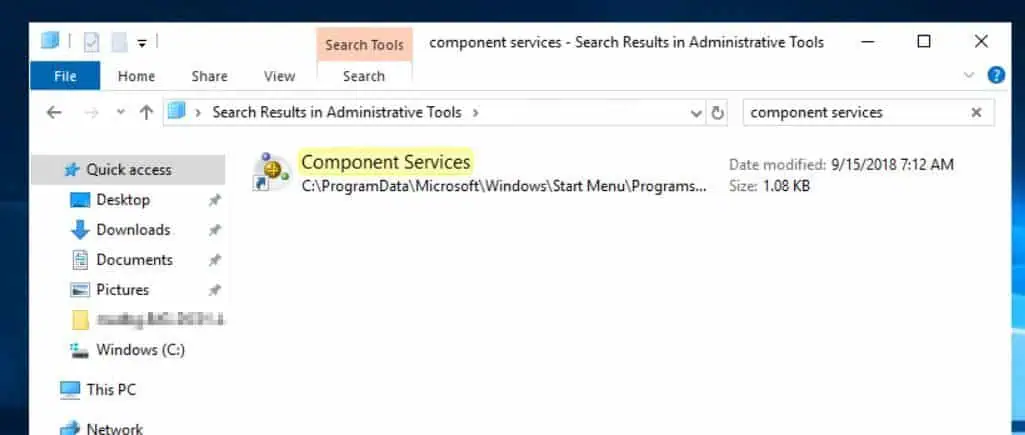
- Seek for and open administrative Instruments. Then, find and open the part providers – you possibly can seek for it.
- Then, develop Part providers > Laptop > My Laptop and click on DCOM Config.

- After that, develop DCOM Config, search for the corresponding service within the error viewer, right-click on it, after which select Properties.
Should you obtain the warning message within the screenshot beneath, choose Sure. The app IDs that start with “{” can be towards the tip, so you should scroll down the DCOM Config checklist to see the one you’re in search of.


- On the Properties window, choose the Safety tab, then within the Entry Permission part, choose Customise, then click on the Edit button.

- After that, click on the Add button.

- Then, click on the Areas button subsequent to From this location, choose the title of the native server and click on OK.
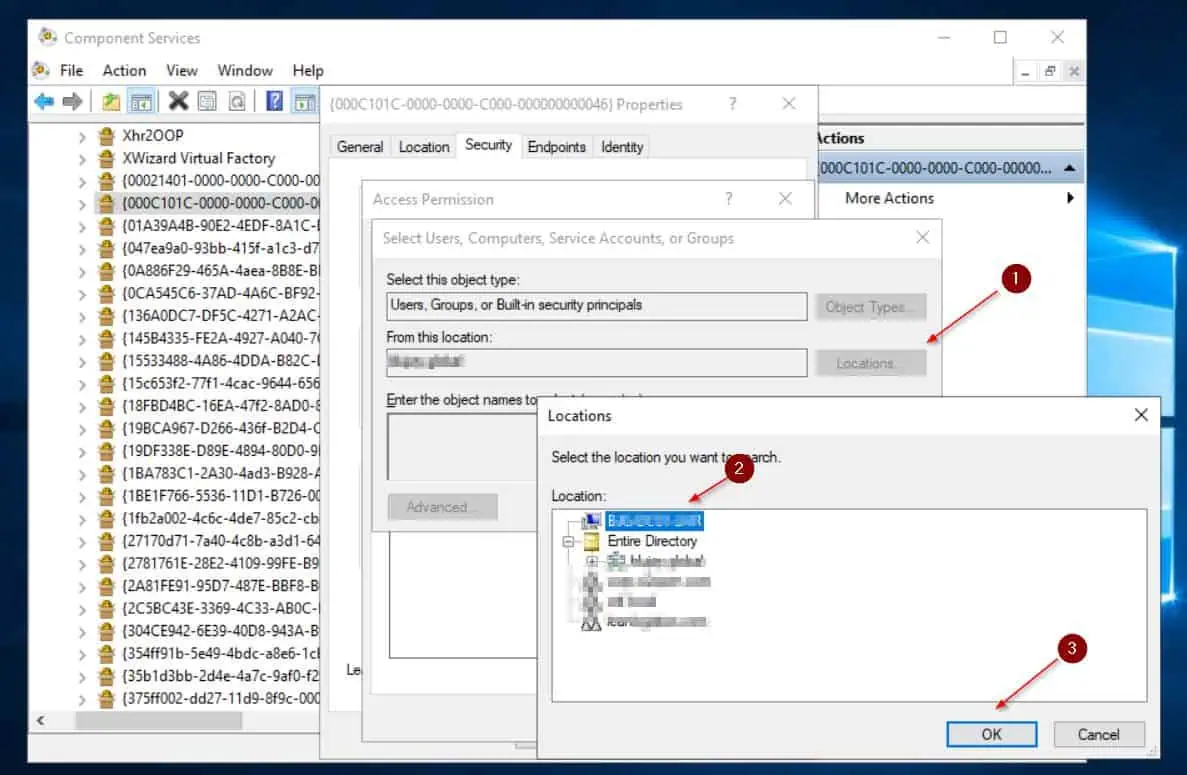
- After that, within the Enter the item title to pick out subject, enter the title of the account displayed within the occasion log error (NT SERVICEOCAUM) see the primary screenshot beneath) – then, click on Examine Names, and OK.


- Lastly, grant the account Native and Distant entry, then click on OK and OK.


Step 5: Rerun DCDIAG to Affirm that the SystemLog Check Handed
- Clear the System occasion log by right-clicking it and selecting Clear log. Save a duplicate of the log within the course of for those who require it for additional troubleshooting.

- After that, rerun dcdiag to substantiate that the SystemLog check handed.

Conclusion
Fixing the “The machine-default permission settings don’t grant Native Activation permission for the COM Server utility with CLSID” Occasion ID 10016 error is so simple as granting the account within the occasion log error permission to the COM Server utility.
On this “repair it” information, I walked you thru the steps to finish this job utilizing a real-life error I encountered after selling a Home windows Server 2019 server to a DC.
I hope this text met your expectations. Let me know by responding to our “Was this web page useful?” request beneath.